- Version
- Download 0
- File Size 1.82 MB
- File Count 1
- Create Date November 25, 2026
- Last Updated November 25, 2026
ATX-304
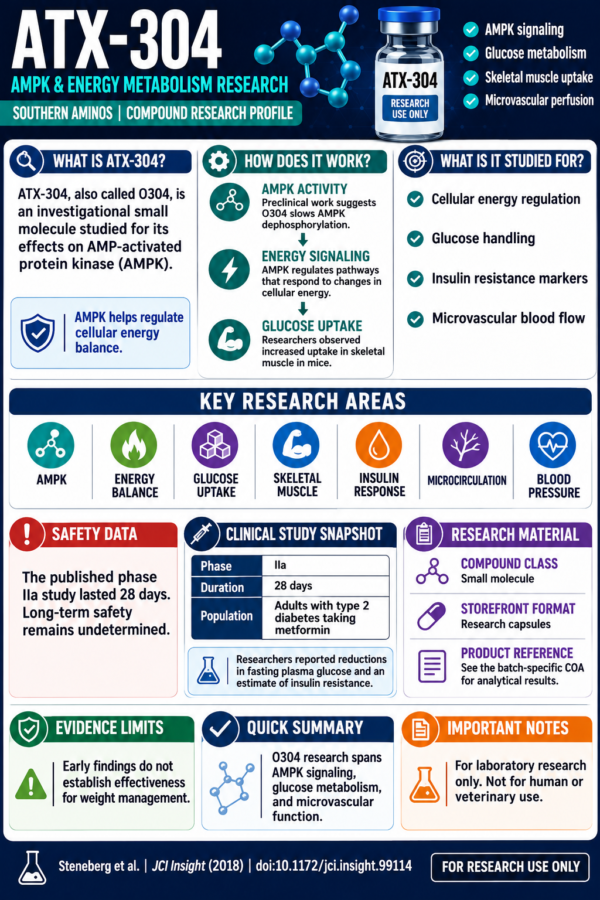
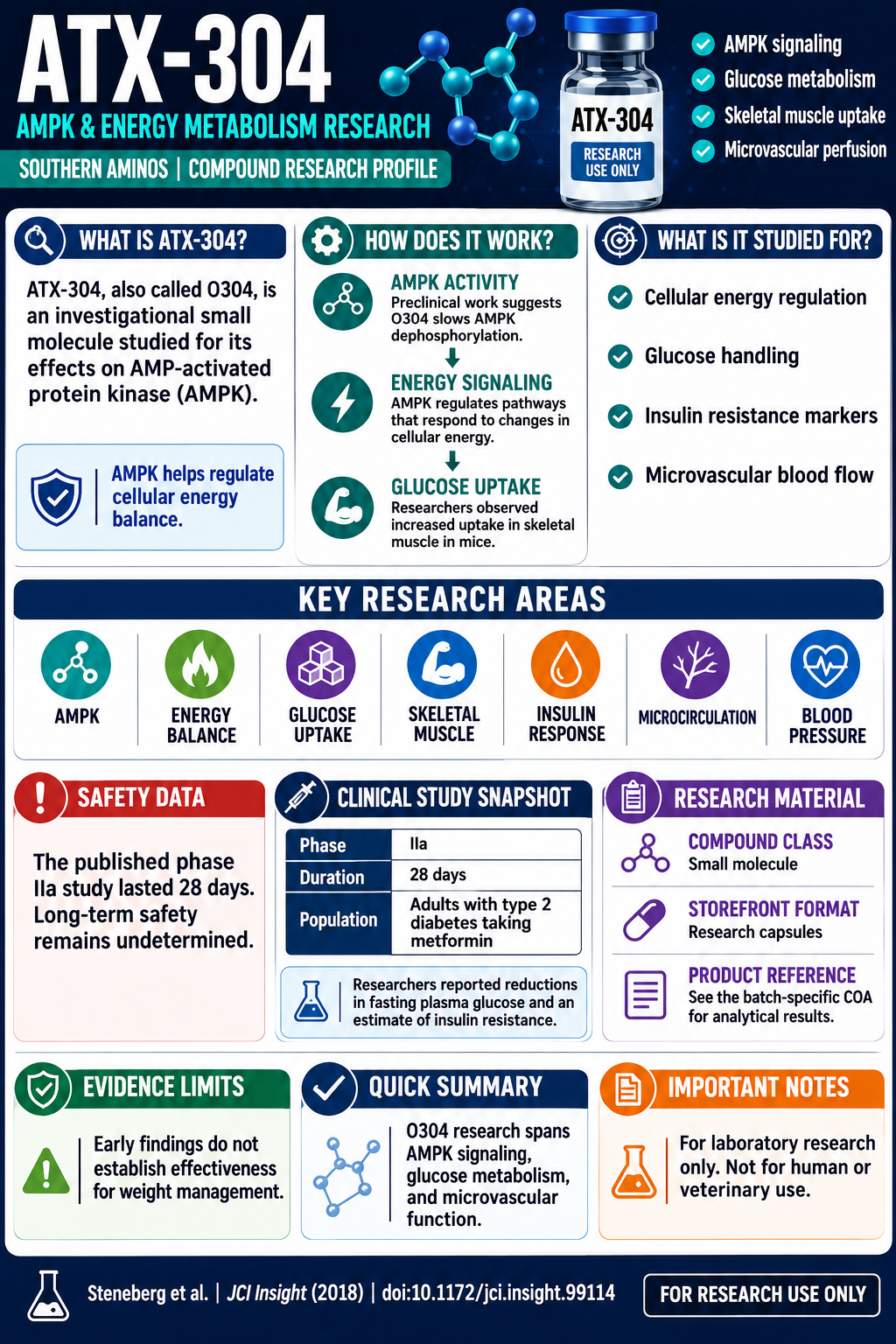
ATX-304 (formerly O304) is an investigational small molecule being developed by Amplifier Therapeutics for cardiometabolic conditions. Researchers describe it as a pan-AMPK and mitochondrial activator. AMPK, or AMP-activated protein kinase, helps cells regulate energy use in response to changes in energy availability. amplifier-tx.com
In preclinical research, O304 increased glucose uptake in the skeletal muscle of mice with diet-induced obesity. A published 28-day Phase IIa study in adults with type 2 diabetes taking metformin reported reductions in fasting plasma glucose and an estimate of insulin resistance. These early findings leave long-term safety and effectiveness for weight management undetermined. content.the-jci.org
Clinical studies include
- Type 2 diabetes (Phase IIa). A 28-day proof-of-concept study in adults taking metformin. content.the-jci.org
- Obesity with prediabetes (Phase Ib). An early study that evaluated safety, how the compound behaves in the body, and changes in metabolic markers. diabetesjournals.org
- Overweight or obesity (Phase I). A study designed to assess safety, tolerability, and pharmacokinetics across different exposure levels. Phase I (2024-514744-91-00)
Clinical trial formulation. Human studies have evaluated oral formulations, including ATX-304 sodium salt tablets. diabetesjournals.org
In humans, the clearest finding so far is that ATX-304 may lower fasting blood sugar. In a 28-day Phase IIa study of adults with type 2 diabetes who were already taking metformin, researchers reported lower fasting blood sugar and an improvement in a blood-test estimate of insulin resistance. The study measured short-term changes in those markers. content.the-jci.org
For weight or belly fat, the human evidence is still preliminary. Researchers have reported weight and energy-expenditure effects in animals and have begun testing ATX-304 in people with obesity and prediabetes. Those studies haven’t established how much weight a person can expect to lose, whether it reduces visceral fat, or whether any benefit lasts. Long-term safety is still uncertain.
For laboratory research use only.