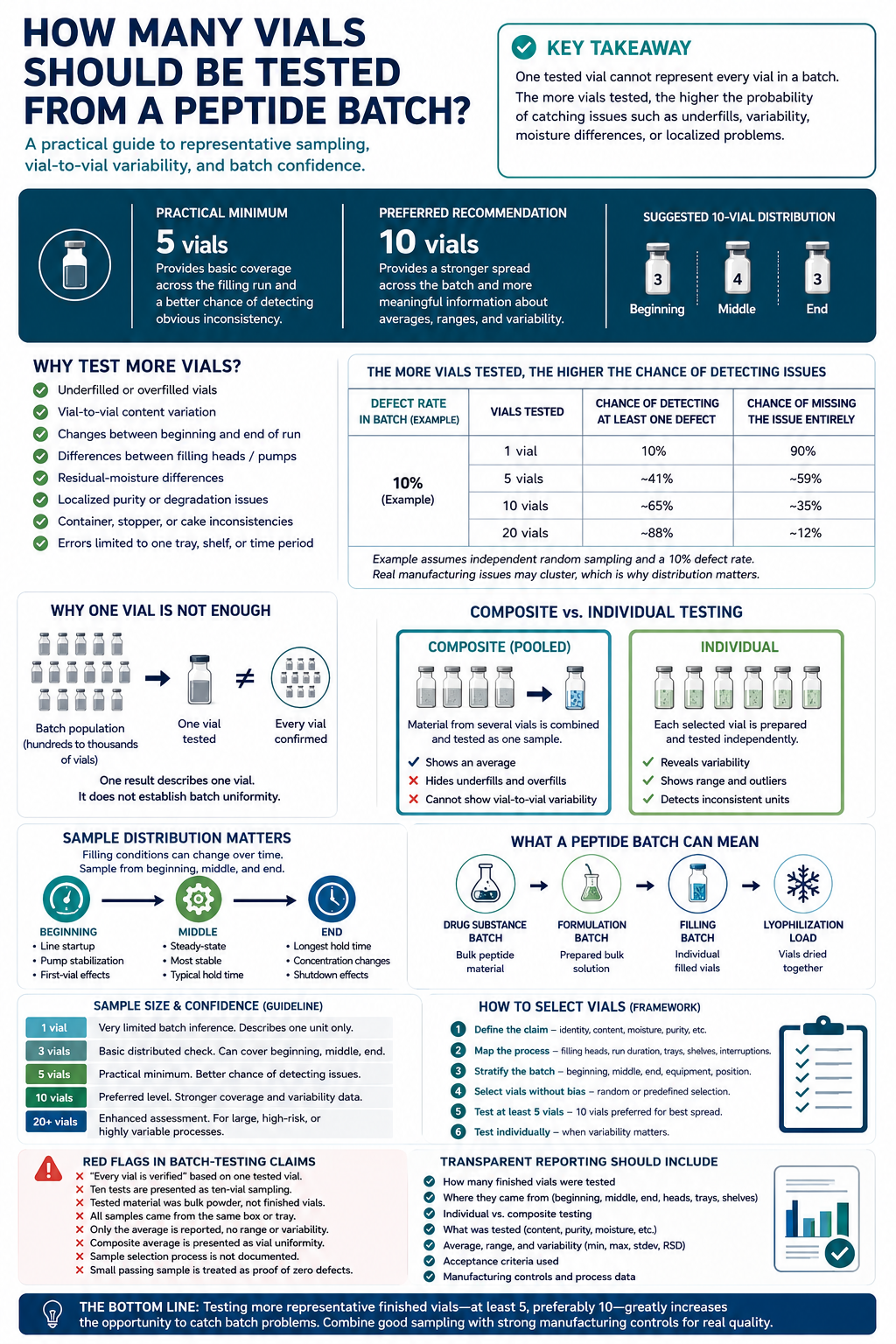
How Many Vials Should Be Tested From a Peptide Batch?
Why one tested vial cannot prove that every vial is identical, how representative sampling works, and why testing more vials increases the probability of…
23 min readRead article
A closer look at the concepts, compounds, and questions that matter.
Why one tested vial cannot prove that every vial is identical, how representative sampling works, and why testing more vials increases the probability of…
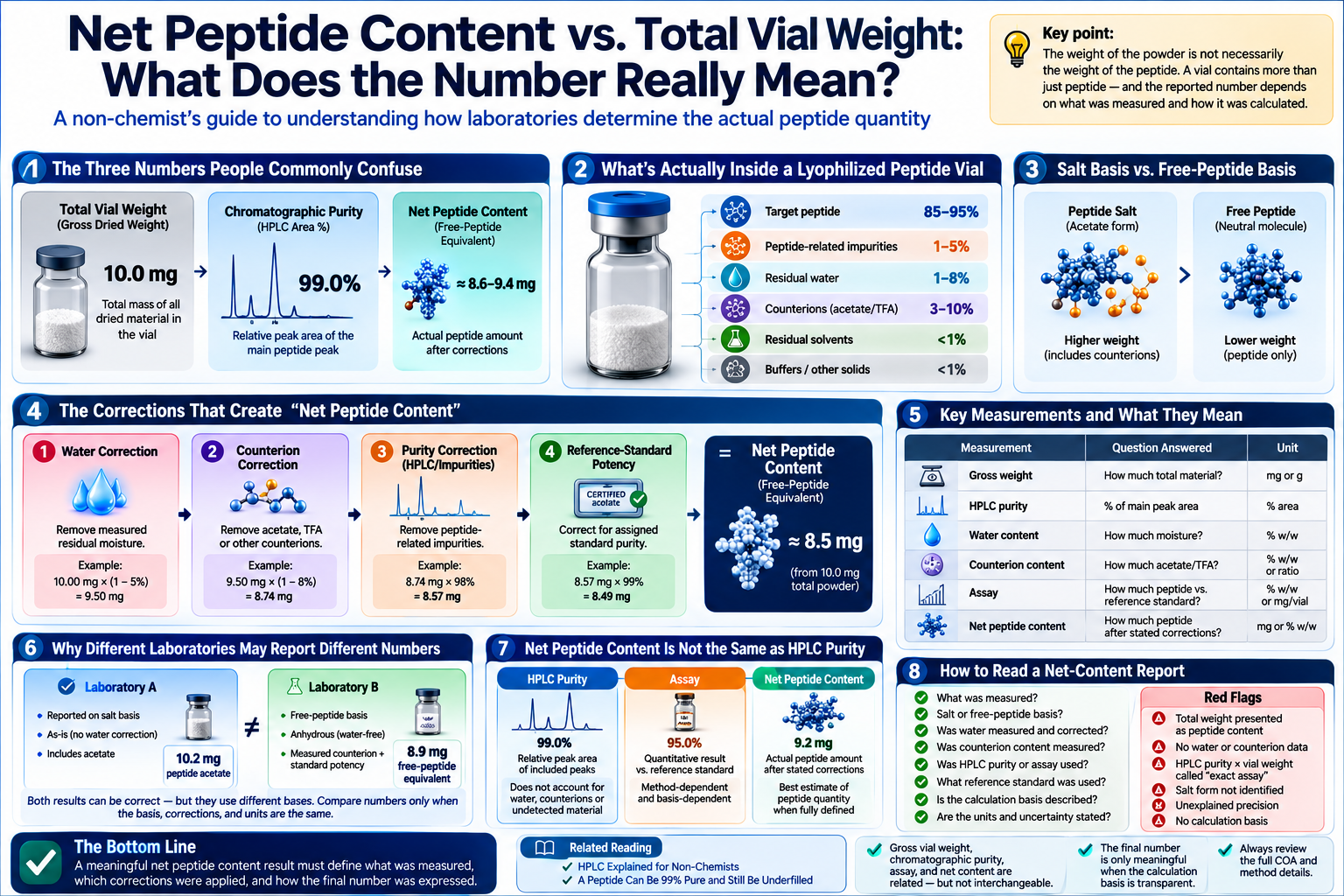
The weight of dried material in a vial is not automatically the weight of the peptide itself. A lyophilized sample may also contain water,…
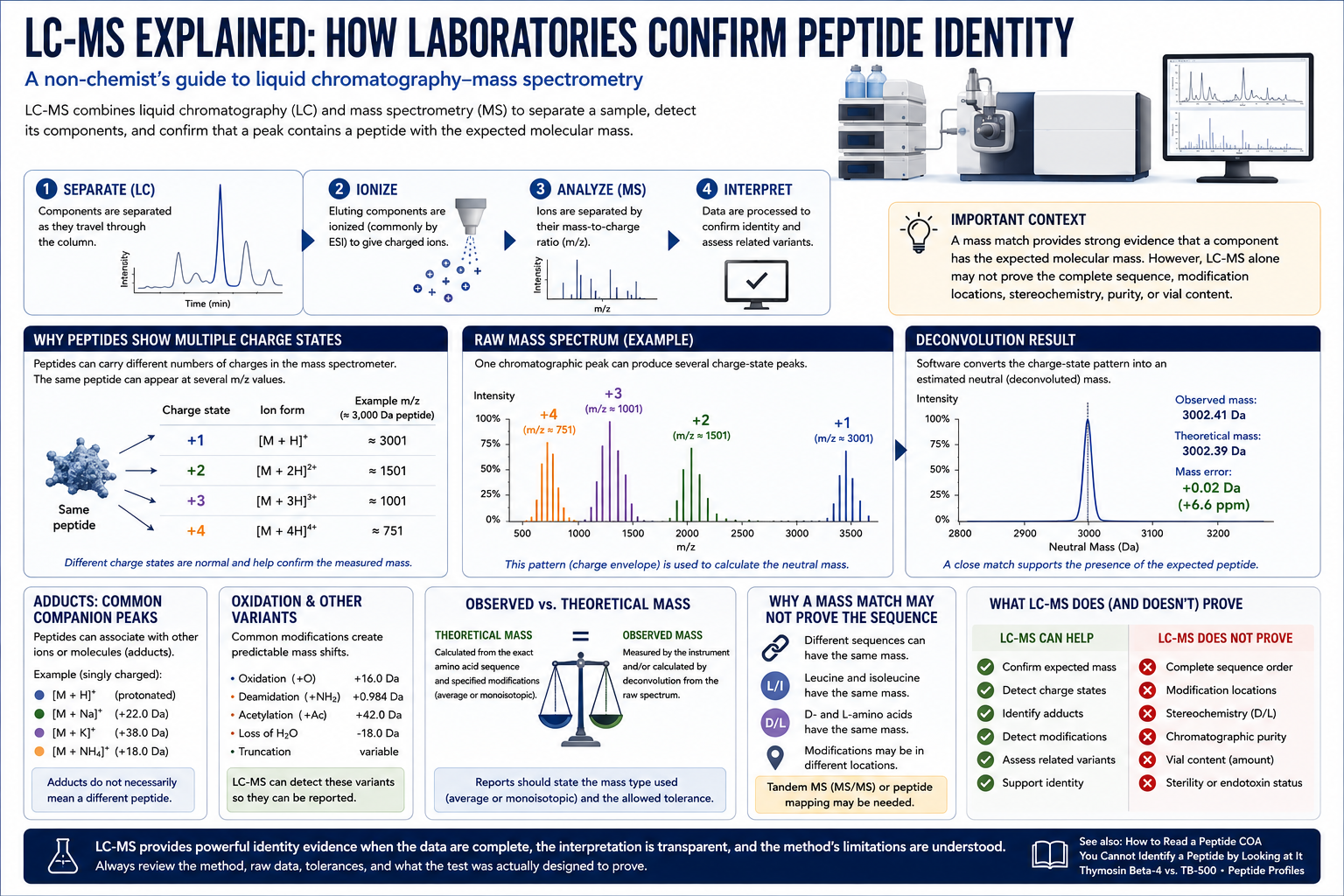
LC-MS can provide strong evidence that a sample contains a compound with the expected molecular mass. However, an intact-mass match alone may not prove…
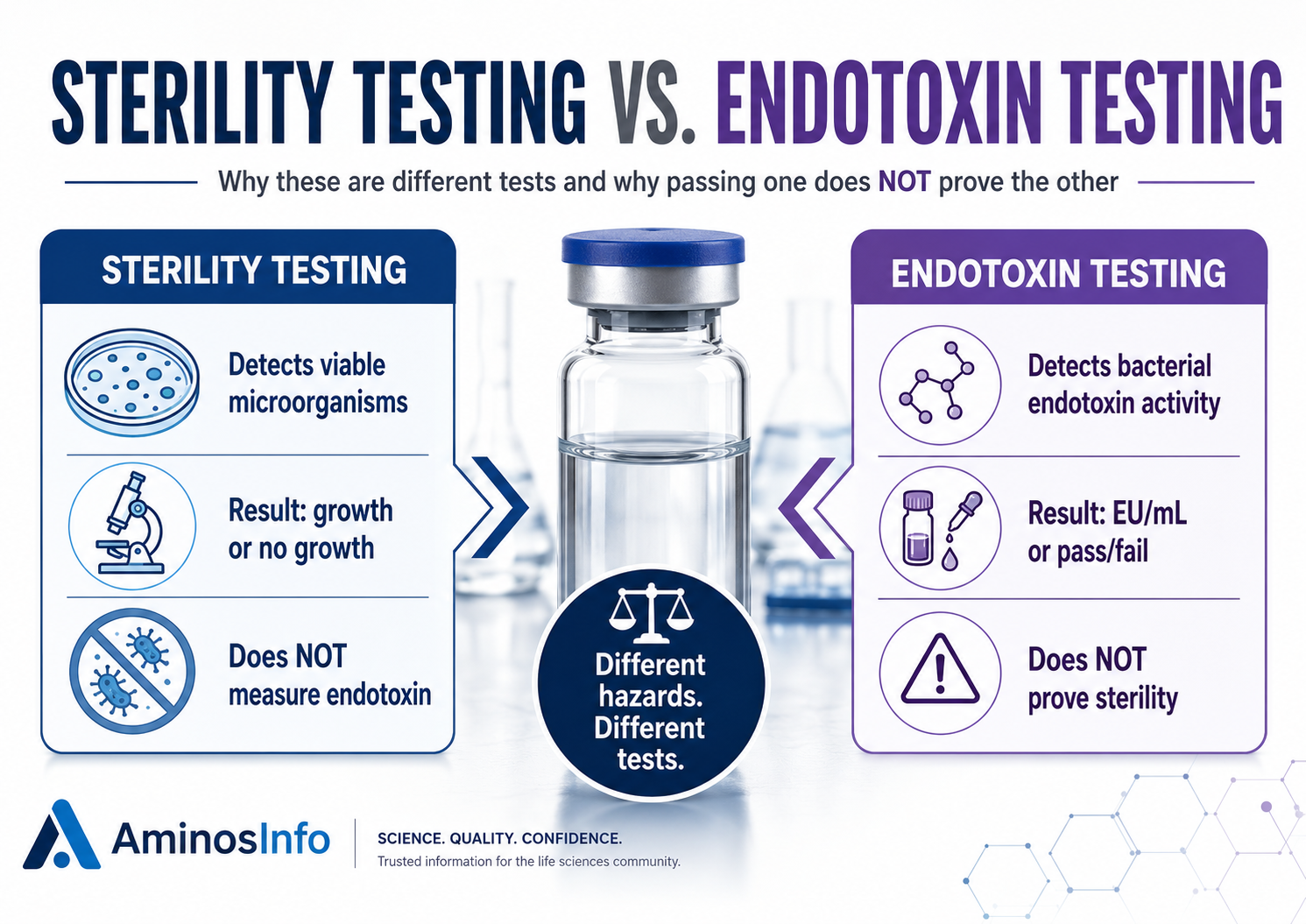
Sterility and bacterial endotoxin tests address different contamination risks. One looks for viable microorganisms under defined test conditions. The other detects or quantifies endotoxin…
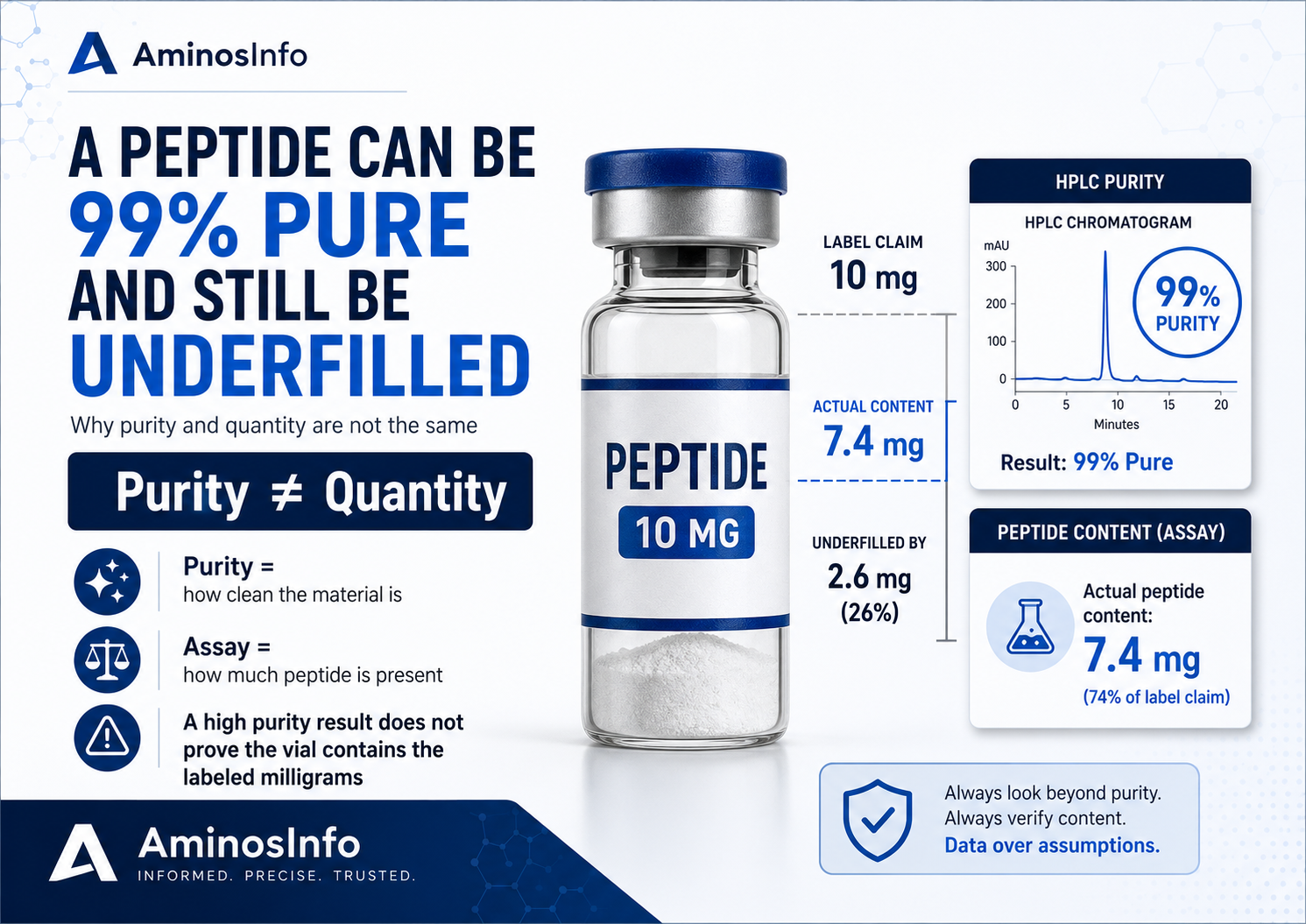
Purity tells you how clean the detected peptide material appears under a particular analytical method. It does not automatically tell you how many milligrams…
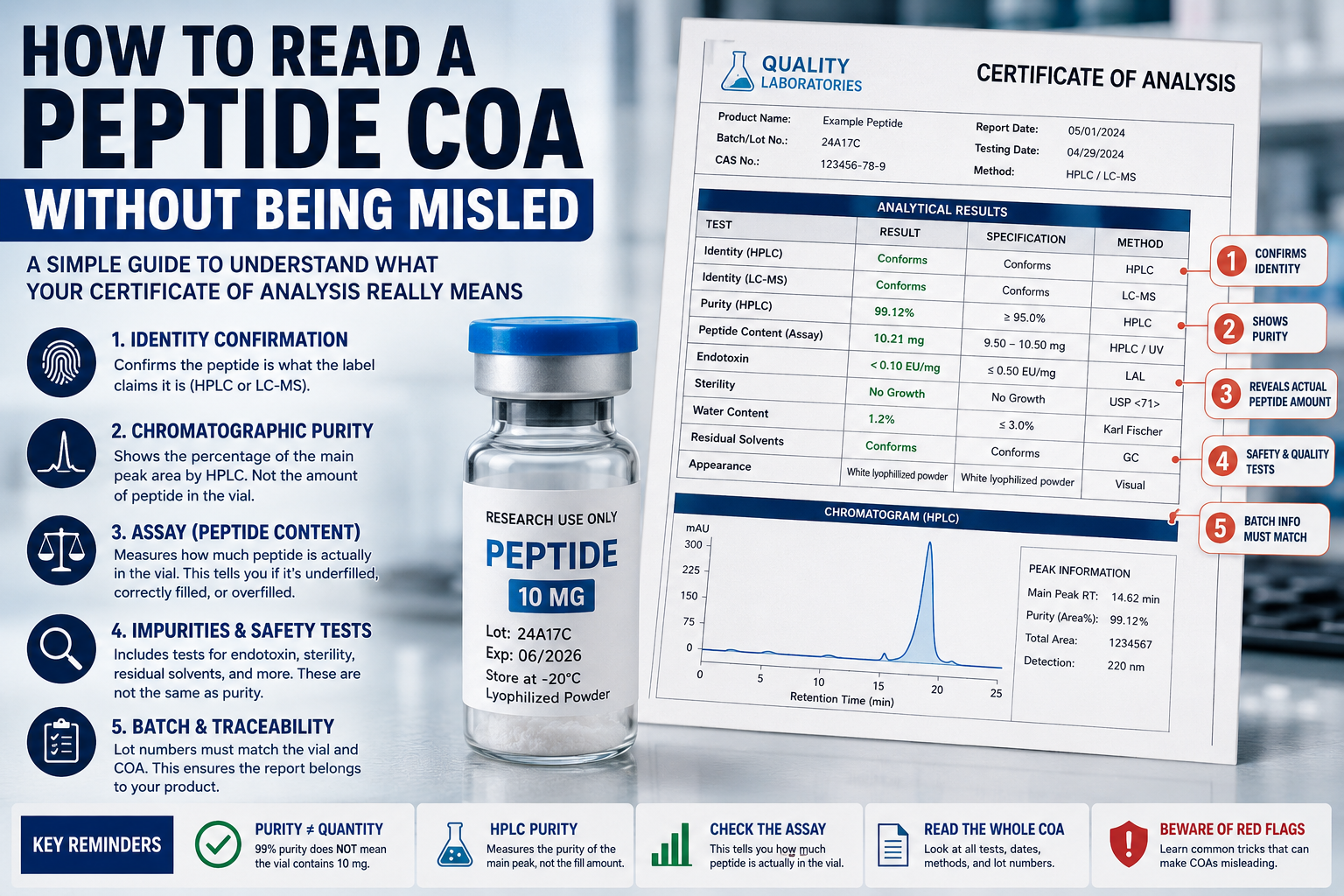
A certificate of analysis can contain useful evidence—or create false confidence. This guide explains how to separate identity, chromatographic purity, assay, vial quantity, impurities,…
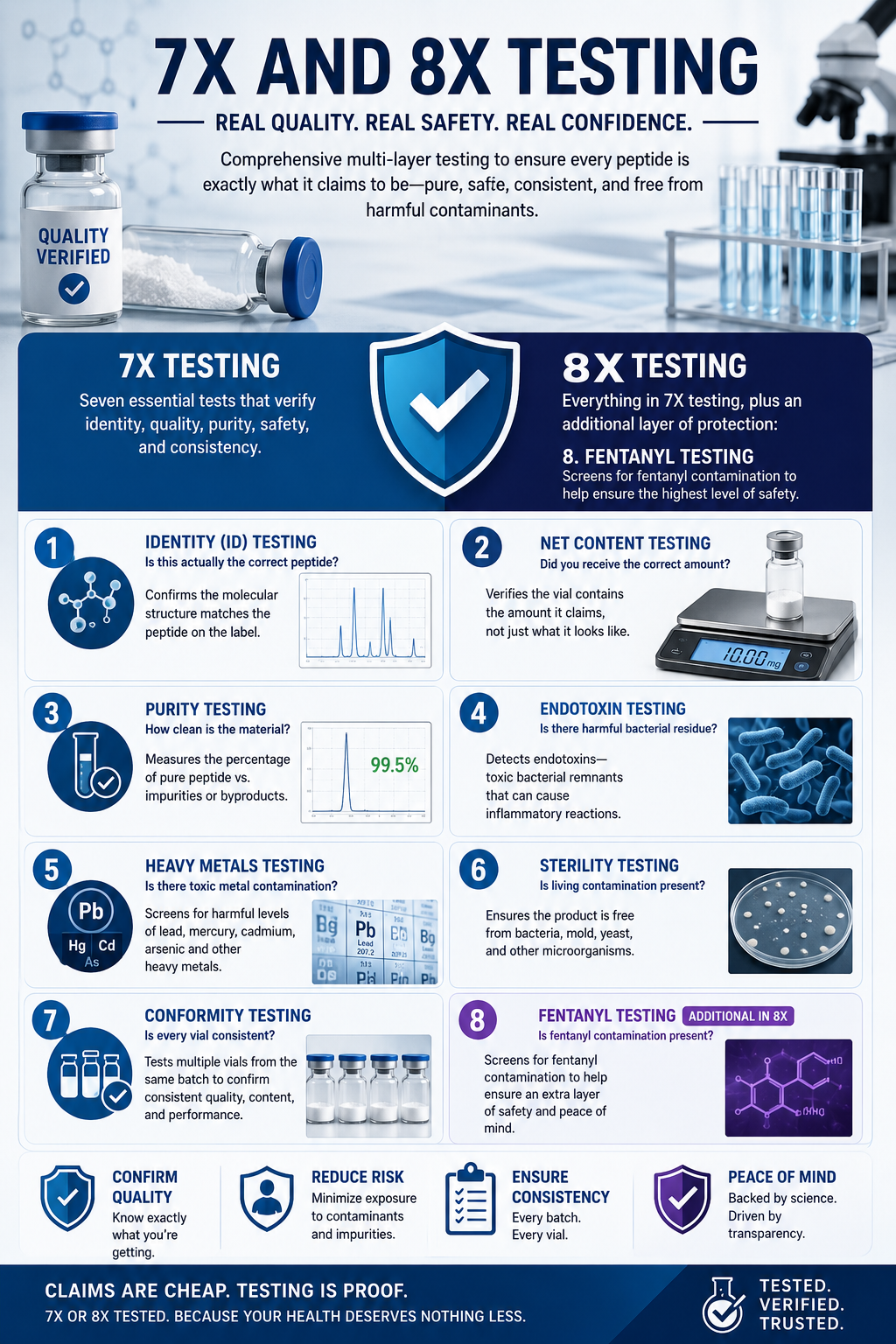
Peptide Quality-Control Education 7X and 8X Peptide Testing: What Real Quality Control Means 7X and 8X peptide testing describe supplier-defined testing programs that combine…
Endotoxin Testing in Peptide Products Why It Matters More Than Most People Realize Introduction When people evaluate peptide quality, they often focus on terms…
Multi-Vial Conformity Testing: Why One Vial Is Not Enough In the peptide industry, one of the biggest problems hiding in plain sight is something…