Endotoxin Testing in Peptide Products
Why It Matters More Than Most People Realize
Introduction
When people evaluate peptide quality, they often focus on terms like purity, HPLC testing, or mass accuracy.
But one of the most important quality control measures in peptide manufacturing is frequently overlooked:
Endotoxin testing.
Endotoxins are invisible contaminants that cannot be identified through standard purity testing, yet they can significantly affect product integrity, research outcomes, and biological responses.
A peptide can appear chemically pure, test at extremely high percentages on paper, and still contain endotoxin contamination.
This is why endotoxin testing is considered a critical component of quality assurance across therapeutic, cosmetic, and research-use peptide products.
What Are Endotoxins?
Endotoxins are toxic molecules called lipopolysaccharides (LPS) found in the outer membrane of certain bacteria known as Gram-negative bacteria.
The biologically active portion of endotoxin—known as lipid A—is capable of triggering powerful immune and inflammatory responses.
An important fact many people misunderstand:
Endotoxins can remain present even when bacteria are no longer alive.
In other words:
A product may be sterile and free of living microorganisms while still containing biologically active endotoxins.
Because endotoxins are highly stable and resistant to many environmental and sterilization processes, they represent one of the most important hidden contamination risks in manufacturing.
Why Endotoxins Matter
Even extremely small amounts of endotoxin can influence biological systems.
Exposure has been associated with inflammatory responses that may include:
- Fever
- Chills
- Headache
- Fatigue
- Muscle discomfort
- Nausea
- Immune activation
In more severe circumstances, excessive endotoxin exposure may contribute to significant inflammatory complications.
This is one reason endotoxins are treated as a major quality concern across pharmaceutical and research industries.
Why High Purity Does NOT Equal Low Endotoxin
One of the biggest misconceptions in the peptide industry is:
“My peptide is 99% pure, so it must be safe.”
That assumption is incorrect.
Tests such as:
- HPLC analysis
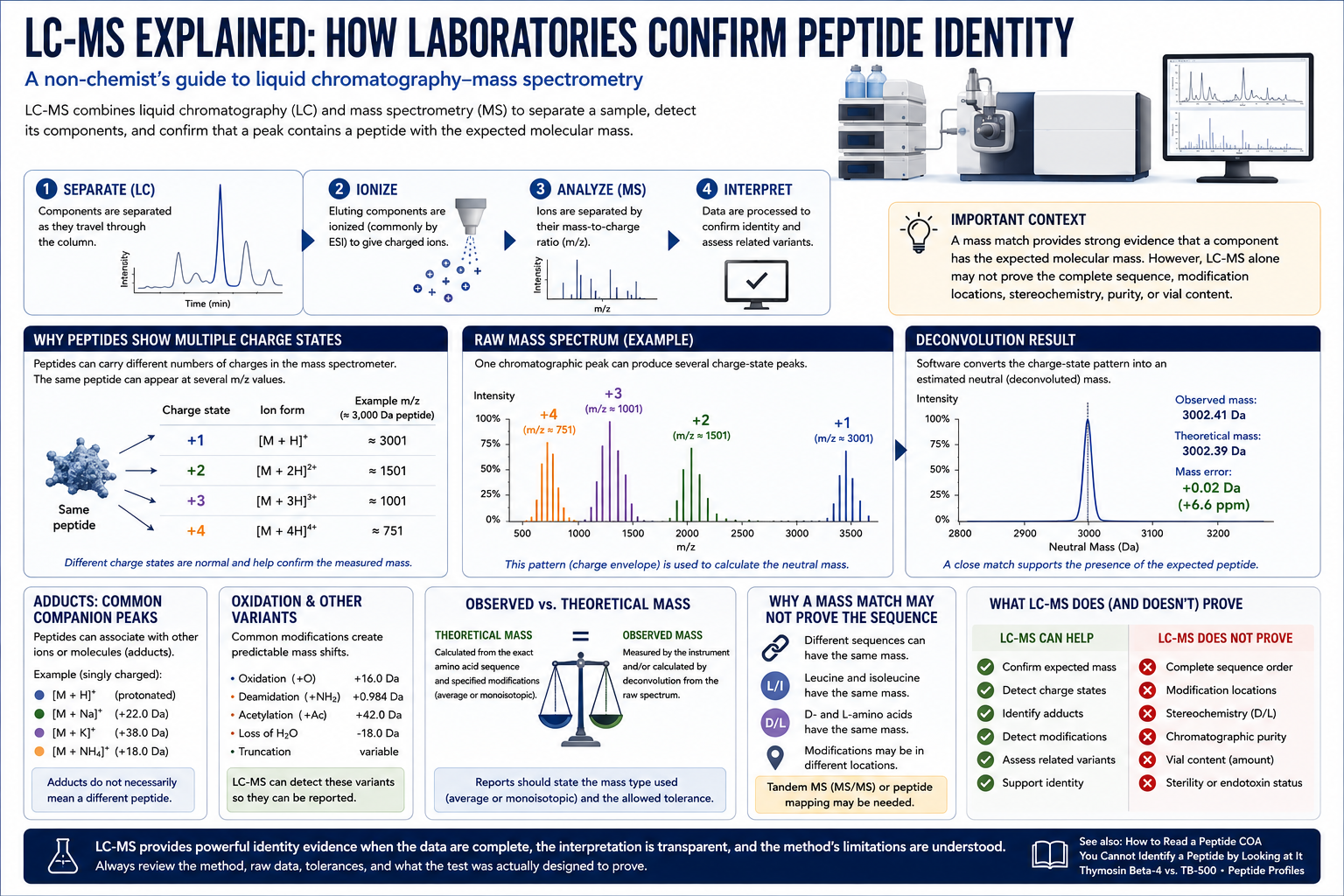
- Mass spectrometry
- Purity assays
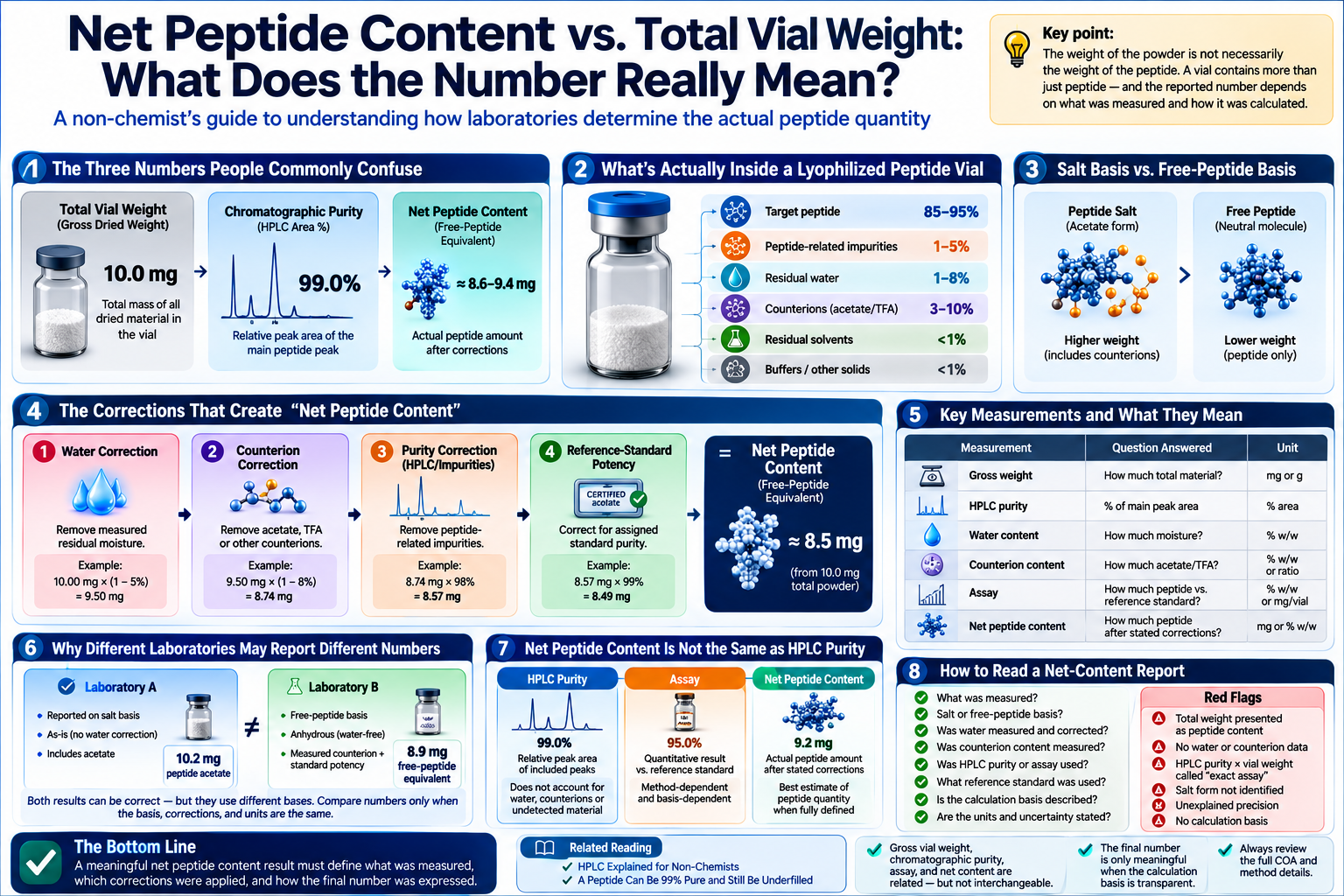
Measure chemical purity.
They do not measure endotoxin contamination.
A peptide can test at 98–99% purity and still contain biologically meaningful endotoxin levels.
This is why purity results alone should never be interpreted as proof of overall quality.
How Endotoxin Contamination Happens
Peptide synthesis itself often begins under conditions that are relatively hostile to bacterial growth.
However, contamination risk commonly increases during later stages of production, including:
- Water-based purification processes
- Chromatography steps
- Filtration
- Lyophilization (freeze-drying)
- Handling and vialing
- Packaging procedures
Potential contamination sources may include:
- Water systems
- Equipment surfaces
- Tubing and filters
- Packaging materials
- Environmental particulates
Because endotoxins can strongly adhere to surfaces, contamination can be difficult to eliminate once introduced.
How Endotoxin Testing Works
1. Limulus Amebocyte Lysate (LAL) Testing
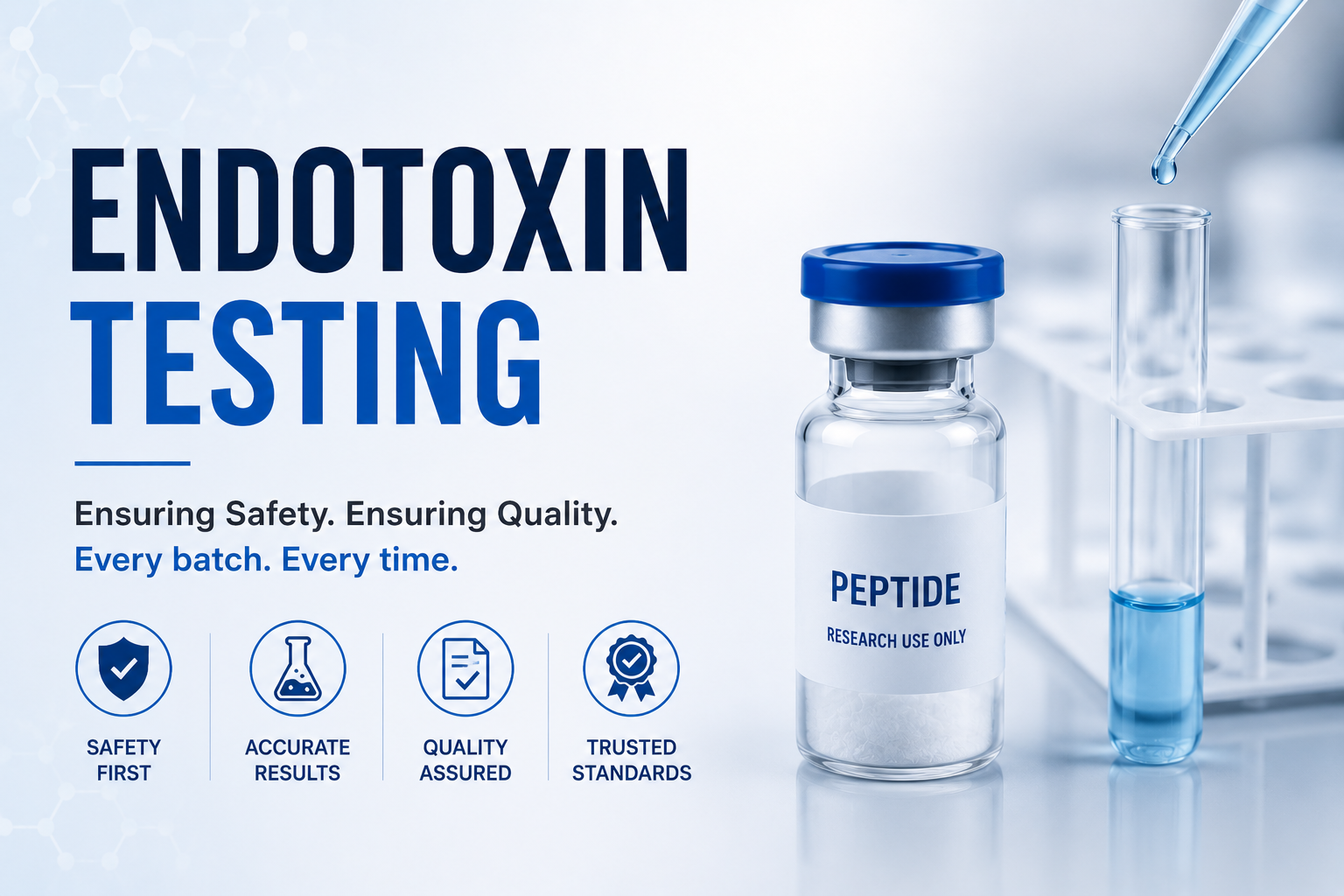
The most widely used method for endotoxin detection is the Limulus Amebocyte Lysate (LAL) assay.
This method uses a naturally occurring biological reaction derived from horseshoe crab blood cells, which react in the presence of endotoxin.
When endotoxin is present, measurable changes occur that allow laboratories to detect contamination—even at extremely low levels.
Several LAL testing methods exist, including:
Gel-Clot Testing
A threshold-based test used to determine whether endotoxin exceeds a specific limit.
Turbidimetric Testing
Measures changes in cloudiness to quantify endotoxin concentration.
Chromogenic Testing
Uses color-based reactions to provide highly sensitive quantitative measurements.
For decades, LAL testing has served as a global benchmark for endotoxin analysis.
2. Recombinant Factor C (rFC) Testing
A newer alternative is Recombinant Factor C (rFC) testing.
Rather than relying on horseshoe crab-derived material, rFC uses a laboratory-engineered endotoxin-sensitive enzyme.
Benefits may include:
- High specificity
- Consistent reagent quality
- Improved sustainability
- Reduced biological variability
When properly validated, rFC testing is increasingly recognized as an effective endotoxin detection method.
Why Endotoxin Testing Matters in Research
For research-use peptides, endotoxin contamination creates a unique problem:
It can distort scientific results.
In laboratory settings, endotoxin exposure may:
- Trigger immune activation in cells
- Alter inflammatory pathways
- Influence gene expression
- Change experimental outcomes
- Reduce reproducibility
Researchers may mistakenly attribute endotoxin-driven effects to the peptide itself, resulting in misleading conclusions and wasted resources.
In other words:
Poor endotoxin control can compromise the science itself.
Why Quality Peptide Suppliers Test for Endotoxins
Responsible peptide manufacturers understand that purity alone is not enough.
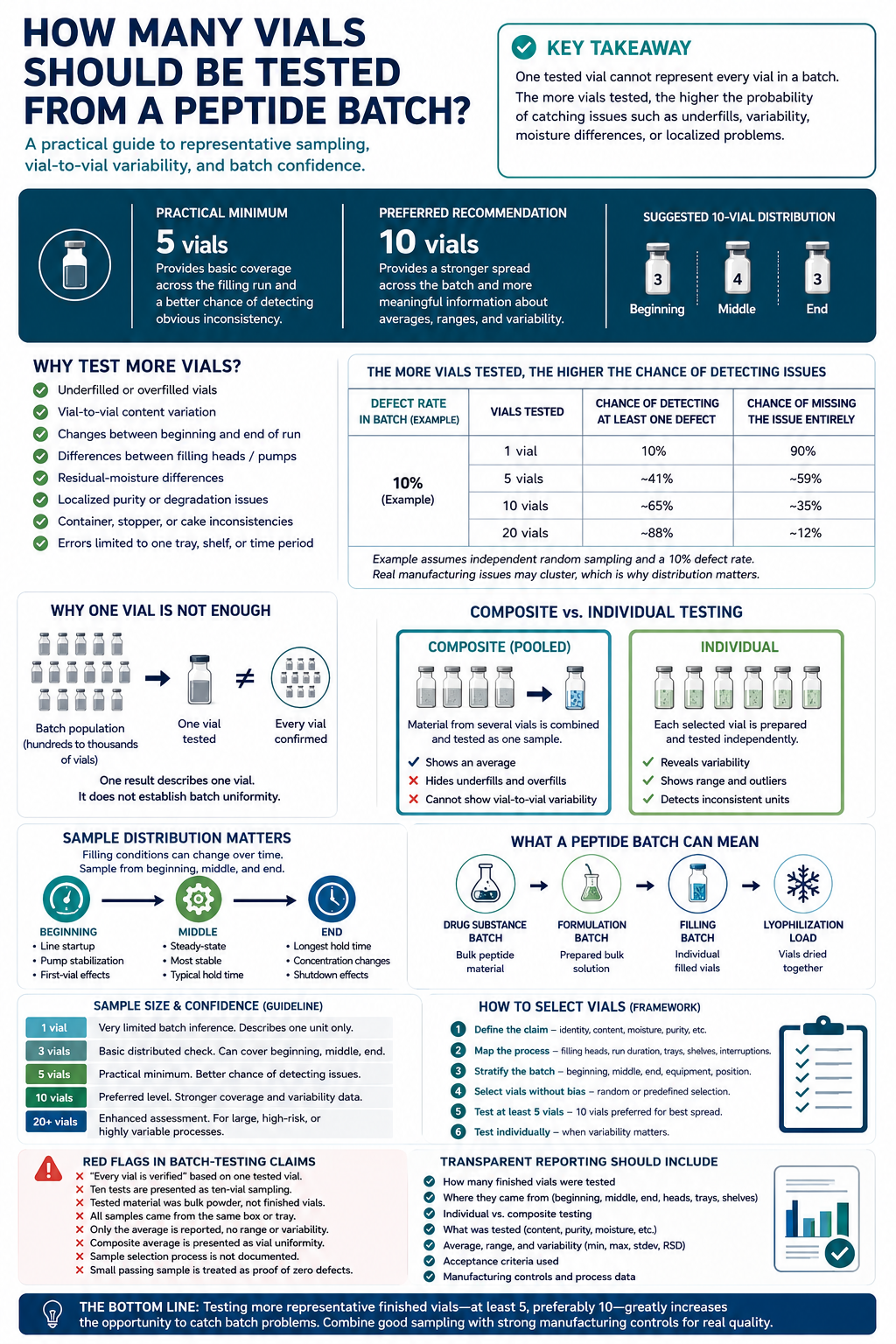
Comprehensive quality systems often include:
- Purity testing
- Identity confirmation
- Batch consistency analysis
- Endotoxin screening
- Manufacturing controls
Transparency matters.
Companies that prioritize quality typically provide clear testing documentation and maintain rigorous manufacturing standards.
Warning Signs to Watch For
When evaluating peptide suppliers, caution may be warranted if you see:
- Claims of “high purity” without broader quality metrics
- No mention of endotoxin testing
- Lack of batch-level transparency
- Emphasis on low cost over quality systems
Quality manufacturing requires more than a purity percentage.
The Simple Takeaway
A peptide can look perfect on paper and still have hidden quality issues.
Purity testing measures chemistry.
Endotoxin testing evaluates biological contamination risk.
They are not interchangeable.
For high-quality peptide products, endotoxin testing should be viewed as an important part of a broader commitment to consistency, reliability, and scientific integrity.
Important Notice
All materials are intended for laboratory research use only and are not for human consumption.