
```html Peptide Vial Education Do Peptide Vials Need to Be Vacuum Sealed? A missing “pop” or suction sound does not automatically mean a pe
“`html
Peptide Vial Education
Do Peptide Vials Need to Be Vacuum Sealed?
A missing “pop” or suction sound does not automatically mean a peptide vial is damaged, fake, or improperly sealed. Here’s what researchers should actually look for.
No. A noticeable vacuum seal is not required for a lyophilized peptide vial to be properly sealed. Stopper integrity, vial condition, powder appearance, and batch-matched documentation matter more.
Understanding How Peptide Vials Are Sealed
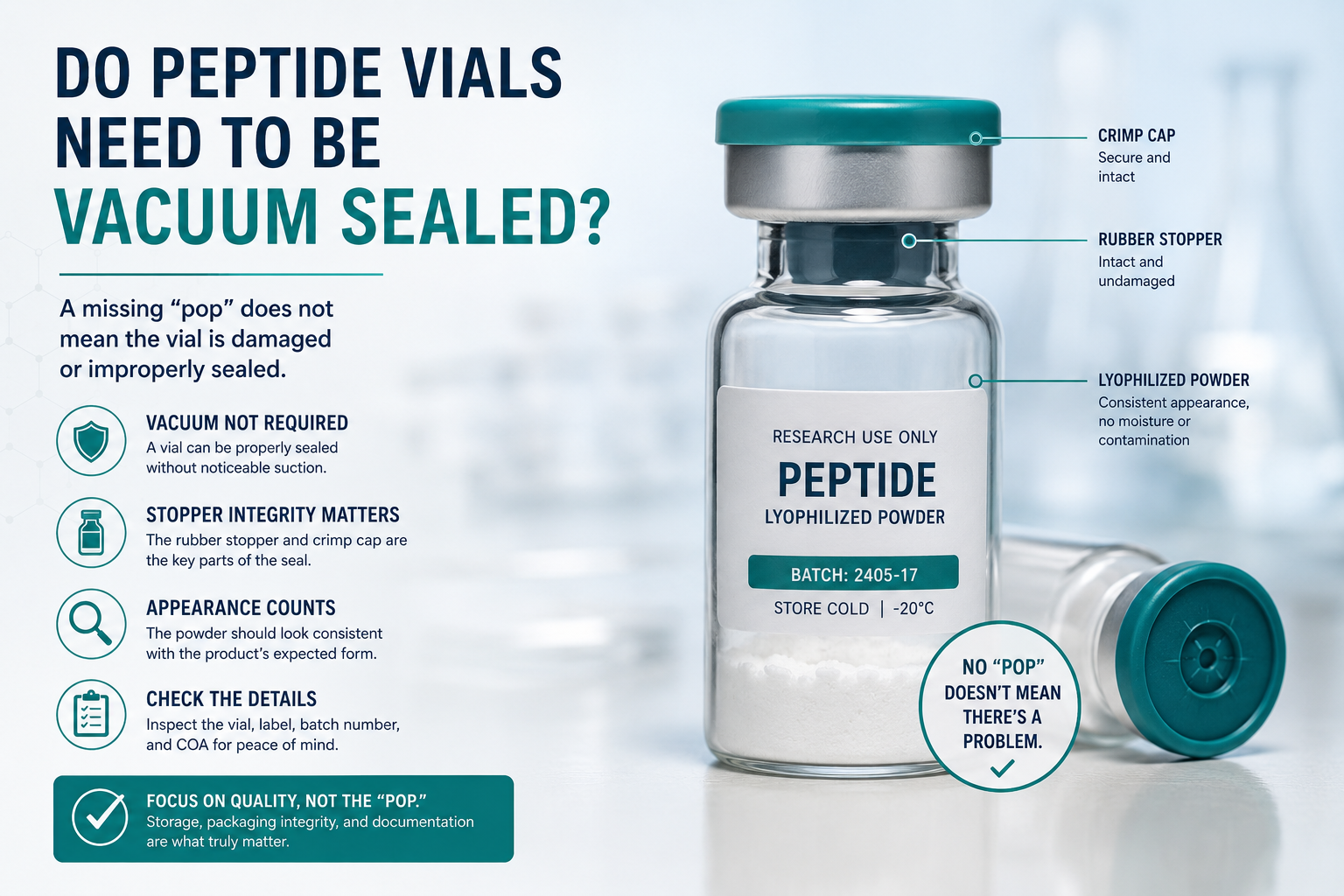
Lyophilized peptides are commonly packaged as freeze-dried powder inside a glass vial. The vial is usually sealed with a rubber stopper and secured with an aluminum or plastic crimp cap.
The rubber stopper is the main barrier that helps protect the contents from outside air, moisture, and contamination. While some vials may have noticeable suction when punctured, others may not — and both can be normal.
Vacuum Not Required
A vial can be properly sealed even if there is no obvious suction or “pop.”
Stopper Matters Most
The rubber stopper and crimp cap are the key parts of the vial’s seal.
Appearance Counts
The powder should look consistent with the product’s expected form.
Why Some Vials Have Suction and Others Do Not
During lyophilization and packaging, some vials may develop a slight vacuum. This can cause a small suction effect when the stopper is punctured. However, this is not guaranteed and is not required for long-term storage or research handling.
The absence of suction does not automatically mean the vial has been compromised. Packaging method, production process, and vial conditions can all affect whether a noticeable vacuum is present.
What Researchers Should Look For Instead
- An intact rubber stopper with no visible damage
- A secure crimp cap that does not appear loose or tampered with
- Proper labeling and batch identification
- Lyophilized powder that appears consistent with the expected product appearance
- No visible contamination, debris, mold, or unexpected moisture
- A batch number that matches the product’s available COA
Is a Missing “Pop” a Problem?
Not necessarily. Some vials may make a small “pop” or show suction when punctured, while others may not. A missing “pop” alone is not a reliable indicator of quality, sterility, or authenticity.
Researchers should evaluate the full condition of the vial rather than relying on suction alone.
When Should You Be Concerned?
A vial should be inspected carefully if any of the following are present:
- Broken or damaged stopper
- Loose or tampered crimp cap
- Unexpected liquid inside the vial
- Visible particles, mold, or debris
- Unusual discoloration
- Evidence of leakage, tampering, or improper storage
Storage and Handling Matter
Proper storage is important for maintaining peptide stability. Researchers should follow the storage recommendations provided for the specific product and avoid unnecessary exposure to heat, moisture, and light.
In most cases, storage conditions and packaging integrity are more important than whether the vial has a noticeable vacuum effect.
Final Takeaway
A peptide vial does not need to have a noticeable vacuum seal to be properly sealed. The most important factors are the condition of the stopper and cap, the appearance of the lyophilized powder, proper storage, and batch-matched quality documentation.
A missing “pop” should not be treated as automatic evidence that a vial is compromised.
Disclaimer: This article is for educational and research-use information only. Products labeled for research use only are not intended for human or animal consumption, diagnosis, treatment, or prevention of any disease.
“`
