
:root{ --ink:#16202a; --muted:#5c6975; --line:#dce3e8; --panel:#f6f8fa; --accent:#174f69; --accent2:#78521f; --warning-bg:#
Kisspeptin Scientific Overview: Mechanism, Fertility Research, and Testing
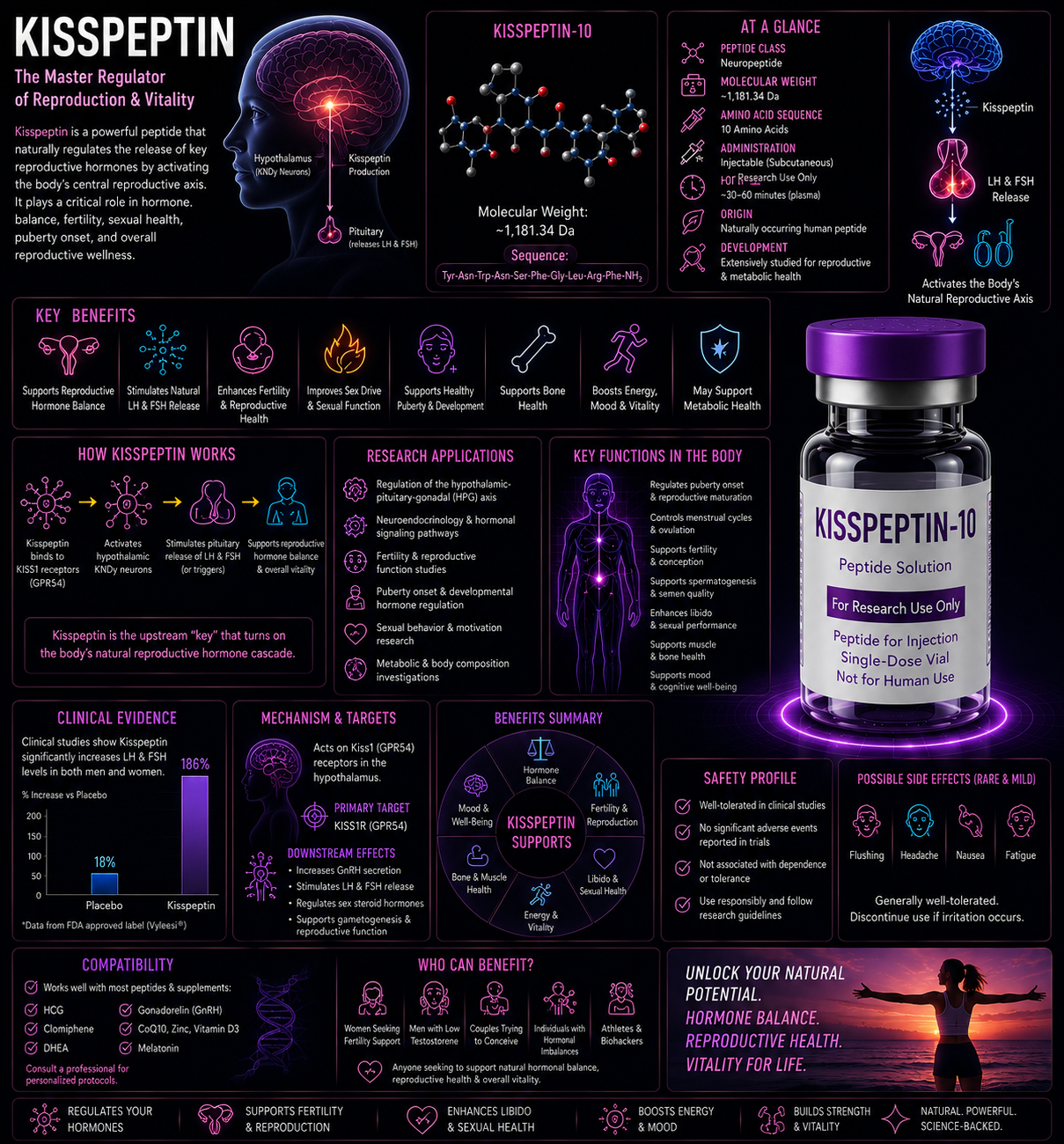
For example, Kisspeptin scientific overview content should identify the exact peptide form, because kisspeptin-10, kisspeptin-54, and related analogs differ in length, pharmacokinetics, and research use. This KISS1–KISS1R system acts upstream of GnRH and controls key reproductive endocrine signals.
What Is Kisspeptin?
First, kisspeptin is the collective name for a family of naturally occurring peptide hormones produced from the KISS1 precursor protein. Kisspeptin activates the kisspeptin receptor, now called KISS1R and historically known as GPR54.
Next, the kisspeptin–KISS1R system acts as a major upstream controller of the hypothalamic-pituitary-gonadal (HPG) axis. Kisspeptin stimulates gonadotropin-releasing hormone (GnRH) neurons, which then signal the pituitary gland to release luteinizing hormone (LH) and follicle-stimulating hormone (FSH). However, those hormones regulate ovarian and testicular function, ovulation, spermatogenesis, and sex-steroid production.
Moreover, the hypothalamus and placenta produce kisspeptin, while gonadal and peripheral tissues also show expression. Therefore, its best-established physiological role is reproductive neuroendocrine signaling.
KISS1
KISS1R, formerly GPR54
Upstream activation of GnRH
LH and FSH
KP-54, KP-14, KP-13, and KP-10
Investigational; no FDA-approved kisspeptin drug
🧬 Kisspeptin Forms and Molecular Structure
First, the human KISS1 gene encodes a precursor protein that enzymes process into several C-terminal peptides. Moreover, the commonly recognized active forms are:
- First, KP-54: This longer kisspeptin form was historically called metastin.
- Next, KP-14: This intermediate fragment retains the shared active C-terminus.
- Also, KP-13: This fragment activates the same KISS1R pathway.
- Finally, KP-10: This is the shortest widely studied active fragment.
Importantly, these peptides share the same C-terminal receptor-binding region. In addition, the final ten amino acids contain the minimal sequence required for strong KISS1R activation. Native active kisspeptins are C-terminally amidated, a modification that is important for receptor activity.
🧪 Kisspeptin-10 Sequence
H-Tyr-Asn-Trp-Asn-Ser-Phe-Gly-Leu-Arg-Phe-NH₂
One-letter notation: YNWNSFGLRF-NH₂
🧪 Kisspeptin-54
By contrast, kisspeptin-54 is a longer 54-amino-acid peptide containing the complete C-terminal KP-10 pharmacophore. For example, it generally produces a longer biological response than KP-10 because the body clears the larger peptide more slowly.
⚛️ Molecular Properties of Human Kisspeptin-10
| Molecular formula | Meanwhile, C63H83N17O14 |
|---|---|
| Average molecular weight | Approximately 1,302.4 g/mol |
| Peptide length | 10 amino-acid residues |
| C-terminal modification | Amidated |
| PubChem CID | 25240297 |
| CAS number | 374675-21-5 |
Why Molecular Values Can Differ
Therefore, reported mass values depend on whether the laboratory is describing the free peptide, an acetate or trifluoroacetate salt, a hydrate, or another counterion form. Therefore, a COA should state the material form and explain whether the assay uses an anhydrous, salt-free, or “as is” basis.
📅 Discovery Timeline
1996: KISS1 identified as a metastasis-suppressor gene
First, KISS1 was initially studied in cancer biology because expression of the gene reduced metastatic behavior in experimental melanoma models. Likewise, its reproductive role was not yet recognized.
2001: Researchers link the KISS1 receptor to metastin
Next, researchers identified the orphan G-protein-coupled receptor GPR54 as the receptor for metastin, later called kisspeptin-54.
2003: Human genetics reveals a puberty gatekeeper
Then, researchers found loss-of-function GPR54/KISS1R variants in families with hypogonadotropic hypogonadism and failure to undergo normal puberty. However, this established kisspeptin signaling as essential for human reproductive maturation.
2004–2005: Potent GnRH and gonadotropin stimulation demonstrated
Afterward, animal and human studies showed that peripheral kisspeptin administration strongly stimulates LH, FSH, and—in men—testosterone through GnRH-dependent mechanisms.
2010s: Human fertility and neuroimaging research expands
Meanwhile, researchers studied kisspeptin in hypothalamic amenorrhea, hypogonadism, IVF, oocyte maturation, sexual and emotional brain processing, and pregnancy biology.
2014–2015: Kisspeptin-54 triggers oocyte maturation
For example, clinical studies demonstrated that KP-54 could trigger final oocyte maturation in women undergoing IVF, including women at elevated risk of ovarian hyperstimulation syndrome.
2020s: Long-acting agonists and broader reproductive applications
Finally, research expanded to longer-acting KISS1R agonists, repeated IVF triggers, sexual-desire studies, diagnostic stimulation testing, and precision treatment for reproductive disorders.
📖 Research History
Importantly, kisspeptin research changed reproductive endocrinology by identifying an upstream signal that integrates sex-steroid feedback, nutritional status, stress, circadian information, and developmental timing before GnRH release.
Next, two major hypothalamic kisspeptin populations are especially important. Therefore, neurons in the arcuate nucleus participate in pulsatile GnRH secretion and overlap with neurokinin B and dynorphin, forming the so-called KNDy network. A separate population in the preoptic region is strongly involved in the preovulatory GnRH/LH surge in females.
Moreover, human research has confirmed that kisspeptin can stimulate the reproductive axis in both sexes. However, biological response depends on dose pattern, peptide form, sex, menstrual-cycle stage, baseline endocrine state, and duration of exposure. Moreover, continuous or repeated stimulation can sometimes lead to receptor desensitization or altered responsiveness.
🧠 Mechanism of Action
First, kisspeptin activates KISS1R, a seven-transmembrane G-protein-coupled receptor located prominently on GnRH neurons and in other central and peripheral tissues.
1. KISS1R binding
Next, kisspeptin binds to KISS1R on GnRH neurons. In addition, the receptor couples mainly to Gq/11 proteins.
2. Phospholipase C activation
Then, activated Gq/11 stimulates phospholipase C, which cleaves membrane phospholipids into inositol trisphosphate (IP₃) and diacylglycerol (DAG).
3. Calcium and protein kinase signaling
Afterward, IP₃ increases intracellular calcium, while DAG activates protein kinase C. For example, these signals depolarize GnRH neurons and promote GnRH secretion.
4. Pituitary gonadotropin release
Moreover, GnRH travels through the hypophyseal portal circulation to the anterior pituitary, where it stimulates gonadotroph cells to release LH and FSH.
5. Gonadal effects
Finally, LH and FSH then act on the testes and ovaries:
- First, In males, LH stimulates Leydig-cell testosterone production, while FSH supports Sertoli-cell function and spermatogenesis.
- Next, In females, LH and FSH regulate follicular growth, estradiol production, ovulation, corpus-luteum function, and progesterone production.
6. Feedback regulation
In addition, sex steroids feed back to the hypothalamus and pituitary. Likewise, kisspeptin neurons help translate both negative and positive sex-steroid feedback into changes in GnRH pulse frequency and surge activity.
🎯 Receptor Profile
| Target | Primary signaling | Biological relevance |
|---|---|---|
| KISS1R / GPR54 | Likewise, Gq/11 → PLC → IP₃/DAG → Ca²⁺ and PKC | In addition, Primary receptor for all active kisspeptin forms; stimulates GnRH neurons. |
| GnRH receptor | Pituitary Gq/11 signaling | Moreover, Downstream receptor activated indirectly after kisspeptin-induced GnRH release. |
| LH receptor | By contrast, Gs/cAMP signaling in gonads | Also, Downstream mediator of steroidogenesis and ovulation-related processes. |
| FSH receptor | Consequently, Gs/cAMP signaling in gonads | However, Downstream mediator of follicular development and spermatogenesis. |
HPG-Axis and Reproductive Physiology
Puberty initiation
Importantly, the kisspeptin–KISS1R system is essential for normal pubertal development. However, loss-of-function mutations can cause congenital hypogonadotropic hypogonadism and absent or incomplete puberty. Rare case reports associate activating variants with central precocious puberty.
Male reproductive signaling
For example, human studies show that KP-10 and KP-54 can increase LH secretion and, under appropriate physiological conditions, testosterone. Therefore, the effect is indirect and depends on an intact hypothalamic-pituitary-gonadal axis.
Therefore, researchers should not describe kisspeptin as testosterone replacement. Moreover, it does not supply testosterone, and it may not be effective when the pituitary or testes cannot respond normally.
Female reproductive signaling
Meanwhile, kisspeptin participates in GnRH pulse generation, follicular-phase signaling, sex-steroid feedback, and the preovulatory LH surge. In addition, responses vary across the menstrual cycle because estradiol and progesterone alter kisspeptin-network activity.
Pregnancy and placenta
In addition, the placenta produces large amounts of kisspeptin during pregnancy. For example, circulating levels rise substantially, and researchers have investigated them as biomarkers of placental function and pregnancy outcomes. Biomarker use remains an area of research rather than routine universal practice.
Metabolic and stress integration
Moreover, kisspeptin neurons receive information related to energy availability, leptin, insulin, stress pathways, and other neuropeptides. Likewise, this helps explain why undernutrition, overtraining, major illness, or chronic stress can suppress reproductive function.
KNDy neurons
Likewise, many arcuate kisspeptin neurons coexpress neurokinin B and dynorphin. However, neurokinin B tends to stimulate the network, while dynorphin provides inhibitory feedback. This coordinated KNDy system is central to pulsatile GnRH secretion.
Sexual and emotional brain processing
However, human neuroimaging studies suggest that kisspeptin can modulate activity in limbic and paralimbic regions involved in attraction, reward, sexual cues, bonding, and emotional processing. Therefore, these findings are early-stage and do not establish kisspeptin as an approved libido treatment.
Human Research and Potential Applications
1. IVF and oocyte maturation
For example, researchers have used KP-54 experimentally to trigger final oocyte maturation during IVF. For example, clinical studies demonstrated successful oocyte maturation, fertilization, embryo transfer, and pregnancies. Because kisspeptin stimulates endogenous GnRH and gonadotropin release, it may offer a more physiologic trigger than direct hCG exposure in selected patients.
2. Ovarian hyperstimulation syndrome research
Moreover, women at high risk of ovarian hyperstimulation syndrome have been a major focus of kisspeptin-trigger research. Early studies suggest a potentially favorable safety profile, but kisspeptin is not established as a universally approved replacement for standard IVF triggers.
3. Hypothalamic amenorrhea
In addition, KP-54 has stimulated gonadotropin release in women with hypothalamic amenorrhea. Repeated exposure may produce tachyphylaxis in some settings, demonstrating that treatment schedule and receptor desensitization are important.
4. Male hypogonadism research
Likewise, KP-10 has increased LH pulse frequency and testosterone in proof-of-concept studies of men with selected forms of secondary hypogonadism, including men with type 2 diabetes and low testosterone. This does not establish routine clinical efficacy for all causes of hypogonadism.
5. Puberty and diagnostic stimulation testing
Meanwhile, researchers are evaluating whether kisspeptin responses can help characterize delayed puberty, congenital hypogonadotropic hypogonadism, and genetic defects in reproductive signaling.
6. Sexual desire and HSDD research
However, randomized neuroimaging studies in men and women have reported changes in brain responses to sexual stimuli and attraction cues. However, larger therapeutic studies must determine whether these effects translate into durable clinical benefit.
7. Long-acting KISS1R agonists
Finally, researchers developed analogs such as MVT-602 to produce longer and more predictable reproductive-hormone responses than native KP-10. These compounds are distinct from natural kisspeptin and require separate safety and efficacy evaluation.
Safety and Regulatory Considerations
Short-term tolerability in research
First, controlled human studies have generally reported acceptable short-term tolerability, with possible effects including:
- First, Headache
- Next, Flushing or warmth
- Also, Lightheadedness
- Moreover, Nausea
- In addition, Transient injection-site discomfort
- Likewise, Temporary changes in LH, FSH, testosterone, estradiol, or progesterone
Endocrine feedback and desensitization
Importantly, repeated or continuous stimulation can alter receptor responsiveness and GnRH secretion. More stimulation is not necessarily more effective, and different forms of kisspeptin have different pharmacokinetic profiles.
Fertility and pregnancy considerations
Moreover, because kisspeptin directly influences reproductive hormone signaling and is naturally elevated in pregnancy, unsupervised exposure could have unpredictable effects on ovulation, implantation, ovarian response, or pregnancy physiology.
Hormone-sensitive conditions
In addition, any intervention that changes LH, FSH, testosterone, estradiol, or progesterone may be clinically important in people with hormone-sensitive disorders. Appropriate medical evaluation is essential in research and clinical settings.
FDA and compounding status
However, no kisspeptin drug is FDA approved. In 2024, the FDA Pharmacy Compounding Advisory Committee unanimously recommended against adding kisspeptin-10 to the 503A Bulks List because available evidence did not convincingly establish safety and effectiveness for the nominated uses. FDA materials updated in 2026 list kisspeptin-10 among bulk substances nominated without adequate support.
Unregulated product concerns
Consequently, products marketed as kisspeptin may contain the wrong fragment, counterion, concentration, or sequence. Risks include incorrect identity, degradation, oxidation, microbial contamination, endotoxin, residual solvents, and inaccurate fill amount.
🧪 Laboratory Testing Methods
| Method | Purpose | Important limitation |
|---|---|---|
| RP-HPLC or UPLC | Therefore, Separates target peptide from detectable impurities and estimates chromatographic purity. | For example, Does not prove exact identity, sequence, or vial quantity. |
| Meanwhile, LC-MS or high-resolution MS | Likewise, Confirms molecular mass and supports identity. | In addition, Does not prove sterility or full sequence correctness. |
| MS/MS peptide mapping | Moreover, Confirms fragment sequence and distinguishes KP-10 from other kisspeptin forms. | By contrast, May require complementary methods for complete structural confirmation. |
| Amino-acid analysis | Also, Supports composition and quantitative assay. | Consequently, Does not independently establish residue order. |
| C-terminal amidation analysis | However, Verifies the biologically important terminal amide. | Therefore, Not always demonstrated by routine HPLC alone. |
| Counterion testing | For example, Measures acetate or trifluoroacetate associated with synthetic peptide salts. | Meanwhile, Counterion burden affects mass and content calculations. |
| Likewise, Assay / net peptide content | In addition, Measures the actual quantity of target peptide. | Moreover, do not infer net peptide content from HPLC area purity. |
| Water determination | By contrast, Karl Fischer testing measures moisture. | Also, Does not confirm identity. |
| Residual-solvent testing | Consequently, Detects solvents used in synthesis and purification. | However, Does not establish biological activity. |
| Elemental impurities | Therefore, ICP-MS measures toxic metals and process contaminants. | For example, Does not establish microbial safety. |
| Endotoxin testing | Meanwhile, LAL or recombinant-factor testing detects bacterial endotoxin. | Likewise, A passing result does not prove sterility. |
| Sterility testing | In addition, Evaluates viable bacterial and fungal contamination. | Moreover, Does not prove identity or labeled concentration. |
📄 How to Interpret a Kisspeptin COA
1. Identify the exact peptide
First, the report must specify KP-10, KP-54, KP-14, KP-13, or another analog. A generic “kisspeptin” label is not sufficiently precise.
2. Verify sequence and species
Next, human and animal kisspeptin sequences can differ. The COA should identify the species sequence and provide sequence confirmation when appropriate.
3. Confirm C-terminal amidation
Moreover, the native receptor-active C-terminal region contains an amide. An incorrectly terminated peptide may have different receptor activity.
4. Separate purity from net content
- Identity First, asks whether the sample contains the claimed kisspeptin form.
- Purity Next, estimates the relative amount of the main chromatographic peak.
- Assay or net content Also, determines the actual quantity of peptide present.
5. Account for salt and water
In addition, acetate, trifluoroacetate, water, and other nonpeptide material contribute to vial mass. A vial’s gross powder weight is not the same as net peptide content.
6. Interpret mass-spectrometry charge states
Likewise, peptides often appear as multiply charged ions. The laboratory should identify the expected charge state or report a deconvoluted neutral mass.
7. Review degradation and oxidation
However, longer peptides may form truncated products or other degradation species. Therefore, reviewers should examine HPLC and mass spectrometry together rather than relying only on one purity percentage.
8. Confirm batch and laboratory details
Finally, the lot number, sample identifier, methods, dates, numerical results, acceptance criteria, laboratory identity, and authorized reviewer should all be present.
📊 Kisspeptin vs hCG vs Testagen vs CJC-1295/Ipamorelin
Mechanisms and Clinical Context
| Feature | Kisspeptin | hCG | Testagen | CJC-1295 / Ipamorelin |
|---|---|---|---|---|
| Main research focus | By contrast, GnRH and HPG-axis regulation | LH-receptor stimulation | Proposed endocrine bioregulation | Growth-hormone secretion |
| Primary mechanism | Also, KISS1R → GnRH → LH/FSH | Direct LH/CG-receptor agonism | Consequently, Mechanism not established to pharmaceutical standards | However, GHRH receptor and ghrelin receptor signaling |
| Site of action | Therefore, Primarily hypothalamic GnRH neurons | For example, Primarily gonadal LH receptors | Uncertain | Meanwhile, Pituitary and hypothalamic GH axis |
| Testosterone effect | Indirect and axis-dependent | Likewise, Direct testicular stimulation through LH receptor | Experimental and unproven | In addition, Not a primary direct effect |
| Fertility relevance | High research relevance | Established clinical relevance | Insufficient evidence | Low direct relevance |
| FDA-approved drug? | No | Moreover, Yes, for specific indications | No | By contrast, No FDA-approved CJC-1295/ipamorelin combination |
Kisspeptin-10 vs Kisspeptin-54
Peptide-Length and Duration Differences
| Property | Kisspeptin-10 | Kisspeptin-54 |
|---|---|---|
| Length | 10 amino acids | 54 amino acids |
| Receptor | KISS1R | KISS1R |
| Active pharmacophore | Also, Minimal C-terminal active sequence | Consequently, Contains the same C-terminal KP-10 region |
| Typical duration | Shorter | Longer |
| Common research use | However, Acute stimulation, pulse studies, neuroendocrine testing | Therefore, IVF triggers, longer endocrine stimulation, reproductive studies |
Kisspeptin vs GnRH vs hCG
| Signal level | Compound | Immediate target | Main downstream effect |
|---|---|---|---|
| Upstream hypothalamic | Kisspeptin | For example, KISS1R on GnRH neurons | Endogenous GnRH release |
| Hypothalamic hormone | GnRH | Meanwhile, GnRH receptor on pituitary gonadotrophs | Likewise, LH and FSH release |
| Gonadal level | hCG | LH/CG receptor | In addition, Direct luteal or Leydig-cell stimulation |
🔗 Related Peptides and Pathways
- GnRH: First, The immediate downstream hypothalamic hormone released after KISS1R activation.
- Neurokinin B: Next, A stimulatory KNDy neuropeptide involved in GnRH pulse generation.
- Dynorphin: Also, An inhibitory KNDy peptide that helps terminate pulse activity.
- hCG: Moreover, A gonadotropin that directly activates the LH/CG receptor.
- LH and FSH: In addition, Pituitary glycoprotein hormones released downstream of GnRH.
- MVT-602: Likewise, A longer-acting synthetic KISS1R agonist under investigation.
🖼️ Original Diagram Specifications
Diagram 1: Kisspeptin peptide family
Moreover, show enzymes cleaving the KISS1 precursor into KP-54, KP-14, KP-13, and KP-10. Highlight the shared C-terminal YNWNSFGLRF-NH₂ receptor-binding region.
Diagram 2: Complete HPG-axis pathway
By contrast, Illustrate hypothalamic kisspeptin neurons activating KISS1R on GnRH neurons, GnRH reaching the pituitary, LH and FSH entering circulation, and downstream ovarian and testicular effects. Add sex-steroid negative and positive feedback arrows.
Diagram 3: KNDy pulse generator
Also, Show arcuate kisspeptin neurons coexpressing neurokinin B and dynorphin. Use neurokinin B as a stimulatory loop and dynorphin as an inhibitory loop controlling pulsatile kisspeptin/GnRH output.
Diagram 4: Kisspeptin vs hCG in IVF
Consequently, Use a split pathway. Kisspeptin should act through KISS1R → endogenous GnRH → LH/FSH surge, while hCG should act directly on the LH/CG receptor at the ovary.
Diagram 5: Molecular testing workflow
However, Show sample receipt, batch verification, HPLC purity, LC-MS identity, peptide mapping, net peptide assay, counterion and water testing, endotoxin, sterility, and final COA review.
❓ Frequently Asked Questions
Is kisspeptin a peptide?
Therefore, Yes. Kisspeptins are naturally occurring peptide hormones produced from the KISS1 precursor protein.
What is the difference between kisspeptin-10 and kisspeptin-54?
For example, Both activate KISS1R and share the same active C-terminal sequence. KP-10 is the minimal ten-residue active fragment, while KP-54 is longer and generally produces a more sustained response.
Does kisspeptin increase testosterone?
Meanwhile, It can increase LH and testosterone in some men with an intact responsive HPG axis. The effect is indirect and depends on GnRH, pituitary, and testicular function.
Is kisspeptin testosterone replacement?
Likewise, No. Kisspeptin stimulates upstream reproductive signaling; it does not supply testosterone.
Is kisspeptin related to fertility?
In addition, Yes. It is essential for puberty, GnRH secretion, ovulation, gonadotropin release, and normal reproductive function.
Can kisspeptin trigger ovulation?
Moreover, KP-54 has triggered final oocyte maturation in IVF research. However, readers should not confuse that investigational use with routine approved treatment.
Is kisspeptin FDA approved?
By contrast, No kisspeptin product is currently FDA approved.
How is kisspeptin different from hCG?
Also, Kisspeptin acts upstream by stimulating GnRH and endogenous LH/FSH release. hCG acts directly on the LH/CG receptor in gonadal tissue.
Does kisspeptin increase libido?
Consequently, Human brain-imaging studies suggest effects on sexual and emotional processing, but kisspeptin is not approved as a libido treatment and clinical efficacy remains investigational.
Can kisspeptin restart puberty?
However, Kisspeptin signaling is necessary for normal puberty, but treatment depends on the cause of pubertal delay. People with KISS1R defects may not respond normally because the defect impairs the receptor itself.
What is the most important COA detail?
Therefore, The report must identify the exact kisspeptin fragment and batch. “Kisspeptin” without specifying KP-10, KP-54, or another form is incomplete.
Does 99% HPLC purity confirm the labeled amount?
For example, No. HPLC area purity and net peptide content are different measurements. Therefore, laboratories need a separate quantitative assay.
Kisspeptin Scientific Overview: Final Thoughts
In conclusion, kisspeptin is a central reproductive neuropeptide system that links developmental, hormonal, nutritional, and environmental signals to GnRH secretion. Through KISS1R, it controls the upstream release of GnRH and the downstream pituitary secretion of LH and FSH.
Moreover, human research has established strong biological effects on gonadotropin secretion and has produced promising findings in IVF, oocyte maturation, selected forms of hypogonadism, puberty research, and sexual-brain processing. However, no kisspeptin product is FDA approved, and evidence does not support treating it as a routine hormone-optimization peptide.
Therefore, scientific and analytical precision is especially important because kisspeptin exists in multiple active forms. Any research article, product description, or COA should clearly identify the exact sequence, molecular form, assay basis, and supporting laboratory methods.
📚 References
- For example, National Center for Biotechnology Information. PubChem Compound Summary: Kisspeptin-10.
- Moreover, National Center for Biotechnology Information. PubChem Compound Summary: Kisspeptin.
- In addition, de Roux N, et al. Hypogonadotropic hypogonadism due to loss of function of the KiSS1-derived peptide receptor GPR54. Proceedings of the National Academy of Sciences. 2003.
- However, Seminara SB, et al. The GPR54 gene as a regulator of puberty. New England Journal of Medicine. 2003.
- Therefore, Gianetti E, Seminara S. Kisspeptin and KISS1R: a critical pathway in the reproductive system. Reproduction. 2008.
- Likewise, Tena-Sempere M. GPR54 and kisspeptin in reproduction. Human Reproduction Update. 2006.
- Meanwhile, Colledge WH. GPR54 and puberty. Trends in Endocrinology and Metabolism. 2004.
- By contrast, Seminara SB. Kisspeptin in reproduction. Seminars in Reproductive Medicine. 2007.
- Finally, Skorupskaite K, George JT, Anderson RA. The kisspeptin-GnRH pathway in human reproductive health and disease. Human Reproduction Update. 2014.
- Consequently, Clarke H, Dhillo WS, Jayasena CN. Comprehensive review on kisspeptin and its role in reproductive disorders. Endocrinology and Metabolism. 2015.
- Also, Dhillo WS, et al. Kisspeptin-54 stimulates the hypothalamic-pituitary-gonadal axis in human males. Journal of Clinical Endocrinology & Metabolism. 2005.
- Instead, George JT, et al. Kisspeptin-10 is a potent stimulator of LH and increases pulse frequency in men. Journal of Clinical Endocrinology & Metabolism. 2011.
- For example, George JT, et al. Kisspeptin-10 stimulates testosterone and LH secretion in hypotestosteronaemic men with type 2 diabetes. Clinical Endocrinology. 2013.
- Moreover, Thompson EL, et al. Central and peripheral administration of kisspeptin-10 stimulates the HPG axis. Journal of Neuroendocrinology. 2004.
- In addition, Thompson EL, et al. Chronic subcutaneous administration of kisspeptin-54 causes tachyphylaxis in the male rat. American Journal of Physiology. 2006.
- However, Jayasena CN, et al. Kisspeptin-54 triggers egg maturation in women undergoing IVF. Journal of Clinical Investigation. 2014.
- Therefore, Abbara A, et al. Efficacy of kisspeptin-54 to trigger oocyte maturation in women at high risk of OHSS. Journal of Clinical Endocrinology & Metabolism. 2015.
- Likewise, ClinicalTrials.gov. Use of kisspeptin in in vitro fertilisation.
- Meanwhile, Kasum M, et al. Kisspeptin as a promising oocyte maturation trigger for IVF. Gynecological Endocrinology. 2017.
- By contrast, Abbara A, et al. Novel concepts for inducing final oocyte maturation in IVF treatment. Endocrine Reviews. 2018.
- Finally, Sharma B, et al. Use of kisspeptin to trigger oocyte maturation during IVF treatment. Human Reproduction Update. 2022.
- Consequently, Owens LA, et al. Direct and indirect effects of kisspeptin-54 on granulosa lutein cell function. Human Reproduction. 2018.
- Also, Abbara A, et al. Endocrine requirements for oocyte maturation following hCG, GnRH agonist, and kisspeptin. Journal of Clinical Endocrinology & Metabolism. 2020.
- Instead, Abbara A, et al. A kisspeptin receptor agonist has therapeutic potential for female reproductive disorders. Journal of Clinical Investigation. 2020.
- For example, Comninos AN, et al. Kisspeptin modulates sexual and emotional brain processing in humans. Journal of Clinical Investigation. 2017.
- Moreover, Comninos AN, et al. Modulation of resting brain connectivity by kisspeptin. Journal of Clinical Endocrinology & Metabolism. 2018.
- In addition, Yang L, et al. Kisspeptin enhances brain responses to olfactory and visual cues of attraction in men. JCI Insight. 2020.
- However, Mills EG, et al. Effects of kisspeptin on sexual brain processing and penile tumescence in men with HSDD. JAMA Network Open. 2023.
- Therefore, Thurston L, et al. Effects of kisspeptin administration in women with HSDD. JAMA Network Open. 2022.
- Likewise, Terasawa E, Fernandez DL. Kisspeptin and puberty in mammals. Advances in Experimental Medicine and Biology. 2013.
- Meanwhile, Sam AH, et al. Kisspeptin: a critical regulator of puberty and reproductive function. Current Drug Targets. 2010.
- By contrast, Trevisan CM, et al. Kisspeptin/GPR54 system: what do we know about its role in human reproduction?. International Journal of Endocrinology. 2018.
- Finally, FDA Pharmacy Compounding Advisory Committee. October 29, 2024 meeting summary and kisspeptin-10 vote.
- Consequently, U.S. Food and Drug Administration. Bulk Drug Substances Nominated for Use in Compounding Under Section 503A. Updated May 14, 2026.
- Also, International Council for Harmonisation. ICH Q2(R2): Validation of Analytical Procedures.
- Instead, United States Pharmacopeia. General Chapter <621>, Chromatography.
- For example, United States Pharmacopeia. General Chapter <71>, Sterility Tests.
- Moreover, United States Pharmacopeia. General Chapter <85>, Bacterial Endotoxins Test.
- In addition, United States Pharmacopeia. General Chapters <232> and <233>, Elemental Impurities.
- However, International Council for Harmonisation. ICH Q3C: Impurities—Guideline for Residual Solvents.
- Therefore, International Council for Harmonisation. ICH Q6B: Specifications—Test Procedures and Acceptance Criteria for Biotechnological/Biological Products.
Foundational and Reproductive-Endocrine Sources
IVF, Neuroimaging, Regulatory, and Analytical Sources
Meanwhile, this article review checked regulatory status, FDA compounding materials, molecular properties, and key human research in July 2026. Consult current primary sources before relying on time-sensitive medical or regulatory information.