Antioxidant defense · detoxification · cellular resilience
Glutathione: The Cellular Redox System Behind Defense, Detoxification & Resilience
What GSH actually is, how cells build and recycle it, why the liver, mitochondria and immune system depend on it, how environmental exposures, alcohol and exercise change glutathione demand, what low levels can—and cannot—tell us, how oral glutathione compares with NAC, GlyNAC and modified forms, what the skin evidence really shows, and why injectable quality requires far more than a certificate of analysis.
Article contents
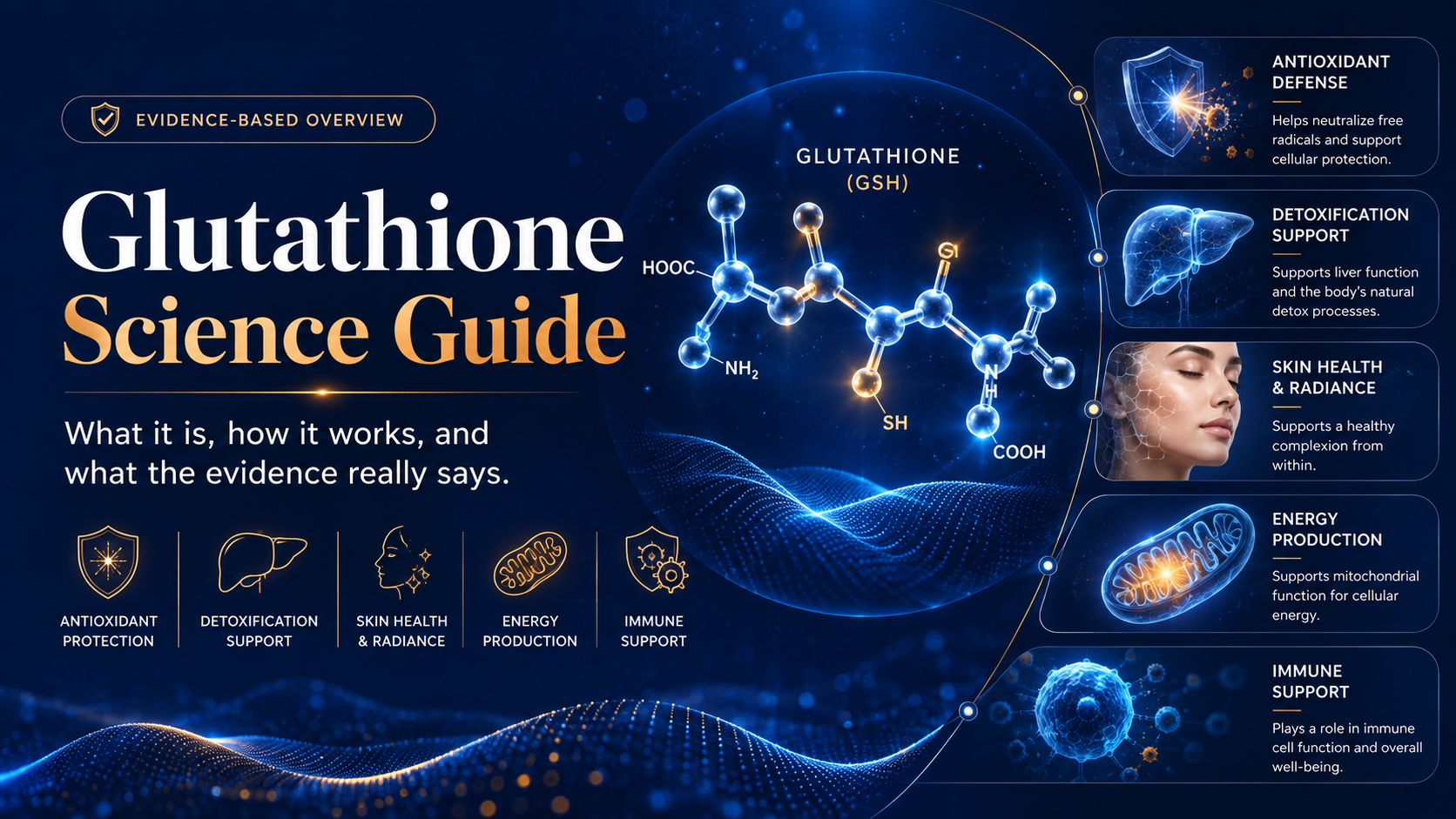
Glutathione is often introduced as the body’s “master antioxidant.” That phrase captures its importance but can hide the more interesting truth: GSH is not a lone scavenger roaming the bloodstream. It is a locally controlled, enzyme-supported redox system inside cells—built, used, oxidized, exported, broken down and regenerated every minute.
The scientifically useful question is not whether glutathione matters—it unquestionably does—but whether a particular food, capsule, precursor, topical product, inhaled solution or injection changes the right glutathione pool in the right tissue enough to improve a meaningful health outcome. That distinction separates established biochemistry from premature promises.
1Executive summary: the evidence in one view
GSH participates in antioxidant defense, xenobiotic conjugation, protein-thiol regulation, mitochondrial protection and many signaling reactions.
Glutathione peroxidases use GSH to reduce peroxides; glutathione reductase and NADPH convert oxidized GSSG back toward GSH.
Several interventions raise blood GSH, but effects on symptoms, disease progression, performance or longevity remain condition-specific and uncertain.
Sterility, endotoxin, particulate matter and route-appropriate raw material are critical. Recent recalls show why a purity number alone is insufficient.
The thirteen conclusions that matter most
- Glutathione is a tripeptide—not a vitamin, hormone, enzyme or large protein. It is built from glutamate, cysteine and glycine.
- Reduced GSH and oxidized GSSG are a dynamic pair. The ratio and compartment can matter more than a single total number.
- Its antioxidant work is largely enzyme-assisted. Glutathione peroxidases and transferases are major partners; GSH does not independently neutralize every reactive molecule.
- “Detoxification” has a real biochemical meaning. It refers partly to conjugation and processing of reactive compounds—not a generalized cleanse or removal of unspecified “toxins.”
- Low GSH is associated with many illnesses, but association is not causation. Illness can consume GSH, impaired synthesis can worsen stress, or both can occur together.
- Oral absorption is not simply “good” or “bad.” Human trials conflict; longer duration, formulation and baseline status influence results.
- NAC and GlyNAC are precursor strategies, not identical substitutes. They supply building blocks and have their own evidence, safety profile and clinical uses.
- Cancer is a special case. GSH protects healthy cells, but many tumors also use high GSH to survive oxidative stress and resist therapy.
- Routine wellness testing has limitations. Plasma, whole-blood, erythrocyte and tissue measurements are not interchangeable, and sample handling can change results.
- Injectable quality cannot be inferred from HPLC purity. Sterility, bacterial endotoxins, particulate matter, potency, pH, container compatibility and validated stability are separate requirements.
- Exposure reduction beats “detox support.” GSH participates in chemical defense, but PPE, ventilation, source removal and toxicant-specific care matter more than a supplement.
- Exercise can both use and strengthen the system. Hard exercise transiently raises oxidative demand, while repeated training can improve resting GSH homeostasis.
- Alcohol, skin and performance claims require outcome data. A changed biomarker, melanin index or fatigue score is not proof of broad detoxification, rejuvenation or protection.
2What glutathione is—and why the names can confuse people
Glutathione is the small sulfur-containing tripeptide γ-L-glutamyl-L-cysteinyl-glycine. The unusual gamma bond between glutamate and cysteine helps distinguish it from ordinary dietary peptides and contributes to the way cells make, protect and recycle it. Its reactive sulfhydryl group—the sulfur-hydrogen group on cysteine—is central to its reducing and nucleophilic chemistry.1
Glutathione was observed in biological material in the late nineteenth century and was more clearly characterized by Frederick Gowland Hopkins in the 1920s. Its history matters because GSH is not a recent wellness discovery. It has been part of mainstream biochemistry for more than a century.
The reduced form. It can donate reducing equivalents, participate in enzyme reactions and protect protein thiols from inappropriate oxidation.
Glutathione disulfide, commonly called the oxidized form. Two glutathione units are linked through a disulfide bond.
A measurement that may combine reduced and oxidized pools, sometimes after chemical conversion. It is not the same as measuring biologically available reduced GSH alone.
Is it an antioxidant, peptide, molecule or compound?
It is all of those, depending on the question. It is a molecule and chemical compound; structurally it is a tripeptide; functionally it is a major reducing agent and antioxidant-system component. It is not a large protein and it is not itself an enzyme, although many enzymes depend on it.
3How cells build, use and recycle glutathione
Most cells synthesize glutathione in the cytosol through two ATP-dependent steps. First, glutamate-cysteine ligase joins glutamate and cysteine to form γ-glutamylcysteine. Second, glutathione synthetase adds glycine. The first step is normally rate-limiting, and cysteine availability can be a major practical constraint.2
The redox cycle
When glutathione peroxidases reduce hydrogen peroxide or lipid hydroperoxides, two GSH molecules are typically converted to GSSG. Glutathione reductase then uses reducing power from NADPH to regenerate GSH. This is why the system depends not only on the amount of glutathione, but also on enzymes, micronutrients, NADPH production and the metabolic health of the cell.
2 GSH + peroxide → GSSG + water or reduced lipid product
GSSG + NADPH → 2 GSH + NADP⁺
Compartmental control
Glutathione exists in the cytosol, nucleus, mitochondria, endoplasmic reticulum and extracellular fluids, but these pools are not identical. Mitochondria do not simply make all of their own GSH; transport and compartment-specific redox control matter. A blood result therefore cannot be assumed to represent the brain, lens, liver mitochondria or a tumor microenvironment.
4Free radicals, oxidative stress and the “master antioxidant” label
Reactive oxygen species are not automatically enemies. Cells intentionally generate some reactive molecules for signaling, immune defense and adaptation to exercise. Trouble develops when production, location or duration overwhelms the systems that control them, or when antioxidant defense becomes too weak for the burden. That imbalance is commonly called oxidative stress.
GSH helps control this chemistry in several ways. It can react directly with some electrophiles and radicals, but much of its protective work is mediated by enzymes. Glutathione peroxidases remove peroxides; glutathione S-transferases attach GSH to certain reactive compounds; glutaredoxins regulate reversible protein glutathionylation; and GSH helps preserve vulnerable protein sulfhydryl groups.
“Mother” or “master” of all antioxidants?
Those are memorable marketing nicknames, not scientific ranks. GSH is exceptionally important because it is abundant inside cells and embedded in many enzyme systems. Yet superoxide dismutases, catalase, peroxiredoxins, thioredoxin, vitamins, metal-binding proteins and repair pathways are also indispensable. The body uses a network, not a single superhero.
5Detoxification, drug metabolism and the liver
The liver is a major center of glutathione synthesis, export and xenobiotic handling. In one important form of phase II metabolism, glutathione S-transferases catalyze the attachment of GSH to electrophilic molecules. The resulting conjugates can be further processed and eliminated through bile or urine. This chemistry can make some compounds more water-compatible or less reactive, but the exact pathway depends on the substance.
A classic example is acetaminophen overdose. A reactive metabolite called NAPQI is normally detoxified by GSH. When overdose exhausts hepatic GSH, NAPQI binds cellular proteins and can cause severe liver injury. The antidote N-acetylcysteine works in large part by restoring cysteine availability and supporting glutathione synthesis, while also providing other protective effects.
Enzymatic conversion, conjugation, transport and excretion of specific endogenous or foreign compounds.
A universal cleanse that removes all environmental chemicals, heavy metals or vague “toxins” after a short supplement course.
Detoxification pathways can activate as well as deactivate compounds, compete for cofactors and vary by genetics, organ function and exposure.
Glutathione is also involved in the processing of endogenous molecules, including lipid mediators and products of oxidative metabolism. The liver’s role is central, but it is inaccurate to portray GSH as a sponge that simply absorbs every harmful substance.
6Environmental exposures, heavy metals and alcohol: where GSH demand can rise
Glutathione demand can rise whenever cells encounter electrophiles, oxidants or reactive metabolites. That can happen during ordinary metabolism, medication processing, inflammation, cigarette-smoke exposure, air pollution, combustion, work with solvents or pesticides, and contact with certain metals. The response is substance-specific: some compounds are neutralized through glutathione conjugation, some are handled mainly by other systems, and a few can even become more reactive after metabolism. “More glutathione” is therefore not a universal antidote to every modern exposure.
Environmental chemicals: reduce the exposure before trying to out-supplement it
Persistent organic pollutants, volatile solvents, combustion products, pesticides and some ingredients used in plastics or personal-care products can influence oxidative stress or xenobiotic-metabolizing enzymes. Glutathione and glutathione S-transferases are part of the cellular response, but their involvement does not prove that a supplement removes a chemical from the body or prevents its long-term health effects.
Heavy metals: glutathione participates in defense, but it is not a home chelation kit
Lead, mercury, cadmium and arsenic can bind protein thiols, disrupt enzymes, alter mitochondrial function and increase oxidative stress. Glutathione may buffer some of this chemistry, participate in transport or conjugation, and become depleted in the process. The relationship is complicated because metal species, dose, route, genetics, selenium status and organ function all change toxicity.19
Suspected metal exposure should be handled with a validated test and a clinician or poison-control specialist. Removing the source and using an approved chelator when medically indicated are fundamentally different from taking oral or topical glutathione. Self-directed “heavy-metal detox” can delay care and, in the case of unneeded chelation, create its own risks.
Occupational exposure and firefighters
Firefighters and other high-exposure workers face mixtures of particulates, polycyclic aromatic hydrocarbons, heat, sleep disruption and intense physical stress. Those exposures can change oxidative-stress biomarkers, including parts of the glutathione system. That biology is a reason to improve protective equipment, decontamination, ventilation, exposure records and medical surveillance—not evidence that a glutathione spray or infusion prevents occupational cancer or liver injury.
It is reasonable to look for root causes such as medication toxicity, occupational exposure, malnutrition, sleep loss or uncontrolled disease. It is not reasonable to label nonspecific symptoms as proof of a hidden “toxin burden,” order unvalidated panels and assume glutathione is the answer.
The body’s own reactive by-products
Some of the most important glutathione-dependent reactions involve compounds produced inside the body. Lipid peroxidation creates reactive aldehydes such as 4-hydroxynonenal; normal hormone and inflammatory pathways generate electrophilic intermediates; acetaminophen produces NAPQI; and ethanol metabolism increases acetaldehyde and oxidative stress. These are real biochemical processes, but they do not imply that all medications, hormones or metabolites are “toxins” that need cleansing.
Alcohol and the hangover question
Ethanol is converted mainly to acetaldehyde and then acetate through alcohol dehydrogenase and aldehyde dehydrogenase. Heavy intake also increases CYP2E1-related oxidative stress and can reduce hepatic and pulmonary glutathione defenses. Glutathione helps manage the resulting redox burden, but it is not the primary enzyme that clears alcohol and it cannot make binge drinking safe.
A 2024 randomized, double-blind crossover trial in 40 adults tested a yeast extract containing 50 mg of glutathione before a controlled alcohol challenge. Serum acetaldehyde was lower with the glutathione-containing product, but alcohol levels were not significantly lower and validated hangover-symptom scores did not differ from placebo. The result is an interesting metabolism signal—not proof of a reliable hangover cure.20
The only dependable way to prevent an alcohol hangover and alcohol-related injury is to drink less or not drink. Hydration and food may reduce some discomfort, but no glutathione product prevents intoxication, impaired judgment, arrhythmia, aspiration, liver injury or alcohol poisoning.
7Immune function, inflammation and infection
Immune cells require carefully controlled redox signaling. GSH supports lymphocyte proliferation, macrophage function, antigen processing and the ability to tolerate the oxidative burst used to attack pathogens. Severe depletion can impair immune performance; at the same time, immune activation and inflammation can consume GSH and alter its redox state.
This two-way relationship explains why low glutathione is reported in conditions such as HIV infection, tuberculosis, severe systemic illness and chronic inflammatory disease. It does not prove that glutathione supplementation prevents or cures those infections. The pathogen, immune response, medication regimen, nutritional status and disease stage all matter.
A common evidence mix-up
A frequently cited six-month trial found fewer clinically apparent influenza-like episodes in people receiving NAC—not direct glutathione. NAC is a medication and cysteine donor with mucolytic and other effects. The result cannot be automatically rewritten as proof that oral or topical GSH prevents influenza.14
Chronic inflammation may raise demand for glutathione while also changing the enzymes that synthesize and consume it. Improving sleep, nutrition, metabolic health, exposure control and treatment of the underlying inflammatory condition may be as important as—or more important than—taking a single antioxidant product.
8Why glutathione levels may fall
Glutathione status reflects supply, synthesis, utilization, recycling, export and tissue demand. A low measurement can arise from one problem or several at once.
There is no reliable symptom checklist
Fatigue, slow recovery, frequent illness, dull skin, brain fog and exercise intolerance are nonspecific. They can occur with anemia, thyroid disease, sleep apnea, depression, medication effects, nutrient deficiency, infection, heart disease and many other conditions. A symptom-based online quiz cannot diagnose a low intracellular glutathione pool.
Rare inherited disorders are different
Glutathione synthetase deficiency and related inborn errors are genuine medical disorders, often presenting in infancy or childhood. Their evaluation and management are highly specialized and should not be confused with the loosely defined “low glutathione” used in wellness marketing.15
9Testing glutathione: useful measurement or misleading snapshot?
Glutathione can be measured in whole blood, erythrocytes, plasma, peripheral blood mononuclear cells or tissue samples. Laboratories may report reduced GSH, oxidized GSSG, total glutathione or a ratio. Those results answer different questions and can vary substantially.
| Sample | What it reflects | Important limitation |
|---|---|---|
| Whole blood | Dominated by red-cell glutathione because erythrocytes contain far more GSH than plasma. | Does not directly measure liver, brain, muscle or mitochondrial pools. |
| Plasma | Extracellular circulating concentration. | Low concentration and highly sensitive to processing, oxidation and hemolysis. |
| Red blood cells | A relatively stable intracellular compartment. | May not track disease-relevant tissue changes. |
| GSH:GSSG ratio | A redox-state indicator under carefully controlled handling. | GSH can oxidize after collection, creating an artifactually low ratio. |
For most healthy consumers, there is no universally accepted “optimal glutathione number” that guides supplementation. Testing can be useful in research or selected clinical contexts, especially when a specialist is monitoring a defined disorder, but it is not a standalone diagnostic for fatigue, aging or chronic disease.
10Glutathione, aging and mitochondrial resilience
Many animal and human studies report lower glutathione synthesis, concentration or redox capacity with age in at least some tissues. Reduced precursor availability, diminished GCL activity, lower NADPH generation, chronic inflammation and increased oxidative burden may all contribute. Yet decline is not identical in every tissue or person; studies of the aging brain, for example, have produced region-specific and sometimes conflicting results.10
Mitochondria rely on glutathione to control peroxide and lipid-oxidation products. When mitochondrial GSH is inadequate, proteins, membranes and mitochondrial DNA become more vulnerable. That mechanism helps explain why glutathione is studied in age-related weakness, metabolic dysfunction and neurodegeneration.
Small GlyNAC studies in older adults have reported improvements in glutathione deficiency, oxidative stress markers, mitochondrial measures and some functional outcomes. These findings are promising but need larger independent trials before being treated as proof of a general anti-aging therapy.8
Telomeres: an indirect redox connection, not a proven lengthening effect
Oxidative stress can damage telomeric DNA, and cells need adequate redox control to maintain chromosome ends. That makes glutathione biologically relevant to telomere research. It does not mean that taking GSH lengthens human telomeres, activates telomerase safely or slows the aging clock. No clinical trial has established glutathione supplementation as a telomere therapy.
11Energy, exercise and athletic performance
Exercise increases oxygen use, electron flow and mechanical stress, so an acute hard session can oxidize part of the glutathione pool. That is not automatically harmful. Reactive species also act as training signals that help induce mitochondrial biogenesis, repair enzymes and stronger endogenous antioxidant defenses. The goal is adaptation—not elimination of every exercise-generated oxidant.
Training changes the glutathione system
In a six-week randomized study of 80 previously sedentary adults, aerobic training, circuit resistance training and combined training increased resting GSH and the GSH:GSSG ratio while lowering oxidized GSSG. The combined program produced the largest change. This is an important reminder that exercise can improve the system that makes and recycles glutathione rather than merely “using it up.”21
What direct glutathione studies show
A small double-blind crossover study gave eight healthy men 1,000 mg/day of oral glutathione or placebo for two weeks before a 60-minute cycling test. The glutathione period was associated with lower post-exercise lactate and lower subjective fatigue measures. The study is useful as proof of concept, but eight participants and a short protocol cannot establish a dependable performance effect for athletes.22
NAC performance studies are not the same as glutathione studies
NAC has been studied more extensively during exercise because it supplies cysteine and also has direct pharmacologic actions. In endurance-trained participants, NAC increased muscle cysteine and glutathione availability and attenuated fatigue during prolonged exercise.23 Those findings cannot be copied onto every oral GSH product, and intravenous or very high-dose NAC is not a casual pre-workout strategy.
Glutathione is essential to muscle redox biology, and correcting a low precursor state may help selected people. Evidence is not strong enough to treat GSH as a universal ergogenic aid, recovery shortcut or substitute for training, food and sleep.
12Disease associations: what low GSH does—and does not—prove
Altered glutathione levels or redox balance have been reported in cardiovascular disease, diabetes, fatty-liver disease, chronic lung disease, neurodegeneration, cancer, inflammatory disorders, infections and eye disease. That broad list reflects GSH’s central biology, but it also creates a major interpretation problem: almost any severe disease increases oxidative and metabolic stress.
| Area | What is observed | What is not established |
|---|---|---|
| Diabetes and obesity | Impaired synthesis, lower GSH or higher oxidative stress is common in some cohorts. | That GSH supplementation reliably normalizes glucose or prevents complications. |
| Heart and vascular disease | Redox imbalance can promote LDL oxidation, endothelial dysfunction and inflammation. | That raising blood GSH prevents heart attacks or replaces standard risk reduction. |
| Parkinson’s and Alzheimer’s disease | Reduced brain GSH or altered redox markers have been reported in selected regions and stages. | That oral, intranasal or IV GSH slows neurodegeneration in routine care. |
| Cataract and retinal disease | The lens depends heavily on GSH, and nuclear cataract is associated with loss of lens GSH. | That systemic GSH supplements prevent or reverse cataracts or macular degeneration. |
| Chronic infection | Immune activation and illness can lower GSH or change the GSH:GSSG balance. | That GSH alone eradicates viruses, bacteria or tuberculosis. |
The wrapper analogy
Removing a wrapper makes bread dry faster, but dry bread does not prove the missing wrapper caused the bakery’s entire problem. Likewise, low GSH may remove a layer of protection and increase vulnerability without being the original cause of the disease.
13Brain health, mood and autism claims
The brain consumes substantial oxygen and contains lipid-rich membranes that are vulnerable to oxidation. GSH is therefore important in neurons and glia, especially for mitochondrial defense and control of peroxides. Lower GSH has been reported in Parkinson’s disease and in some studies of depression, cognitive impairment and Alzheimer’s disease. The location, stage of illness and measurement method matter, and current evidence does not support a simple “low GSH causes brain disease” model.
Depression and anxiety
Oxidative-stress biomarkers and altered glutathione have been reported in some psychiatric research. These are mechanistic clues, not validated diagnostic tests or proof that glutathione supplements treat depression or anxiety. Mood symptoms require assessment for psychological, medical, social and medication-related causes.
Autism spectrum disorder
Some autistic children show differences in glutathione-related metabolites, and older open-label studies generated interest. However, a 2025 double-blind, placebo-controlled crossover pilot involving 24 children found that weekly IV glutathione—alone or combined with vitamin C and NAC—did not improve behavioral or biological outcomes compared with placebo.12
What the evidence does not support
Glutathione should not be presented as a cure for autism, a substitute for evidence-based developmental support, or a reason to expose children to unapproved injectable or transdermal products.
14The cancer paradox: protection for normal cells, advantage for some tumors
Glutathione helps normal cells manage oxidative damage and reactive carcinogens, which gives it a plausible role in cancer prevention biology. But established tumors are not passive. Many cancer cells increase GSH synthesis, transport and related enzymes, helping them tolerate rapid metabolism, evade cell death and resist chemotherapy or radiation.3
Adequate redox defense can reduce damage to DNA, lipids and proteins and support normal detoxification.
High tumor GSH can help malignant cells survive treatment and may contribute to drug resistance.
For this reason, the question is not “Does glutathione cause or cure cancer?” Both claims are too simple. Anyone with active cancer, a recent cancer diagnosis or ongoing chemotherapy, radiation or immunotherapy should discuss antioxidant and precursor supplements with the oncology team rather than assuming they are harmless.
15Food, NAC, GlyNAC and oral glutathione: different routes to the same network
The body can raise or maintain GSH by supplying intact glutathione, increasing precursor amino acids, improving synthesis signals, reducing consumption or supporting recycling. Products that use these strategies are not interchangeable.
| Approach | What it provides | Evidence snapshot | Main caution |
|---|---|---|---|
| Protein-rich diet | Cysteine, glycine, glutamate and methionine-related sulfur amino acids. | Foundational for synthesis; most useful when intake or absorption is inadequate. | More protein is not automatically beneficial in advanced kidney or liver disease. |
| NAC | A cysteine donor with direct mucolytic and pharmacologic effects. | Established antidote for acetaminophen poisoning; studied in many other conditions with mixed results. | GI effects, medication interactions and condition-specific dosing require care. |
| GlyNAC | Glycine plus NAC, supplying two potentially limiting precursors. | Small older-adult trials are promising; confirmation and independent replication are needed. | Large gram quantities used in trials are not automatically appropriate for everyone. |
| Reduced oral GSH | Intact glutathione that may be absorbed, hydrolyzed or processed at the intestinal surface. | Human trials conflict; longer trials have shown increases in some blood compartments. | A blood increase does not guarantee a clinical benefit or tissue-specific increase. |
| Liposomal GSH | GSH dispersed in phospholipid vesicles. | Small pilot studies report biomarker increases; robust head-to-head data are limited. | “Liposomal” quality depends on actual formulation, particle characterization and stability. |
| γ-Glutamylcysteine | The intermediate immediately before GSH formation. | A small randomized pilot reported increased intracellular GSH. | Limited clinical-outcome evidence and fewer long-term data. |
| S-acetyl glutathione | An acetylated derivative intended to improve stability or cellular delivery. | Human evidence is sparse. One small 18-patient study combined it with oleuropein in mild Alzheimer disease, making the individual contribution difficult to isolate. | Claims of superior absorption, brain penetration or disease treatment are not established.26 |
| Sublingual or buccal GSH | Glutathione held against oral mucosa rather than swallowed immediately. | Small studies and formulation-specific claims suggest possible absorption, but strong head-to-head outcome data are lacking. | “Under the tongue” does not guarantee dose delivery or superiority. |
Modified forms are hypotheses until compared directly
Foods that support the system
A balanced diet can supply the amino-acid building blocks and micronutrients needed by glutathione-related enzymes. Useful categories include eggs, dairy, fish, poultry, legumes, soy, whey protein, nuts and seeds; cruciferous vegetables such as broccoli and cabbage; allium vegetables such as garlic and onions; and selenium-containing foods such as seafood, eggs and Brazil nuts. Selenium is required for several glutathione peroxidases, but excessive selenium is toxic.
Vitamin C and vitamin E participate in the broader antioxidant network, while riboflavin supports the FAD-dependent enzyme glutathione reductase. These nutrients do not become glutathione, but a deficiency can weaken the network in which GSH operates.
16What representative human trials actually found
Glutathione research illustrates why one study rarely settles a supplement question. Different trials measure different compartments, durations, populations and outcomes.
| Study | Design | Intervention | Main finding | Best interpretation |
|---|---|---|---|---|
| Allen et al., 2011 | Randomized, double-blind, placebo-controlled; 39 completed | 500 mg reduced GSH twice daily for 4 weeks | No significant change in glutathione status or oxidative-stress biomarkers | Short-term standard oral GSH did not reliably alter the measured markers.4 |
| Richie et al., 2015 | Randomized, placebo-controlled; 54 healthy adults | 250 or 1,000 mg/day for 6 months | Increases in whole blood, erythrocyte, plasma, lymphocyte and buccal-cell GSH, especially by 6 months | Longer use can increase several body-compartment measurements, but the trial did not prove disease prevention.5 |
| Sinha et al., 2018 | One-month pilot; 12 healthy adults | Liposomal GSH, 500 or 1,000 mg/day | Higher GSH in several blood compartments and changes in selected immune/oxidative markers | Interesting but very small and not a definitive efficacy trial.6 |
| Søndergård et al., 2021 | Randomized, placebo-controlled; 20 men with obesity, with or without T2D | 1,000 mg/day for 3 weeks | Improved insulin sensitivity; no clear change in measured oxidative-stress outcomes | A small metabolic signal requiring replication, not a diabetes treatment recommendation.7 |
| Kumar et al., 2023 | Randomized clinical trial in older adults | Glycine + NAC for 16 weeks | Improved GSH deficiency and several oxidative, mitochondrial and functional measures | Promising precursor strategy; larger independent trials are needed.8 |
| Williams et al., 2025 | Double-blind, placebo-controlled crossover pilot; 24 autistic children | Weekly IV GSH or GSH + vitamin C + NAC | No improvement in behavioral or biological measures versus placebo | Does not support IV GSH as an autism therapy.12 |
| Aoi et al., 2015 | Double-blind crossover pilot; 8 healthy men | 1,000 mg/day oral GSH for 2 weeks before cycling | Lower exercise-associated lactate and subjective fatigue measures | Interesting proof of concept, but far too small to establish a general athletic benefit.22 |
| Song et al., 2024 | Randomized, double-blind, placebo-controlled crossover; 40 adults | Yeast extract containing 50 mg GSH before alcohol challenge | Lower serum acetaldehyde; no significant difference in validated hangover symptom scores | A biomarker effect without demonstrated symptom relief; not a license to drink more.20 |
How to read a glutathione study
- Was the study measuring whole blood, plasma, erythrocytes, PBMCs, muscle or a symptom?
- Was it randomized and placebo-controlled, or an uncontrolled pilot?
- Did the intervention raise GSH, improve a biomarker, or improve an outcome people actually feel?
- Was the study large enough to detect harms and was it independently replicated?
- Were conflicts of interest, formulation details and laboratory methods clearly reported?
17Skin biology, pigmentation and “rejuvenation” claims
Skin is continuously exposed to ultraviolet radiation, air pollution, inflammation and normal metabolic oxidants. Glutathione helps keratinocytes and melanocytes manage peroxide, maintain protein thiols and limit oxidative injury. That role makes it relevant to photoaging and pigmentation research, but it does not turn GSH into sunscreen or a proven scar, acne, psoriasis or wrinkle treatment.
UV exposure, collagen and visible aging
Ultraviolet exposure generates reactive species, damages DNA, activates matrix-degrading enzymes and contributes to uneven pigmentation, loss of elasticity and wrinkles. Glutathione is one part of the defense network. Broad-spectrum sun protection, shade, protective clothing and treatment of specific skin disease have far stronger clinical support than attempting to raise GSH after repeated sun damage.
What oral and topical studies suggest
Small randomized trials have reported modest reductions in melanin index or increases in skin brightness with oral or topical glutathione. A recent review identified several randomized trials but emphasized variation in dose, formulation, treatment length, body site and outcome measurement. Durability after stopping, long-term safety and the size of any visible benefit remain uncertain.24
Topical 2% oxidized or acetylated glutathione preparations have also been studied for cosmetic endpoints. Those results apply to the tested formula and skin site; they do not prove that a generic cream delivers meaningful systemic glutathione or treats internal disease.
Acne, psoriasis, burns and scars
Oxidative stress and glutathione-related biomarkers have been studied in acne, psoriasis, dermatitis, burns and wound healing. Association does not make topical GSH an established treatment. Persistent acne, inflammatory plaques, pigment change after injury, infection or significant burns require condition-specific care. Products that promise to erase scars or treat autoimmune skin disease through “detoxification” should be viewed cautiously.
FDA has not approved glutathione injections for skin whitening. Unapproved products may contain unsuitable raw material, microbes, endotoxin, particles or undeclared ingredients. Oral or topical cosmetic studies cannot be used to establish the safety of injection.25
18IV, inhaled, topical and skin-lightening claims
Intravenous glutathione
IV administration bypasses digestion and creates immediate systemic exposure, but that does not establish superior clinical benefit. Compounded glutathione injections are not automatically equivalent to an approved drug, and the route adds risks from contamination, endotoxin, dosing error, incompatibility, venous access and infusion reactions.
Immediate bloodstream delivery with higher procedural and manufacturing risk. A brief plasma exposure does not guarantee durable intracellular repletion.
Designed primarily for local skin contact. Systemic delivery cannot be assumed without human pharmacokinetic data.
When GSH is combined with vitamins, minerals or fluids, benefits and adverse effects cannot be attributed to one ingredient, and compatibility must be validated.
Certain lots of compounded glutathione 200 mg/mL multidose vials were recalled after elevated bacterial endotoxin was identified. Reported adverse events included fever, chills, severe headache, nausea, vomiting, tachycardia, blood-pressure changes, body aches and injection-site reactions. The recall warning stated that excessive endotoxin can cause severe inflammatory reactions, shock or death.17
FDA had already investigated a separate 2019 episode in which patients developed acute symptoms after compounded IV glutathione. Testing found excessive endotoxin, and the raw material had been labeled for dietary-supplement use rather than sterile injectable use.16
Nebulized or inhaled glutathione
Inhaled GSH has been studied in respiratory disease, but it is not automatically safe. A controlled challenge study found bronchoconstriction in people with mild asthma, likely related to sulfite formation. Anyone with asthma or reactive-airway disease should not assume that an “antioxidant mist” is benign.13
Topical versus transdermal: local effect is not systemic proof
Topical and oral skin-lightening products
Several small trials suggest that oral or topical glutathione can modestly change melanin index or skin tone in some populations, but results are inconsistent, cosmetic endpoints vary and long-term safety data are limited. A 2019 systematic review concluded that the overall evidence remained inconclusive because of study quality and inconsistent findings.18
FDA has not approved injectable drugs for skin whitening. Injectable beauty products may contain unknown ingredients, contaminants or unsuitable raw materials and should not be confused with evidence for topical cosmetics or oral supplements.
19Product quality: a glutathione label is not a laboratory result
Glutathione can oxidize, degrade or vary in assay. Formulation and route determine which quality tests matter. A “99% purity” statement may refer to one chromatographic method and says nothing by itself about identity, potency per dose, microbes, endotoxin or sterile manufacturing.
- Identity and quantitative assay
- Related substances and oxidation products
- Microbial limits and heavy metals
- Disintegration or capsule performance
- Stability through expiration
- Transparent excipients and allergen information
- Actual phospholipid composition
- Particle size and distribution
- Encapsulation or association method
- Oxidation and microbiological stability
- Lot-specific assay—not only a supplier document
- Sterility
- Bacterial endotoxins at the intended maximum dose
- Visible and subvisible particulates
- Potency, identity and impurities
- pH, osmolality and container compatibility
- Validated aseptic processing and stability
Purity is not potency—and neither is sterility
A vial can have a high chromatographic purity percentage yet contain the wrong amount, excessive endotoxin or viable microorganisms. Each attribute requires its own validated test and acceptance criteria.
20Common glutathione myths and the more accurate version
Reality: It is central, but it works within a network of enzymes, vitamins, thioredoxin, catalase, superoxide dismutases and repair systems.
Reality: Trials conflict. Some show no short-term change; others show increases after longer use or with specific formulations.
Reality: Direct exposure is not the same as proven outcome, and the route adds serious sterile-product risks.
Reality: Fatigue is nonspecific and should not be self-diagnosed from a marketing checklist.
Reality: Disease can lower GSH; low GSH may worsen vulnerability; both may reflect a third process.
Reality: It protects normal cells, while some tumors exploit high GSH. Context and treatment stage are critical.
Reality: Supplier purity does not replace route-specific sterility, endotoxin, particulate and stability testing.
Reality: It participates in specific enzymatic pathways; it does not indiscriminately remove every environmental exposure.
Reality: Redox systems require balance. Excess antioxidant pressure can interfere with normal signaling, and tumor biology is a major exception.
Reality: A recent placebo-controlled pilot found no benefit, and glutathione is not an established autism therapy.
Reality: GSH participates in metal-related redox and transport chemistry, but exposure control, validated testing and medically indicated chelation are separate issues.
Reality: One controlled trial lowered acetaldehyde but did not improve validated symptom scores. It does not prevent intoxication or alcohol injury.
Reality: Training itself improves GSH homeostasis. Direct supplementation data are small and do not establish a universal performance effect.
Reality: Local cosmetic effects do not prove systemic absorption or delivery to liver, brain or muscle.
Reality: Redox biology is relevant to cellular aging, but clinical telomere lengthening and broad rejuvenation have not been demonstrated.
21A practical evidence-based framework
Correcting a documented deficiency, supporting general nutrition, improving a laboratory marker and treating a disease are different goals.
Adequate protein, diverse plants, smoking avoidance, alcohol moderation, sleep, exercise and treatment of underlying disease reduce burden and support synthesis.
Do not assume that NAC, GlyNAC, oral GSH, liposomal GSH, topical products and IV formulations produce the same exposure or outcomes.
Look for lot-specific identity and assay testing, transparent manufacturing, stability, and route-appropriate microbiological controls.
Choose a realistic endpoint—symptom, validated lab marker or clinician-defined goal—rather than relying on vague feelings of “detox.”
If there is no meaningful benefit, escalating dose or route may increase expense and risk without solving the original problem.
When clinician review is especially important
- Active cancer, recent cancer treatment or planned chemotherapy/radiation.
- Pregnancy, breastfeeding, children or adolescents.
- Asthma or reactive-airway disease, particularly before any inhaled product.
- Advanced liver or kidney disease, diabetes with medication changes, or significant cardiovascular disease.
- Any consideration of an IV, IM, subcutaneous or nebulized compounded formulation.
- Unexplained fatigue, neurologic symptoms, recurrent illness or suspected poisoning.
22Frequently asked questions
Is glutathione really the body’s most powerful antioxidant?
Can the body make its own glutathione?
Does oral glutathione survive digestion?
Is liposomal glutathione better?
Is NAC the same as glutathione?
What is GlyNAC?
Can glutathione improve skin tone?
Does glutathione prevent the flu or other infections?
Can glutathione treat Parkinson’s or Alzheimer’s disease?
Should people with cancer avoid it?
Is a blood glutathione test worth it?
Why is IV glutathione riskier than a capsule?
Can glutathione cure a hangover?
Can glutathione remove lead, mercury or other heavy metals?
Does glutathione improve exercise performance?
Does topical glutathione enter the bloodstream?
Is S-acetyl glutathione proven to be better?
Can someone take too much glutathione?
The bottom line
Glutathione is indispensable biology—but that does not make every glutathione product indispensable medicine.
The strongest case is biochemical: cells need GSH for redox control, peroxide removal, xenobiotic processing, protein protection and mitochondrial resilience. The consumer evidence is more nuanced. Oral GSH can raise some measurements in some studies; training can improve endogenous GSH homeostasis; precursor strategies may help selected populations; disease, exposure, skin and performance associations rarely prove a cure; a small alcohol study changed acetaldehyde without improving symptom scores; and injectable products demand pharmaceutical-grade controls that go far beyond a purity claim. The best decisions begin with a defined goal, source control, realistic evidence, route-appropriate quality and respect for the underlying condition.
23Selected primary and official references
- Lapenna D. (2023). Glutathione and glutathione-dependent enzymes: From biochemistry to gerontology and successful aging. Ageing Research Reviews. PMID 37683986.
- Lu SC. (2013). Glutathione synthesis. Biochimica et Biophysica Acta. PMID 22995213.
- Ballatori N, et al. (2009). Glutathione dysregulation and the etiology and progression of human diseases. Biological Chemistry. PMID 19166318.
- Allen J, Bradley RD. (2011). Effects of oral glutathione supplementation on systemic oxidative stress biomarkers in human volunteers. PMID 21875351.
- Richie JP Jr, et al. (2015). Randomized controlled trial of oral glutathione supplementation on body stores of glutathione. PMID 24791752.
- Sinha R, et al. (2018). Oral supplementation with liposomal glutathione elevates body stores of glutathione and markers of immune function. PMID 28853742.
- Søndergård SD, et al. (2021). The effects of 3 weeks of oral glutathione supplementation on whole-body insulin sensitivity in obese males with and without type 2 diabetes. PMID 33740389.
- Kumar P, et al. (2023). GlyNAC supplementation in older adults: randomized clinical trial. PMID 35975308.
- Zarka MH, Bridge WJ. (2017). Oral γ-glutamylcysteine increases intracellular glutathione in a randomized pilot. PMID 28131081.
- Detcheverry F, et al. (2023). Changes in brain glutathione with aging: systematic evidence review. PMID 37742519.
- Lim JC, et al. (2020). Age-dependent changes in glutathione metabolism and lens/cataract biology. PMID 32462803.
- Williams PG, et al. (2025). Glutathione, vitamin C and cysteine use in autistic children with disruptive behavior: double-blind placebo-controlled crossover pilot. PMID 39960783.
- Marrades RM, et al. (1997). Nebulized glutathione induces bronchoconstriction in patients with mild asthma. PMID 9279219.
- De Flora S, et al. (1997). Long-term NAC and influenza-like symptomatology. PMID 9230243.
- Ristoff E, Larsson A. (2007). Inborn errors in the metabolism of glutathione. PMID 17397529.
- U.S. Food and Drug Administration. (2019). Concerns with using dietary-ingredient glutathione to compound sterile injectables. Official FDA notice.
- U.S. Food and Drug Administration. (August 5, 2026). Recall of certain compounded glutathione 200 mg/mL multidose vials because of elevated endotoxin. Official FDA recall.
- Dilokthornsakul W, et al. (2019). Clinical effect of glutathione on skin color and other related skin conditions: systematic review. PMID 30895708.
- Jomova K, et al. (2025). Heavy metals: toxicity and human health effects. PMID 39567405.
- Song G, et al. (2024). Effects of GSH on alcohol metabolism and hangover improvement in humans: randomized double-blind placebo-controlled crossover trial. PMID 39408229.
- Elokda AS, Nielsen DH. (2007). Effects of exercise training on the glutathione antioxidant system. PMID 17925621.
- Aoi W, et al. (2015). Glutathione supplementation suppresses muscle fatigue induced by prolonged exercise via improved aerobic metabolism. PMID 25685110.
- Medved I, et al. (2004). N-acetylcysteine enhances muscle cysteine and glutathione availability and attenuates fatigue during prolonged exercise in endurance-trained individuals. PMID 15194675.
- Sarkar R, et al. (2025). Glutathione as a skin-lightening agent and in melasma. PMID 39444151.
- U.S. Food and Drug Administration. (2026). Skin Facts and safety information on skin-lightening products; FDA has not approved injectable glutathione for skin whitening. Official FDA resource.
- Marianetti M, et al. (2022). Olive polyphenols and bioavailable glutathione: randomized crossover study combining oleuropein and S-acetyl glutathione in 18 patients with probable mild Alzheimer disease. PMID 35310529.
The supplied source material was used as a topic map, but the article was independently rewritten and updated. Anecdotes, product testimonials, occupational stories and broad disease claims were not treated as proof. Controlled trials, recent reviews and FDA safety communications were used to qualify claims about toxins, heavy metals, hangovers, athletic performance, skin lightening, topical delivery, modified glutathione forms and injection.