Cellular metabolism · nutrition · longevity science
NAD+: The Cellular Coenzyme Behind Energy, Repair & the Longevity Debate
What NAD+ actually does, why it may change with age, how food and lifestyle support its metabolism, what niacin, NR, NMN and NADH can—and cannot—be expected to do, and why direct NAD+ infusions require a far more cautious reading than the marketing often suggests.
Article contents
- Executive summary
- What NAD+ is
- How the body makes NAD+
- What NAD+ does
- NAD+ and aging
- Metabolism and energy
- Brain health and cognition
- Lifestyle and diet
- Supplement options
- Nicotinamide riboside
- Nicotinamide mononucleotide
- IV, injections and patches
- Human-trial evidence
- Safety and interactions
- Product quality
- Myths and overclaims
- Practical framework
- Frequently asked questions
- References
NAD+ has become a centerpiece of modern longevity marketing, yet it is neither a newly discovered “anti-aging molecule” nor a simple fuel that can be poured into the body. It is an essential coenzyme already present in every living cell, continuously converted to NADH, consumed by signaling enzymes, broken down, and rebuilt.
The scientifically interesting question is not whether NAD+ matters—it unquestionably does—but whether a given food, lifestyle habit, capsule, powder, patch or infusion changes the right NAD pool in the right tissue enough to improve metabolism, physical function, brain health or another meaningful outcome. That distinction separates sound biochemistry from premature promises.
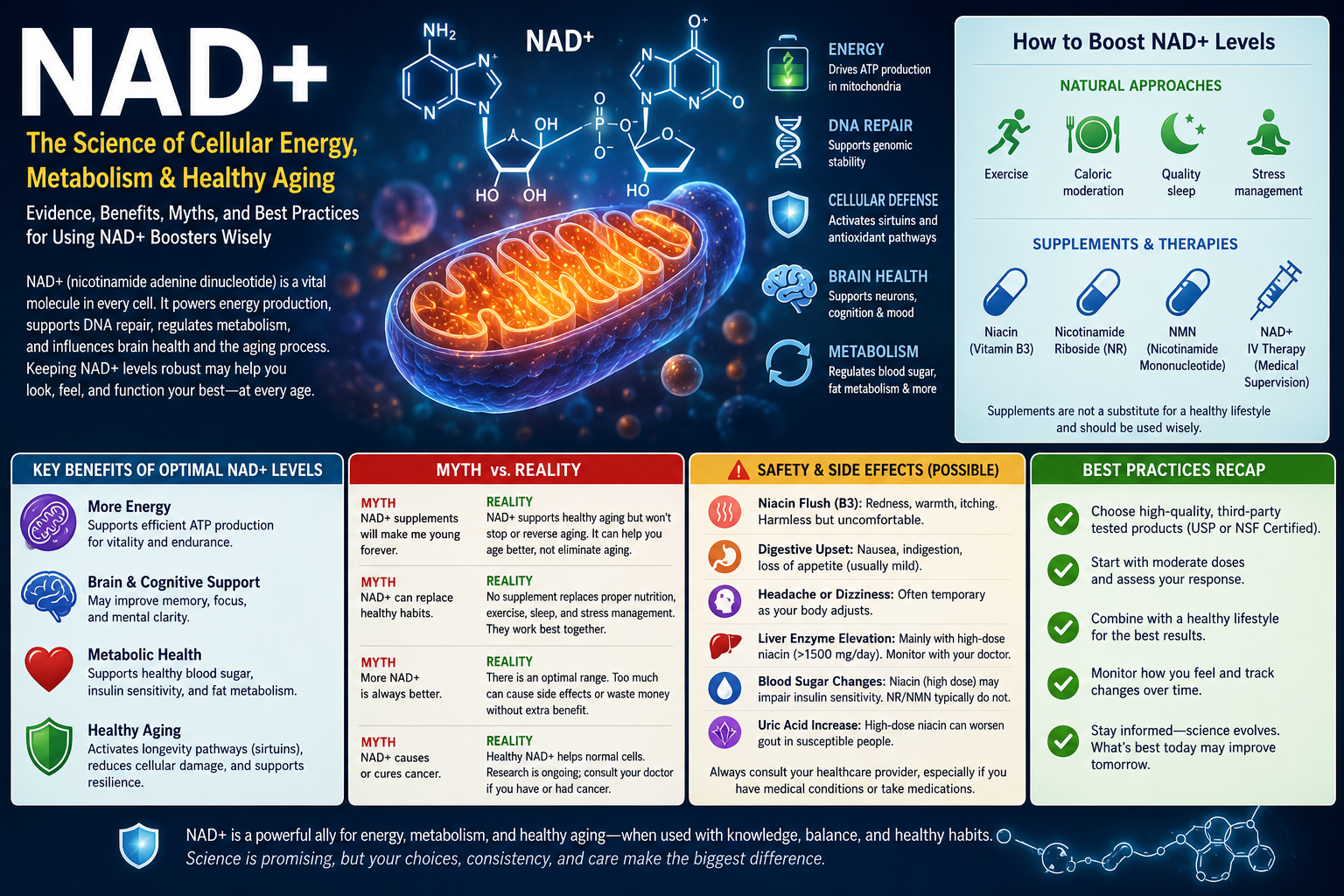
NAD+/NADH is indispensable for redox reactions and energy metabolism; NAD+ is also consumed by PARPs, sirtuins and CD38-family enzymes.
Several human trials show that NR and NMN can raise circulating NAD-related metabolites. That is biomarker engagement, not automatic proof of slower aging.
Trials measuring insulin sensitivity, mitochondrial function, muscle performance, blood pressure or fatigue have produced small, population-specific or null results.
No NAD+ supplement or infusion has been shown to reverse human aging, extend human lifespan, “reset” cells, cure addiction or deliver a guaranteed energy surge.
1Executive summary: the evidence in one view
NAD+ is essential biology. Raising a laboratory marker related to NAD+ is achievable. Converting that biochemical change into reliable, long-term improvements in how people feel, function or age is the unresolved part.
NAD+/NADH carries electrons; NAD+ also serves as a substrate for repair and signaling enzymes.
Multiple short human trials show increases in blood NAD+ or related metabolites.
Metabolic, vascular and performance outcomes vary by study, population and endpoint.
Human lifespan extension, age reversal and broad disease-treatment claims are unproven.
The six most important conclusions
- NAD+ is not the same as energy. It enables reactions that help extract energy from nutrients, but swallowing or infusing NAD+ is not equivalent to charging a battery.
- NAD+ is not one uniform body-wide pool. Blood, skeletal muscle, liver, brain, fat, immune cells, cytosol, nucleus and mitochondria can behave differently. A rise in whole-blood NAD+ does not prove the same rise occurred in every target tissue.
- Exercise has a stronger whole-health case than any NAD supplement. Human skeletal-muscle data show training can restore age-associated loss of NAD+ salvage capacity, while also improving fitness, insulin sensitivity, blood pressure, sleep and function through many pathways.3
- NR and NMN are credible NAD precursors, not proven anti-aging drugs. They often raise blood biomarkers, are generally well tolerated in short trials, and may help selected endpoints in selected groups. The evidence does not justify a guaranteed benefit for healthy consumers.
- Niacin and nicotinamide are biologically effective but not risk-free. Niacin can flush at relatively low supplemental doses, while pharmacologic doses can affect blood pressure, glucose, uric acid, eyes and liver. Nicotinamide avoids flushing but can still cause toxicity at high doses.1
- Direct IV NAD+ is the most aggressively marketed and least clinically validated option. The published human literature includes a small pharmacokinetic pilot, not convincing trials of anti-aging, addiction recovery, depression, Parkinson’s disease or chronic fatigue. Sterile-compounding quality is a separate and serious safety issue.1415
A useful rule for reading NAD+ claims
Ask three separate questions: Did the intervention raise a NAD-related biomarker? Did it improve a pre-specified clinical outcome? And was the improvement large, durable and replicated? Marketing often answers only the first question and implies the other two.
2What NAD+ is—and why the plus sign matters
Nicotinamide adenine dinucleotide is a molecule built from two nucleotide-like components. One contains adenine; the other contains nicotinamide, a form of vitamin B3. The “plus” in NAD+ reflects its oxidized chemical state—not a positive marketing grade.
Although NAD+ is now discussed in the language of metabolism and longevity, it is not a new discovery. Scientists first identified it in the early 20th century while studying yeast fermentation, and later research connected vitamin B3 deficiency to pellagra, a disease that helped reveal how essential NAD-related chemistry is to normal human physiology. Modern interest in NAD+ is therefore an extension of a very old story: cells need it to make energy, maintain repair systems and regulate core biological processes.
NAD+ and NADH form a redox pair
In many metabolic reactions, NAD+ accepts two electrons and one proton and becomes NADH. NADH can later donate those high-energy electrons, often to the mitochondrial electron-transport chain, and return to NAD+. This cycling allows cells to move reducing power from one reaction to another.
NAD+
The oxidized form. It accepts electrons during processes such as glycolysis, pyruvate oxidation, the citric-acid cycle and fatty-acid oxidation. It is also consumed by several signaling enzymes.
NADH
The reduced form. It carries electrons and helps drive ATP production. A healthy cell requires both adequate amounts and an appropriate NAD+/NADH ratio in each compartment.
This ratio matters because metabolism depends on the direction reactions need to run. A high cytosolic NAD+/NADH ratio favors some oxidative reactions; a more reduced state favors others. Alcohol metabolism, for example, generates NADH and can sharply shift the liver’s redox balance, contributing to impaired fat oxidation and altered glucose handling.
NAD+ is also spent, not merely recycled
Redox reactions usually convert NAD+ to NADH and back again. Other enzymes physically cleave NAD+ and therefore require the cell to replace it. The major consumers include:
- PARPs, which use NAD+ to build ADP-ribose signals during DNA-damage responses and other cellular processes.
- Sirtuins, a family of NAD+-dependent enzymes involved in protein deacylation, metabolic adaptation, stress responses and gene regulation.
- CD38 and related enzymes, which generate calcium-signaling metabolites and can become important NAD consumers during inflammation and aging.
- SARM1, an NAD-cleaving enzyme important in axonal degeneration after severe neuronal injury.
NAD+ is not one number
A laboratory result may measure whole blood, plasma, peripheral blood mononuclear cells or a metabolite such as NAAD or methyl-nicotinamide. Each is informative in a different way. None is a universal readout of brain, liver, skeletal-muscle and mitochondrial NAD+ at once.
3How the body makes and recycles NAD+
Human cells maintain NAD+ through overlapping pathways. The pathways explain why tryptophan, niacin, nicotinamide, NR and NMN can all be described as NAD+ precursors—even though they enter the network at different points.
The four main entry routes
Enzyme names are simplified to keep the map readable.
1. De novo synthesis from tryptophan
The body can convert the essential amino acid tryptophan through the kynurenine pathway to quinolinic acid and then into the nicotinic-acid branch of NAD synthesis. This is metabolically expensive and influenced by liver function, vitamin B6 status, inflammation and the competing use of tryptophan for protein and signaling molecules. In nutrition calculations, the United States uses niacin equivalents: roughly 60 mg of dietary tryptophan is counted as 1 mg niacin equivalent, although individual conversion varies.1
2. The Preiss–Handler pathway from nicotinic acid
Nicotinic acid—classically called niacin—is converted by NAPRT into nicotinic acid mononucleotide (NaMN), then to nicotinic acid adenine dinucleotide (NaAD), and finally to NAD+. This route is efficient but nicotinic acid also activates a skin receptor that can cause the characteristic niacin flush.
3. The salvage pathway from nicotinamide
When PARPs, sirtuins and CD38 consume NAD+, they often release nicotinamide. Rather than discard it, cells recycle it. The enzyme NAMPT converts nicotinamide to NMN, and NMNAT enzymes convert NMN to NAD+. This salvage pathway is central because the body turns over substantial amounts of NAD+ every day.
4. The NR-to-NMN route
Nicotinamide riboside can be phosphorylated by NR kinases to form NMN, which then becomes NAD+. Oral metabolism is more complex than a single arrow, however. NR and NMN can be degraded, converted by intestinal cells and microbes, absorbed as different metabolites and reassembled in tissues. A short 2026 human study found that both NR and NMN raised circulating NAD+ comparably over 14 days and proposed that gut-microbial conversion to nicotinic acid contributes to their sustained effect; that model is intriguing but still needs independent confirmation.13
The salvage lesson
“More precursor” is only one side of NAD biology. The result also depends on enzyme capacity, tissue demand, inflammation, DNA damage, methylation and excretion of breakdown products. A bottleneck downstream can limit the value of simply adding more material upstream.
4What NAD+ does inside cells
Energy extraction and ATP production
NAD+ accepts electrons when cells oxidize glucose, lactate, amino acids, ketones and fatty acids. The resulting NADH delivers many of those electrons to the mitochondrial respiratory chain. Oxygen ultimately accepts the electrons, and the released energy supports the proton gradient used to make ATP.
This does not mean NAD+ alone determines energy. ATP production also depends on oxygen delivery, mitochondrial quantity and quality, thyroid status, iron, riboflavin, coenzyme Q, macronutrient availability, membrane integrity, physical conditioning and many other factors. Fatigue is therefore not a specific sign of “low NAD+.”
DNA-damage response
PARP enzymes detect certain forms of DNA damage and consume NAD+ to build ADP-ribose signals that recruit repair machinery and alter chromatin. This is protective when damage is limited. During severe or persistent damage, excessive PARP activation can deplete NAD+ and strain cellular energy.
Sirtuin activity
Sirtuins use NAD+ while removing acyl groups from proteins. Depending on the sirtuin and tissue, this can influence mitochondrial enzymes, antioxidant responses, circadian regulation, inflammation, metabolic flexibility and gene expression. NAD+ availability can affect sirtuin activity, but sirtuins are not simple on/off “longevity switches,” and raising blood NAD+ does not prove that every sirtuin becomes beneficially activated.
Calcium and immune signaling
CD38 uses NAD+ to generate signaling molecules that help regulate intracellular calcium. CD38 expression can increase in inflammatory immune-cell environments. In a widely cited mouse study, CD38 was required for much of the age-associated NAD decline and mitochondrial dysfunction observed in that model.4 This is important mechanistic evidence, but a mouse mechanism is not itself proof that an over-the-counter precursor will reverse aging in humans.
These molecular roles scale upward into whole-body physiology. The next sections examine how NAD biology intersects with metabolic health, cardiovascular function, physical energy, brain aging and cognition—while separating strong biochemical rationale from the much more limited evidence for clinical benefit.
5NAD+ and aging: what “decline” really means
NAD+ decline is a strong theme in animal aging research, but it is not a universal, identical percentage loss across every human tissue. Age, inflammation, activity, metabolic health, sampling method and the specific NAD metabolite measured all matter.
Why NAD+ may fall
- Lower synthesis or salvage capacity. NAMPT and other pathway components may become less active in some tissues or conditions.
- Greater consumption. Chronic DNA damage, PARP activity and inflammatory CD38 expression can increase NAD turnover.
- Metabolic disease. Obesity, insulin resistance, fatty-liver disease and chronic inflammation can alter NAD metabolism and redox balance.
- Circadian disruption. The molecular clock regulates NAMPT and daily NAD oscillations in experimental systems.2
- Lower physical activity. Human data show an age-related loss of skeletal-muscle NAD salvage capacity that can be reversed by aerobic and resistance training.3
What declining NAD+ may look like in everyday aging
- Lower energy and vitality. When cells are less efficient at making ATP and responding to stress, people may experience more fatigue or reduced physical resilience.
- Slower recovery and repair. NAD+ supports DNA repair and cellular maintenance, so lower availability may contribute to slower bounce-back after illness, hard training or other stressors.
- Metabolic drag. Age-related changes in NAD biology may interact with insulin resistance, weight gain, fatty-liver disease and reduced metabolic flexibility.
- Brain and muscle vulnerability. Neurons and skeletal muscle have high energy demands, making them especially relevant targets in the aging conversation around NAD+.
What animal studies actually show
Much of the excitement around NAD+ comes from animal work. In aged mice, boosting NAD through precursor strategies has been associated in different experiments with improved muscle function, better insulin sensitivity, enhanced cognitive performance, support for vascular health and in some cases an extension of remaining lifespan. These findings are important because they suggest that age-related NAD decline is not just a bystander. At the same time, mouse “rejuvenation” should not be translated directly into promises for humans, because species, dose, treatment timing and disease context differ substantially.
Mechanisms linking NAD+ to aging
- Genomic stability. NAD+-dependent repair systems help manage accumulated DNA damage over time.
- Epigenetic and gene-regulatory control. Sirtuins use NAD+ to help regulate stress responses, inflammation and aspects of cellular aging.
- Mitochondrial function. Lower NAD availability can impair energy production and mitochondrial quality control, both central features of aging tissues.
- Inflammation and immune signaling. Age-related inflammatory changes can increase NAD consumption, creating a feed-forward cycle of stress and depletion.
Why a blood increase is not the finish line
Blood is convenient to sample, but many desired outcomes—muscle endurance, cognition, liver fat, vascular function or mitochondrial respiration—depend on tissue-specific biology. A supplement can raise whole-blood NAD+ while producing no measurable improvement in insulin sensitivity or mitochondrial function. That pattern has appeared in several NR and NMN trials.
Biological plausibility is not clinical proof
It is plausible that restoring a deficient NAD pool could help a particular tissue. It does not follow that everyone is deficient, that every precursor reaches every compartment, or that pushing an already adequate pool higher will improve health. Clinical benefit must be demonstrated outcome by outcome.
Does higher NAD+ equal longer life?
No human trial has shown that NR, NMN, niacin, nicotinamide, oral NAD+, NADH or IV NAD+ extends lifespan. Lifespan experiments in yeast, worms and mice can reveal mechanisms, but doses, metabolism, life history and disease patterns differ dramatically from humans. “Supports a pathway associated with longevity” is not the same claim as “extends human life.”
6Metabolism, energy and cardiometabolic health
NAD+ is not a stimulant or a stand-alone “fat burner.” It is part of the biochemical infrastructure that allows cells to convert carbohydrate, fat, protein and ketones into usable energy while maintaining an appropriate redox state.
The metabolic engine: moving electrons so fuel can be used
During glycolysis, the citric-acid cycle and fatty-acid oxidation, NAD+ accepts electrons and becomes NADH. NADH then helps deliver that reducing power to the mitochondrial respiratory chain, supporting ATP production. If the NAD+/NADH balance shifts too far in either direction, metabolic reactions can slow or reroute. This is why NAD biology is connected not only to how much energy a cell can make, but also to which fuels it can use efficiently.
A useful analogy is an energy-processing network rather than a single fuel tank. NAD+ is one of the transport systems moving energy between reactions; mitochondria, oxygen delivery, hormones, micronutrients, muscle mass and physical conditioning are the rest of the network. Raising one NAD marker cannot compensate for every other bottleneck.
What can strain the NAD economy
- Chronic overnutrition. Persistent energy surplus, especially when paired with low activity, can increase metabolic stress, liver fat and insulin resistance.
- Heavy alcohol exposure. Alcohol metabolism generates large amounts of NADH, shifting liver redox balance and interfering with fat and glucose handling.
- Inflammation and infection. Immune activation, CD38 activity and tissue stress can accelerate NAD consumption.
- DNA damage and oxidative stress. PARP activation uses NAD+ as part of the repair response.
- Physical inactivity and disrupted sleep. Both can impair insulin sensitivity, mitochondrial capacity and circadian regulation of NAD salvage.
Finite at a moment, dynamic over time
NAD+ is not permanently “used up” like gasoline. Cells constantly synthesize and recycle it. The problem arises when demand, degradation or redox imbalance outpaces the ability of a particular tissue to restore the pool it needs.
Blood sugar and insulin sensitivity
Mitochondria need NAD-linked reactions to oxidize glucose, while skeletal muscle and liver must respond appropriately to insulin to keep blood sugar within a healthy range. In metabolic disease, NAD metabolism can be disrupted alongside inflammation, ectopic fat and mitochondrial dysfunction. That association supports the hypothesis that improving NAD availability might remove one metabolic bottleneck—but it does not establish NAD deficiency as the sole cause of insulin resistance.
Human results illustrate the difference between a plausible pathway and a dependable therapy. In a small trial of postmenopausal women with prediabetes and overweight or obesity, NMN improved muscle insulin sensitivity and selected insulin-signaling measures.9 By contrast, randomized NR studies in obese or insulin-resistant adults raised NAD-related metabolites without improving their primary measures of insulin sensitivity or mitochondrial function.78 The evidence therefore points to population-specific signals, not a universal glucose-lowering effect.
Fat metabolism, body weight and liver health
Fatty acids must be broken down through NAD-dependent oxidation before their energy can be captured as ATP. In animal models, restoring NAD biology has often improved fat oxidation, reduced liver fat and protected against some consequences of high-calorie feeding. These experiments explain why NAD boosters are frequently marketed for weight control.
Human evidence is much less dramatic. Oral NR and NMN have not been shown to produce reliable, clinically meaningful weight loss, and they should not be described as replacements for an energy deficit, resistance training, adequate protein, sleep or evidence-based obesity treatment. A supplement might support a pathway involved in fuel handling; that is different from proving that it causes sustained fat loss.
Cholesterol, blood pressure and heart health
High-dose prescription niacin can lower triglycerides and alter cholesterol fractions, but those pharmacologic effects come with flushing, glucose, liver and uric-acid concerns and should not be generalized to every NAD precursor.1 Converting to NAD+ is part of niacin biology, yet niacin also has receptor-mediated and dose-specific actions that NR, NMN and nicotinamide do not simply reproduce.
A small crossover trial of NR in healthy middle-aged and older adults reported exploratory reductions in systolic blood pressure and arterial stiffness, while other trials have not consistently replicated broad cardiovascular benefits.6 At present, NAD precursors should not replace proven management of blood pressure, lipids, diabetes, smoking or cardiovascular disease.
Physical energy, endurance and muscle function
Contracting muscle rapidly cycles NAD+ and NADH as it uses glucose and fat for ATP. Older muscle can also lose some NAD salvage capacity, although exercise training can restore elements of that machinery.3 This makes fatigue and endurance logical research targets, but fatigue remains nonspecific and may instead reflect anemia, heart or lung disease, thyroid dysfunction, medication effects, sleep apnea, under-fueling, depression or many other causes.
Some NMN studies in older adults have reported modest signals in walking speed, grip strength, fatigue or sleep-related measures, while others show no clear functional advantage.1112 These results are better described as exploratory than as proof that NAD supplementation restores youthful performance.
Mitochondrial maintenance and metabolic resilience
NAD+ supports more than moment-to-moment ATP production. Sirtuins and other NAD-dependent systems influence mitochondrial protein function, antioxidant responses, quality control and the formation of new mitochondria. In that sense, NAD is part of the maintenance crew for the cell’s power-generating machinery. The strongest human way to stimulate mitochondrial biogenesis and improve metabolic resilience, however, remains progressive physical training.
| Claimed outcome | Biological rationale | Current human evidence | Most accurate interpretation |
|---|---|---|---|
| Better glucose control | NAD-linked oxidation and insulin signaling | Mixed; one small NMN trial positive, several NR trials neutral | Possible in selected metabolically impaired groups; not established for routine treatment |
| Weight or fat loss | Fatty-acid oxidation and mitochondrial function | No reliable clinically meaningful weight-loss effect | Do not market as a stand-alone fat burner |
| Lower blood pressure or arterial stiffness | Endothelial and vascular-redox pathways | Small exploratory NR signals; inconsistent replication | Interesting research target, not a substitute for standard care |
| More energy or endurance | ATP production and muscle NAD salvage | Small, variable functional signals | Subjective response is unpredictable; exercise has stronger outcome evidence |
| Improved fatty liver | Liver redox balance and fat oxidation | Strong animal rationale; insufficient clinical proof | Promising but experimental |
NAD+ works within a system, not above it
A precursor cannot make chronic overconsumption, inactivity, poor sleep or untreated disease harmless. The most defensible model is that adequate NAD biology gives cells capacity to perform; healthy habits and appropriate medical care determine how that capacity is used.
7Brain health, cognition and neurological aging
The brain represents only a small fraction of body mass but consumes a disproportionate share of resting energy. Neurons therefore depend heavily on NAD-linked metabolism, mitochondrial function and repair systems—and they are vulnerable when any part of that network fails.
Why neurons depend on NAD+
- Continuous energy demand. Neurons need ATP to maintain ion gradients, fire electrical signals, recycle neurotransmitters and support synaptic communication.
- DNA and protein maintenance. Long-lived neurons must repair DNA damage and manage misfolded or damaged proteins over decades.
- Mitochondrial quality control. Axons and synapses rely on healthy mitochondria positioned far from the cell body.
- Inflammatory balance. Microglial activation, oxidative stress and NAD-consuming enzymes can alter the environment around neurons.
- Axonal integrity. Severe injury can activate SARM1, an enzyme that rapidly cleaves NAD and contributes to axon degeneration.
Does NAD+ in the human brain decline with age?
Noninvasive magnetic-resonance spectroscopy studies have reported age-associated reductions in cerebral NAD+ or changes in the NAD+/NADH redox state, although estimates differ by brain region, field strength, assay method and participant sample.19 The evidence supports a downward trend, not a universal rule that every person reaches a specific percentage loss at a particular birthday.
Lower brain NAD could plausibly contribute to reduced mitochondrial efficiency, slower repair and diminished stress tolerance. It is equally possible that inflammation, vascular disease, metabolic dysfunction and neurodegenerative processes lower NAD as part of the disease process. In other words, the relationship may run in both directions.
What animal models suggest
In mouse models of Alzheimer-like pathology, NR and other NAD-raising interventions have improved memory tasks, synaptic plasticity, mitochondrial function and selected markers of protein or DNA stress in some experiments.20 Other animal studies have reported neuronal protection in models of Parkinsonian injury, stroke, chronic cerebral hypoperfusion and traumatic stress.
These results are scientifically important because they show that manipulating NAD metabolism can change disease-relevant biology. They do not prove prevention or treatment of Alzheimer’s disease, Parkinson’s disease, stroke or depression in humans. Animal models reproduce selected features of these conditions, not the full complexity of human disease.
Neuroplasticity, mood and the “youthful brain” hypothesis
NAD-dependent pathways influence mitochondrial biogenesis, synaptic remodeling, vascular support and cellular stress responses. Preclinical research has therefore linked NAD restoration with better formation or maintenance of neural connections and, in some models, antidepressant-like or anxiety-related behavioral changes. These observations have inspired claims about memory, focus and mood, but clinical validation is still limited.
It is reasonable to investigate whether a depleted NAD pool impairs cognition. It is not reasonable to assume that increasing blood NAD above baseline will make a healthy brain “younger” or enhance intelligence. The brain is protected by specialized barriers and contains multiple cell types and metabolic compartments; blood measurements cannot stand in for all of them.
What early human trials show
The most informative human findings are cautious rather than sensational. In the phase I NADPARK trial, 30 newly diagnosed, untreated participants with Parkinson’s disease received NR or placebo for 30 days. NR was well tolerated and produced a significant but variable rise in brain NAD measured by phosphorus magnetic-resonance spectroscopy; metabolic and mild clinical signals were exploratory and require larger trials.21
In a 10-week randomized pilot involving 20 older adults with mild cognitive impairment, NR increased blood NAD+ approximately 2.6-fold but did not improve cognition; other imaging and epigenetic findings were exploratory.22 A separate crossover trial in older adults with subjective cognitive decline or mild cognitive impairment found no improvement on cognitive testing after eight weeks of NR, although a plasma Alzheimer-related biomarker moved in a potentially favorable direction that needs replication.23
Biomarker change is not cognitive improvement
A rise in brain or blood NAD, a change in cerebral metabolism, or movement in a disease biomarker can justify a larger study. It does not by itself prove better memory, slower dementia progression or neuroprotection that matters to patients.
Brain fog, mood and IV NAD+ anecdotes
Wellness clinics and individual users often report immediate clarity, alertness or reduced “brain fog” during or after IV NAD+. Such experiences may be genuine, but they are vulnerable to expectation, hydration, rest, concurrent nutrients, changes in caffeine or sleep, and the natural fluctuation of symptoms. Controlled trials have not established IV NAD+ as a treatment for brain fog, depression, PTSD, addiction withdrawal, Alzheimer’s disease or Parkinson’s disease.
Addiction-related claims deserve particular caution. Withdrawal can be medically dangerous, and established treatment may include monitored detoxification, behavioral care and approved medications. An expensive infusion should not delay evidence-based treatment or be presented as a cellular “reset.”
| Proposed benefit | Evidence base | What is known | What remains unproven |
|---|---|---|---|
| Sharper memory | Positive animal studies; small human pilots | NAD is essential to neuronal energy and repair | Reliable improvement in memory or dementia progression |
| Better focus or less brain fog | Mainly subjective reports | Some people perceive changes | A specific therapeutic effect beyond placebo and concurrent factors |
| Neuroprotection | Strong mechanistic and preclinical rationale | Early Parkinson and cognitive trials demonstrate target engagement | Prevention or treatment of a neurodegenerative disease |
| Mood support | Mostly animal and mechanistic evidence | NAD pathways intersect with stress, inflammation and metabolism | An antidepressant or anti-anxiety indication |
| Addiction recovery | Anecdotes and limited uncontrolled reports | No established efficacy standard | Detoxification, craving reduction or relapse prevention |
A practical brain-health hierarchy
The strongest available strategy is to protect the systems that supply and sustain the brain: regular aerobic and resistance exercise, adequate sleep, blood-pressure and diabetes control, smoking avoidance, treatment of hearing loss and sleep apnea, a nutrient-rich dietary pattern, social connection and continued cognitive engagement. NAD supplementation may remain a research-informed optional layer for some adults, but it should not displace these better-established measures.
Can NAD+ prevent Alzheimer’s or Parkinson’s disease?
There is currently no clinical proof that NAD+, NR, NMN or NADH prevents either disease. The responsible conclusion is optimism about the biology, paired with restraint about what has actually been demonstrated in people.
8Lifestyle and diet: the foundation with the broadest benefit
Lifestyle does not need to produce a dramatic blood-NAD spike to be valuable. Exercise, sleep, appropriate energy intake, a nutrient-dense diet, alcohol moderation and stress management improve multiple systems that determine NAD synthesis, demand and redox balance. They also have outcomes that matter directly: fitness, blood pressure, glucose control, mood, sleep quality and physical function.
Exercise: the strongest practical NAD strategy
Aerobic and resistance exercise increase energy turnover and repeatedly challenge the NAD+/NADH system. Training also induces mitochondrial biogenesis, improves insulin sensitivity and raises oxidative capacity. In human skeletal muscle, both aerobic and resistance training reversed an age-related decline in NAD+ salvage capacity.3
That finding does not mean every workout creates a permanent NAD+ increase. It means trained muscle appears better equipped to maintain and recycle the NAD network. The larger point is that exercise improves the machinery rather than supplying a single precursor.
Sleep and circadian regularity
Experimental studies show that the circadian clock regulates NAMPT, a rate-limiting salvage enzyme, producing daily oscillations in NAD+ and coupling metabolism to the light–dark cycle.2 Human sleep research has not established a specific “NAD bedtime protocol,” but regular sleep timing, adequate sleep opportunity and treatment of sleep disorders support the broader metabolic environment in which NAD pathways operate.
Caloric moderation and fasting
Calorie restriction and fasting alter NAD-linked metabolism in model organisms and can activate AMPK, change sirtuin signaling, increase fat oxidation and improve insulin sensitivity. However, the claim that a particular fasting schedule reliably “boosts NAD+” in all human tissues is stronger than the evidence.
The practical evidence supports avoiding chronic overconsumption and, where medically appropriate, using a sustainable eating pattern that improves body composition and metabolic health. A 16:8 schedule, a 5:2 pattern or a 24-hour fast is not inherently superior because it sounds more hormetic. People with diabetes, a history of eating disorders, pregnancy, frailty, medication-sensitive blood pressure or glucose, or other medical conditions require individualized guidance.
Nutrient-rich foods: niacin and tryptophan
Food supports NAD production primarily by supplying vitamin B3 and tryptophan—not by delivering a pharmacologic amount of intact NAD+. The adult recommended intake is expressed as niacin equivalents: 16 mg NE/day for adult men and 14 mg NE/day for adult women in U.S. guidance, with different needs during pregnancy and lactation.1
| Food category | Main contribution | Examples | Practical interpretation |
|---|---|---|---|
| Lean meats and poultry | Niacin and tryptophan | Chicken, turkey, lean pork, beef | Dense sources, but overall dietary pattern and preparation still matter. |
| Fish | Niacin, tryptophan, protein | Tuna, salmon, sardines | Also supplies omega-3 fats in many species. |
| Legumes, nuts and seeds | Niacin, tryptophan and minerals | Peanuts, lentils, beans, sunflower and pumpkin seeds | Useful plant-based building blocks with fiber. |
| Whole grains | Niacin and other B vitamins | Brown rice, oats, whole wheat | Refining removes nutrients; enrichment replaces only some. |
| Mushrooms and potatoes | Niacin | Common mushrooms, white or sweet potatoes | Contribute modestly within a varied diet. |
| Eggs, dairy and soy | Tryptophan and protein | Eggs, milk, yogurt, tofu, edamame | Support de novo NAD synthesis through amino-acid supply. |
| Green vegetables | Small precursor amounts plus micronutrients | Broccoli, peas, avocado, leafy greens | Excellent foods, but not a high-dose source of NMN or NR. |
Alcohol moderation
Alcohol dehydrogenase and aldehyde dehydrogenase convert NAD+ to NADH while the liver metabolizes ethanol. Heavy or repeated alcohol exposure can therefore create an abnormally reduced NADH-rich state and interfere with fat and glucose metabolism. “Preserving NAD+” is not the only reason to limit alcohol, but it is one biochemical part of the larger health picture.
Stress management
Chronic stress can worsen sleep, inflammation, blood pressure, glucose regulation and health behaviors. Meditation, breathing practices, therapy, social connection and time in nature may improve these outcomes. Direct human evidence that stress reduction measurably raises tissue NAD+ is limited, so it is more accurate to describe stress management as supportive of metabolic health rather than a proven NAD booster.
Heat, cold and “hormetic stress”
Sauna bathing and cold exposure activate stress-response pathways and can influence circulation, heat-shock proteins, catecholamines and subjective recovery. Direct, reproducible human evidence that either intervention meaningfully raises NAD+ is not established. These practices should not be sold as substitutes for exercise, sleep or medical care, and extreme heat or cold can be dangerous for people with cardiovascular disease, fainting risk, neuropathy or impaired temperature regulation.
Sunlight: seek circadian light, not DNA damage
Morning outdoor light can help synchronize circadian rhythms. Ultraviolet exposure, however, damages DNA and can increase repair demand—including PARP-related NAD consumption. The goal is sensible light exposure without burns, not intentional UV stress as an NAD strategy.
A practical lifestyle hierarchy
Regular movement, progressive exercise, adequate sleep, a nutrient-dense diet, healthy body composition, smoking avoidance and alcohol moderation have far more complete evidence for health than any isolated claim about “raising NAD+.” Their value does not depend on a single biomarker.
9NAD+ supplement options: what each form really is
| Option | Pathway | Best-supported statement | Main limitation | Evidence for broad anti-aging benefit |
|---|---|---|---|---|
| Nicotinic acid (niacin) | Preiss–Handler | Corrects deficiency and can raise NAD; pharmacologic doses alter lipids. | Flush, blood-pressure, glucose, uric-acid, eye and liver risks at high doses. | Not established |
| Nicotinamide (niacinamide) | Salvage via NAMPT | Corrects deficiency and supplies a direct salvage precursor without flushing. | High doses can cause GI, platelet or liver effects; not proven to improve longevity. | Not established |
| NR | NRK → NMN → NAD+ | Repeatedly raises circulating NAD-related metabolites in short human trials. | Clinical outcomes are inconsistent; long-term data are limited. | Biomarker strong, outcomes mixed |
| NMN | NMNAT → NAD+ after absorption/metabolism | Raises circulating NAD+ in multiple short trials; some subgroup-specific signals. | Small studies, variable endpoints, uncertain long-term effectiveness. | Biomarker strong, outcomes mixed |
| NADH | Reduced redox form | Participates in electron transfer and is sold for energy-related claims. | Not equivalent to raising cellular NAD+; clinical evidence is comparatively thin. | Insufficient |
| Oral/liposomal NAD+ | Direct molecule, then digestion/transport/metabolism | May supply breakdown products or metabolites. | Human tissue-delivery and outcome data are sparse; “liposomal” does not prove efficacy. | Insufficient |
| IV NAD+ | Direct bloodstream delivery | A small pilot described plasma/urine metabolite handling during infusion. | No convincing anti-aging efficacy trials; cost, infusion burden and sterile-product risk. | Insufficient |
Nicotinic acid: the original precursor
Nicotinic acid directly enters the Preiss–Handler pathway and has a long history as both a nutrient and a prescription-strength lipid-modifying intervention. Its visible flush results from skin vasodilation and often begins around 30–50 mg, although sensitivity varies. Flushing is usually transient, but it can accompany dizziness, headache or a drop in blood pressure.1
Gram-level nicotinic acid should not be treated as an ordinary wellness supplement. Reported risks include impaired glucose tolerance, elevated uric acid and gout, gastrointestinal effects, eye complications and liver injury. Extended-release products can reduce the immediate flush while increasing concern about hepatotoxicity. Medical lipid therapy requires laboratory monitoring; it should not be reverse-engineered from an NAD article.
Nicotinamide: no flush does not mean no ceiling
Nicotinamide does not activate the same flushing receptor and is generally easier to tolerate. It enters the salvage pathway and is also generated whenever sirtuins and PARPs consume NAD+. At very high concentrations, nicotinamide can feed back on NAD-dependent enzymes, and clinical high-dose use has produced diarrhea, low platelets and liver toxicity in some settings.1
Do not confuse dietary needs with pharmacologic dosing
The U.S. adult tolerable upper intake level for supplemental nicotinic acid/nicotinamide is 35 mg/day for the general healthy population, largely because of flushing. It does not apply to medically supervised treatment, and it should not be used as a DIY target. NR and NMN have separate evidence and should not be assumed to share the same risk profile simply because all belong to the vitamin B3/NAD network.1
NADH supplements
NADH is the electron-rich partner of NAD+, not a more potent version of it. Oral NADH has been studied in limited contexts, but its stability, absorption and relationship to intracellular NAD+/NADH ratios are different from NR or NMN. A label that says “NADH” does not establish that the product will raise cellular NAD+ or improve mitochondrial function.
Resveratrol, pterostilbene and “sirtuin stacks”
Combining a precursor with a purported sirtuin activator is biologically attractive: one ingredient supplies NAD-related substrate while another is intended to influence the enzyme. Human evidence that these combinations produce additive anti-aging benefits is not established. Pterostilbene and resveratrol also have their own pharmacology, interactions and trial results. A multi-ingredient stack makes it harder to identify which component caused a benefit or adverse effect.
10Nicotinamide riboside (NR): the most extensively studied oral precursor
NR is a naturally occurring B3-related nucleoside present in trace amounts in foods such as milk and yeast. Supplemental NR is manufactured at far higher concentrations. Cells can convert it through NR kinases to NMN and then NAD+, while the intestine and microbiome may convert part of an oral dose into other B3 metabolites.
What human trials consistently show
Oral NR is bioavailable and can increase blood NAD-related metabolites.5 In a randomized crossover trial of healthy middle-aged and older adults, six weeks of NR was well tolerated and stimulated NAD metabolism; exploratory vascular findings supported further research rather than a definitive treatment claim.6
Where the outcome evidence becomes less impressive
In obese insulin-resistant men, 2,000 mg/day for 12 weeks was generally tolerated but did not improve insulin sensitivity or the principal glucose-metabolism outcomes.7 In another small crossover study, 1,000 mg/day for six weeks increased skeletal-muscle NAD-related metabolites and altered acetylcarnitine metabolism, yet did not improve insulin sensitivity, mitochondrial function, liver or muscle fat, ambulatory blood pressure, inflammation or cardiac measures.8
This is not evidence that NR “does nothing.” It shows that precursor delivery and clinical function are separate layers. A compound can engage its intended biochemical pathway without improving every downstream endpoint over a short trial.
Safety and uncertainty
Short trials have generally reported good tolerability, with occasional gastrointestinal symptoms, nausea or headache. The larger uncertainty is not an obvious epidemic of acute toxicity; it is the absence of long-duration, adequately powered trials that can evaluate uncommon adverse events and meaningful clinical outcomes over years.
Best evidence-based description of NR
NR is a credible oral NAD precursor with comparatively strong human biomarker evidence and inconsistent clinical-outcome evidence. It should not be described as a proven anti-aging, cognitive, exercise-recovery or metabolic treatment for the general population.
11Nicotinamide mononucleotide (NMN): one step closer, but not one step proven
NMN is the phosphorylated intermediate immediately upstream of NAD+ in the salvage pathway. That proximity is often used to claim that NMN must be superior to NR. Human biology is not that simple: digestion, dephosphorylation, transport, microbial metabolism, tissue enzymes and dose all influence what reaches circulation and cells.
What human studies show
In a small 10-week randomized trial involving postmenopausal women with overweight or obesity and prediabetes, 250 mg/day NMN improved skeletal-muscle insulin sensitivity and insulin signaling without producing broad changes across all metabolic endpoints.9 Other studies have found increased blood NAD+ with no clear improvement in many metabolic measures, while some older-adult trials have reported modest or nominal signals in gait, grip or sleep-related endpoints that require replication.1011
A multicenter dose-ranging study reported that 300, 600 and 900 mg/day for 60 days increased blood NAD and was generally well tolerated, with several exploratory outcomes favoring NMN. Because the trial was short and included multiple doses and endpoints, it is better viewed as encouraging early-phase evidence than proof of durable anti-aging benefit.10
NR versus NMN
A 2026 randomized, open-label, placebo-controlled study in 65 healthy participants compared NR, NMN and nicotinamide over 14 days. NR and NMN produced comparable increases in circulating NAD+, whereas nicotinamide did not produce the same sustained effect. The investigators proposed a gut-dependent mechanism involving microbial conversion to nicotinic acid.13
This head-to-head result argues against confidently declaring one precursor universally superior. It was short, measured circulating biomarkers rather than aging outcomes, and should be considered alongside funding and author conflicts disclosed by each paper.
2026 U.S. regulatory update
On January 28, 2026, FDA stated in its response to New Dietary Ingredient Notification 1444 that NMN was not excluded from the dietary-supplement definition and set aside the agency’s January 18, 2023 letter concerning an earlier notification.17
This is a material change from the prior U.S. position frequently repeated in older articles. It is not FDA approval of NMN products, a finding that every product is safe, or proof that NMN is effective. FDA does not pre-approve dietary supplements for safety or effectiveness before marketing.18
Best evidence-based description of NMN
NMN is a credible NAD precursor that can raise circulating NAD+ in short human trials. A few studies report promising population-specific changes, but the overall clinical evidence remains early, heterogeneous and insufficient to support broad claims of age reversal, guaranteed energy, disease prevention or lifespan extension.
12IV NAD+, injections and patches: direct delivery does not equal proven benefit
The appeal of IV NAD+ is intuitive: bypass digestion and place the molecule into the bloodstream. The scientific problem is that bloodstream delivery does not establish tissue uptake, target engagement, clinical benefit, optimal dose, long-term safety or superiority to oral precursors.
What the published IV pilot actually studied
A 2019 pilot infused NAD+ for six hours in eight participants and compared them with three controls. It measured plasma and urine metabolites—not anti-aging, addiction recovery, mood, cognition, Parkinson’s symptoms or chronic-fatigue outcomes. NAD+ was rapidly removed from plasma during the first two hours, and later changes in metabolites and urinary excretion were documented.14
That study is useful for pharmacokinetic questions. It cannot support the much broader clinic claims often attached to IV NAD+.
Why infusion symptoms are not evidence of “cellular repair”
People may experience nausea, abdominal or chest discomfort, flushing, headache, light-headedness or a sense of pressure during rapid infusion. Slowing an infusion may improve tolerance. These sensations do not validate detoxification, mitochondrial “resetting” or a therapeutic response. A strong sensation can be a side effect rather than a biomarker.
Sterility and endotoxin are separate from NAD chemistry
Any injectable product must meet a much higher quality standard than an oral supplement. In 2024, FDA warned compounders about adverse event reports after NAD+ injectable products, including severe chills, shaking, vomiting and fatigue, with some people requiring medical treatment. FDA said the pattern was consistent with excessive endotoxin exposure and emphasized using ingredients suitable for sterile drug compounding.15
In a January 2026 warning letter, FDA described three patients sent to an emergency room after receiving a compounded NAD+ lot; testing of an unopened vial reportedly found 3,360 EU/mL of bacterial endotoxin.16 This does not mean all compounded NAD+ is contaminated. It demonstrates why ingredient grade, validated aseptic processing, finished-product sterility, endotoxin testing, potency and pharmacy oversight are non-negotiable.
Subcutaneous injections and patches
Subcutaneous NAD+ or NMN and transdermal patches are marketed as slower or more convenient delivery systems. Robust human trials establishing bioavailability, tissue delivery, clinical efficacy and comparative safety are lacking. A patch can contain an ingredient without delivering a clinically meaningful amount through the skin; an injection can bypass digestion while introducing sterility, dosing and local-reaction risks.
Bottom line on direct NAD+ delivery
IV, subcutaneous and transdermal routes should not be presented as proven upgrades over oral precursors. Direct administration increases procedural and quality-control demands while the evidence for broad wellness or anti-aging outcomes remains weak.
13What representative human trials actually found
The table below uses reported research designs to show why “raises NAD+” and “improves health” must be separated. The doses are study details, not personal dosing recommendations.
| Intervention and study | Participants | Reported study exposure | Biomarker result | Clinical result | Key limitation |
|---|---|---|---|---|---|
| NR — Martens 2018 Randomized crossover |
24 healthy middle-aged/older adults | 500 mg twice daily, 6 weeks | NAD metabolism increased | Well tolerated; exploratory vascular signals | Small and short; not powered for disease outcomes |
| NR — Dollerup 2018 Randomized placebo-controlled |
40 obese, insulin-resistant men | 2,000 mg/day, 12 weeks | Target engagement observed | No improvement in insulin sensitivity or main metabolic outcomes | Specific male population; 12-week duration |
| NR — Remie 2020 Randomized crossover |
13 overweight/obese adults | 1,000 mg/day, 6 weeks | Muscle NAD-related metabolites increased | No improvement in insulin sensitivity or mitochondrial function; minor secondary changes | Very small sample; multiple endpoints |
| NR — Brakedal 2022 (NADPARK) Randomized double-blind phase I |
30 newly diagnosed, untreated adults with Parkinson’s disease | 1,000 mg/day, 30 days | Variable increase in cerebral NAD and related CSF metabolites | Exploratory metabolic and mild clinical signals | Small phase I study; not powered for disease modification |
| NR — Orr 2024 Randomized placebo-controlled pilot |
20 older adults with mild cognitive impairment | Dose escalation to 1,000 mg/day, 10 weeks | Blood NAD+ increased about 2.6-fold | No improvement in cognition; imaging and epigenetic findings exploratory | Tiny sample and short duration |
| NR — Wu 2025 Double-blind randomized crossover |
Older adults with subjective cognitive decline or mild cognitive impairment | 1,000 mg/day, 8 weeks per treatment phase | Target engagement and a potentially favorable pTau217 signal | No measurable cognitive improvement | Small pilot; biomarker finding requires replication |
| NMN — Yoshino 2021 Randomized placebo-controlled |
25 postmenopausal women with prediabetes and overweight/obesity | 250 mg/day, 10 weeks | NAD-related pathway engagement | Improved muscle insulin sensitivity/signaling | Small, narrow population; replication needed |
| NMN — Igarashi 2022 Randomized placebo-controlled |
Older men; 42 randomized, fewer completed 12 weeks | 250 mg/day, 6–12 weeks | Whole-blood NAD+ increased | Nominal gait/grip signals; no body-composition change | Small completion sample and exploratory endpoints |
| NMN — Yi 2023 Multicenter dose-ranging RCT |
80 healthy middle-aged adults | 300, 600 or 900 mg/day, 60 days | Blood NAD increased | Generally well tolerated; exploratory functional signals | Short duration; multiple doses/outcomes |
| NR vs NMN vs NAM — Christen 2026 Randomized, open-label, placebo-controlled |
65 healthy adults | 14 days | NR and NMN comparably raised circulating NAD+; NAM did not chronically | No anti-aging outcome was tested | Short, open-label, biomarker-focused |
| IV NAD+ — Grant 2019 Pilot pharmacokinetic study |
8 infusion participants and 3 controls | 3 μmol/min over 6 hours | Plasma/urine handling and metabolites described | No efficacy outcome tested | Tiny sample; not a treatment trial |
Study exposures cannot be generalized across products, populations or medical conditions. Formulation, purity, adherence, baseline status and outcome selection all affect interpretation.
How to read a NAD+ trial without being misled
A result in postmenopausal women with prediabetes does not automatically apply to young athletes, people with normal glucose control or patients with a different disease.
Trials often measure dozens of endpoints. A small change in one secondary measure can occur by chance and needs replication.
Whole-blood NAD+, plasma metabolites and skeletal-muscle NAD are different measurements. The target tissue should match the claimed benefit.
Open-label wellness studies are especially vulnerable to expectation effects, regression to the mean and concurrent behavior changes.
Industry participation does not invalidate a trial, but it increases the importance of preregistration, transparent analysis and independent replication.
14Safety, contraindications and interaction questions
“Naturally present in the body” is not a safety guarantee. Insulin, potassium, iron and oxygen are natural too; dose, route, formulation and health context determine risk. NAD precursors alter vitamin B3 metabolism, methylated breakdown products and cellular pathways that are active in both healthy and diseased tissue.
Niacin and nicotinamide deserve the most established cautions
- Liver: pharmacologic nicotinic acid can elevate enzymes or cause hepatitis and acute liver failure; some extended-release forms pose greater risk.
- Glucose: high-dose nicotinic acid can worsen insulin resistance and raise blood glucose.
- Blood pressure: vasodilation can produce dizziness or hypotension, especially with other blood-pressure-lowering agents.
- Uric acid: high-dose niacin can worsen hyperuricemia or gout.
- Muscle: combining lipid-dose niacin with statin therapy can complicate muscle-symptom monitoring and requires clinician oversight.
- Nicotinamide: high doses can produce nausea, diarrhea, thrombocytopenia or liver toxicity.1
NR and NMN: short-term tolerance is not long-term certainty
Most published trials last weeks to a few months. Commonly reported adverse effects are mild and nonspecific, but these trials are too small and short to exclude uncommon harms or determine multiyear safety. Product quality can also differ from the research ingredient.
What “well tolerated” means—and what it does not
Randomized oral studies of NR and NMN have generally not identified a major short-term safety signal in the populations and products studied.6, 7, 10, 12 That is reassuring, but it does not establish multiyear safety, safety during pregnancy, safety during cancer treatment, safety of every commercial brand, or effectiveness. A study dose is a research detail—not a universal recommendation.
Potential adverse effects differ by form and route
| Form or context | What may occur | How to interpret it |
|---|---|---|
| Nicotinic acid (niacin) | Flushing, warmth, itching, tingling, headache, dizziness or lower blood pressure; pharmacologic exposure can also affect glucose, uric acid and the liver. | The flush is a known vascular effect—not “detoxification.” Persistent or severe symptoms require review, especially when niacin is used at drug-like amounts.1 |
| Nicotinamide (niacinamide) | Usually no flush. High intakes can cause nausea, diarrhea, liver abnormalities or, in selected patient groups, lower platelet counts. | “Flush-free” does not mean unlimited. Nicotinamide has a different adverse-effect profile from nicotinic acid.1 |
| NR or NMN | Mild gastrointestinal discomfort, headache or other nonspecific complaints have been reported by some participants, often without a clear pattern or clear separation from placebo. | A new symptom is not evidence that NAD+ is “activating.” Review the full ingredient list, because blends may contain other B vitamins, stimulants or botanicals. |
| IV or injectable NAD+ | Nausea, abdominal or chest discomfort, lightheadedness and other infusion-related symptoms can occur. Fever, chills, marked weakness or hypotension are more concerning. | Intensity is not proof of benefit. Severe reactions can reflect infusion rate, formulation problems, contamination or bacterial endotoxins and should not be dismissed as a healing crisis.15 |
| Multi-ingredient “NAD stacks” | Overlapping niacin forms, methyl donors, resveratrol-like compounds, stimulants or other additives can create effects not caused by the named NAD precursor alone. | The Supplement Facts panel matters more than the front-label theme. Starting several products together makes attribution difficult. |
Reports of new fatigue, restlessness or insomnia are inconsistent and are not validated indicators of a successful NAD response. They may reflect an individual reaction, another ingredient, an unrelated illness, sleep disruption or coincidence. Persistent symptoms deserve reassessment rather than automatic dose escalation.
Cancer and NAD metabolism
Healthy cells need NAD+ for DNA repair and metabolism; cancer cells also use NAD pathways. Preclinical research can support competing hypotheses—adequate NAD may protect genomic stability, while established tumors may exploit NAD metabolism. There is no good evidence that ordinary NAD-precursor supplementation causes cancer in humans, and NAD products are not cancer treatments. People with active cancer or receiving chemotherapy, radiation or immunotherapy should not self-initiate concentrated products without their oncology team. A remote history of cancer is not an automatic lifelong prohibition, but it is a reason for individualized review rather than marketing-based reassurance.
Pregnancy, breastfeeding and children
Human safety data for isolated high-dose NR, NMN, NADH or direct NAD+ in pregnancy, lactation and children are inadequate. Nutritional vitamin B3 requirements—and the niacin already present in a prenatal vitamin—are separate issues from concentrated longevity products. Lack of reported harm is not the same as evidence of safety in fetal development, infancy or childhood.
Medication interactions are form-specific
There is no complete interaction map for NR or NMN, and short trials cannot establish that every combination is harmless. The most established concerns involve pharmacologic nicotinic acid: it can complicate glucose control in people using diabetes medications, add to lightheadedness with blood-pressure-lowering therapy, and complicate liver or muscle-symptom monitoring when used with lipid-lowering drugs. Alcohol, liver disease, other potentially hepatotoxic products and duplicate B3-containing supplements can further change the risk profile.1
Anyone planning IV or injectable NAD+ should disclose the treatment, formulation and full medication list to the clinicians managing their care. “It is a vitamin-related molecule” is not an adequate interaction screen for an invasive treatment.
When clinician review is especially important
Medical conditions
- Liver or kidney disease
- Diabetes or recurrent hypoglycemia
- Gout or high uric acid
- Unstable cardiovascular disease or fainting
- Active cancer or cancer treatment
- Neurologic or psychiatric symptoms attributed to “low NAD”
Medication contexts
- Statins or other lipid-lowering therapy
- Blood-pressure medicines
- Diabetes medicines or insulin
- Anticoagulants or antiplatelet therapy
- Multiple supplements with overlapping B3 ingredients
- Any planned IV or injectable product
Monitoring without turning wellness into a lab chase
Record the symptom or outcome being targeted, when it occurs and what would count as meaningful improvement. “I felt something” is a poor substitute for a defined outcome.
Beginning multiple precursors, a new fasting schedule and several “longevity” compounds together makes benefits, side effects and interactions nearly impossible to identify.
Lack of an acute sensation does not mean a product failed, and an intense sensation does not prove efficacy. Escalating exposure to manufacture a feeling adds risk without creating evidence.
For drug-like nicotinic-acid therapy, professional guidance includes liver enzymes, glucose or A1C and uric acid monitoring. Other testing should be driven by the person’s condition—not by a generic “NAD panel.”1
This information is useful if a clinician, manufacturer, laboratory or regulator needs to investigate a suspected adverse event or quality problem.
Consumers and health professionals can report serious reactions and product-quality concerns through FDA’s reporting pathways.26
Stop and seek care for concerning reactions
Severe flushing with faintness, chest pain, trouble breathing, persistent vomiting, marked weakness, jaundice, dark urine, confusion, allergic symptoms, uncontrolled shaking or fever after an injection/infusion requires prompt medical evaluation. Injection-related chills and hypotension can signal endotoxin exposure rather than an expected “detox reaction.”
15Product quality: the label is a claim, not a laboratory result
FDA does not approve dietary supplements for safety and effectiveness before they are marketed and does not routinely test every product before sale.18 This places unusual importance on manufacturer controls, transparent testing and realistic labeling.
Checklist for oral products
A useful certificate of analysis should identify the exact ingredient and confirm the amount or concentration—not merely report a high “purity” percentage for a raw powder.
The lot number on the bottle should match the test report. A generic marketing COA from a different batch provides little assurance.
Depending on the product, this may include heavy metals, microbial limits, residual solvents and adulterants. The test panel should fit the dosage form and manufacturing process.
Ask which method was used, whether the lab is independent, and whether the report includes sample receipt, test date, method and acceptance criteria.
A verifiable USP Verified or NSF certification can add assurance about identity, label accuracy, contaminants and manufacturing oversight. It does not prove that the ingredient improves energy, cognition or longevity, and the mark should be confirmed in the certifier’s product database rather than trusted from a logo alone.24, 25
An NDI response, facility registration, cGMP statement or “made in an FDA-registered facility” is not the same as FDA approval of the product.
Stacks may hide additional niacin, nicotinamide, methyl donors, stimulants or herbs that change the risk profile.
Keep the receipt, bottle, lot number and expiration date until the product is finished. Traceability matters when a batch is recalled, questioned or associated with an adverse event.
Additional requirements for sterile products
For an injectable, chemical purity is only one line on a much longer checklist. Finished-product controls should address identity, concentration, sterility, bacterial endotoxins, visible and subvisible particles, container integrity, beyond-use dating, storage and validated aseptic processing. A food- or supplement-grade ingredient is not automatically suitable for sterile compounding.15
Purity is not potency
A material can be 99% pure yet contain too little total ingredient per capsule, be mislabeled, degrade during storage, or fail microbial specifications. Quality requires identity, strength, purity, contamination control and stability—not a single impressive percentage.
16Common NAD+ myths and the more accurate version
17A practical, evidence-based decision framework
There is no universal NAD protocol. A sensible framework begins with the problem a person is trying to solve and asks whether that problem has a proven, more direct intervention.
“More energy” is vague. Relevant outcomes might be sleep duration, exercise capacity, validated fatigue score, blood pressure, A1C, medication side effects or a diagnosed deficiency.
Fatigue and cognitive complaints can arise from anemia, thyroid disease, sleep apnea, depression, infection, medication effects, inadequate calories, overtraining, heart disease and many other conditions.
Exercise, sleep, dietary adequacy, body-composition goals, alcohol moderation and medical risk-factor control have stronger outcome evidence than NAD marketing.
Starting NR, NMN, resveratrol, a methyl donor and a new fasting schedule simultaneously makes benefit and harm impossible to attribute.
Decide in advance what outcome would justify continuing, what adverse effects require stopping, and when a clinician or laboratory check is appropriate.
A higher NAD-related lab value is interesting, but it is not a validated treatment target for the general public and should not override how well a person functions or whether established risk factors are improving.
Best-practice recap
Combine with lifestyle
Treat NAD strategies as an optional layer within exercise, sleep, adequate nutrition, alcohol moderation and appropriate medical care—not as an escape from those foundations.
Educate yourself on quality
Verify the ingredient, full label, lot-specific testing, manufacturer traceability and any claimed certification. Quality assurance answers “what is in it,” not “will it work.”
Use moderation and monitoring
Avoid stacking multiple new products or escalating exposure because the effect feels subtle. Define a review date, meaningful outcome and stop criteria before beginning.
Stay current without chasing every headline
Prioritize replicated human trials, official safety communications and transparent methods. The field will become clearer as larger and longer studies report.
How to compare options without chasing hype
| Question | Lower-risk interpretation | Red flag |
|---|---|---|
| What is the claim? | “Raises a measured NAD metabolite in short trials.” | “Reverses aging,” “repairs all cells,” “cures fatigue” or “detoxes addiction.” |
| What was measured? | Pre-specified biomarker and clinical endpoint. | Only testimonials, before/after feelings or an undisclosed proprietary score. |
| Who was studied? | Population resembles the intended user. | Mouse findings or a narrow patient group generalized to everyone. |
| How long? | Duration matches the claimed outcome. | A 14-day biomarker study used to claim multiyear longevity. |
| What is the quality standard? | Lot-specific identity, potency and contaminant testing. | “Pharmaceutical grade” with no verifiable documentation. |
| What is the exit plan? | Stop criteria and review date are defined. | Open-ended escalation whenever benefits are unclear. |
18Frequently asked questions
Does NAD+ definitely decline as everyone gets older?
Age-related decline is well supported in many animal tissues and observed in some human tissues and metabolic contexts, but it is not a uniform body-wide percentage. Tissue, health status, activity, assay and the NAD metabolite measured affect the result.
Which is better, NR or NMN?
Both can raise circulating NAD-related biomarkers. There is not enough comparative, long-term outcome evidence to declare one universally superior. Product quality, study population, dose, tolerance and the outcome being targeted matter more than the simple “one step closer” argument.
Can a supplement reverse aging?
No NAD-related supplement has been shown to reverse human aging or extend human lifespan. Some interventions change biomarkers associated with aging, but a biomarker shift is not equivalent to a younger biological system or longer life.
Is a niacin flush dangerous?
Typical flushing is often uncomfortable rather than toxic, but it can include dizziness, headache, rash or lower blood pressure. Severe, persistent or unexpected symptoms require evaluation. High-dose niacin has additional risks that are unrelated to whether a flush occurs.
Can NR and NMN be taken together for a stronger effect?
There is no convincing evidence that combining them produces an additive health benefit. Because they converge on the same network, stacking may add cost and exposure without a proportional effect. It also makes side effects and outcomes harder to interpret.
Is morning the best time to take an NAD precursor?
There is no universally established clinical timing rule. Circadian biology provides a rationale for studying timing, but trials have not defined a best time for every person. Tolerance, sleep effects, food instructions and clinician guidance are more practical considerations.
Will NAD+ help workout recovery or performance?
NR and NMN trials have not established a reliable performance or recovery benefit in healthy exercisers. Exercise itself improves NAD salvage capacity and has far stronger evidence for performance adaptation.
Is IV NAD+ better than oral NR or NMN?
That has not been demonstrated in comparative clinical trials. IV delivery bypasses digestion but adds cost, time, infusion reactions and sterile-product risks. Published human IV evidence is largely pharmacokinetic rather than therapeutic.
Does NAD+ supplementation cause weight loss?
No NAD+ product has been shown to cause dependable, clinically meaningful weight loss by itself. NAD biology is involved in fat oxidation and metabolic flexibility, but body weight still depends on energy intake, activity, hormones, medications, sleep, disease and other factors.
Can NAD+ improve memory or prevent dementia?
Animal research is promising, and small human trials show that oral NR can raise blood or brain NAD-related markers. Human studies have not yet demonstrated reliable cognitive improvement or prevention of Alzheimer’s or other dementias.
Do foods contain NMN, NR or NAD+?
Foods can contain trace amounts, but normal servings do not supply supplement-like doses. The more meaningful dietary contribution is niacin and tryptophan, which the body uses to synthesize and recycle NAD+.
Should people test their NAD+ level?
Consumer NAD testing is not yet standardized into a broadly accepted diagnostic target with treatment thresholds. Different sample types and assays can produce different answers. Testing may be useful in research, but a single number should not be interpreted as a universal biological-age score.
How quickly should someone feel a benefit?
There is no reliable timeline because many people experience no noticeable change and because the claimed outcomes differ. A rapid sensation after an infusion is not proof of a therapeutic effect, and lack of sensation does not prove that a biomarker did not change.
Is NMN now FDA-approved?
No. FDA’s January 2026 NDI response changed the agency’s prior exclusion position and said NMN is not excluded from the dietary-supplement definition. Dietary supplements are not FDA-approved for safety and effectiveness before marketing, and the status of one ingredient does not validate every product.
The bottom line
NAD+ deserves scientific attention because it sits at the intersection of metabolism, redox balance, DNA-damage responses, immune signaling and cellular adaptation. That importance is real. The leap from essential molecule to universal anti-aging treatment is not.
The most defensible interpretation of the current human evidence is that oral NR and NMN can raise circulating NAD-related biomarkers and appear reasonably well tolerated over the short periods studied. Whether that produces meaningful benefit depends on the population and outcome, and many well-designed trials have found limited or no improvement beyond the biomarker. Niacin and nicotinamide are effective precursors with better-known dose-related risks. Direct NAD+ infusions have far less clinical-outcome evidence than their price and marketing visibility imply.
A healthy NAD network is best viewed as one component of a healthy organism. Its connections to metabolism, physical energy and brain biology are real, but current human evidence does not justify promises of effortless weight loss, guaranteed mental clarity, dementia prevention or age reversal. It is not a replacement for exercise, sleep, nutrition, vascular-risk control, evidence-based medical care or realistic expectations.
19Selected primary and official references
References emphasize primary human studies, mechanistic primary research and official U.S. regulatory or nutrition sources. Links open the source record.
- NIH Office of Dietary Supplements. Niacin: Health Professional Fact Sheet. Recommended intakes, food sources, upper limits, flushing, pharmacologic-dose risks and medication considerations. Official NIH fact sheet.
- Ramsey KM et al.; Nakahata Y et al. (2009). Independent primary studies linking the circadian clock, NAMPT and NAD oscillation. PMID 19299583; PMID 19286518.
- de Guia RM et al. (2019). Aerobic and resistance exercise training reverses age-dependent decline in NAD+ salvage capacity in human skeletal muscle. PMID 31207144.
- Camacho-Pereira J et al. (2016). CD38 dictates age-related NAD decline and mitochondrial dysfunction through an SIRT3-dependent mechanism. PMID 27304511.
- Trammell SAJ et al. (2016). Nicotinamide riboside is uniquely and orally bioavailable in mice and humans. PMID 27721479.
- Martens CR et al. (2018). Chronic nicotinamide riboside supplementation is well tolerated and elevates NAD+ in healthy middle-aged and older adults. PMID 29599478.
- Dollerup OL et al. (2018). Randomized placebo-controlled trial of nicotinamide riboside in obese men: safety, insulin sensitivity and lipid mobilization. PMID 29992272.
- Remie CME et al. (2020). NR altered skeletal-muscle NAD metabolites and acetylcarnitine measures but did not improve many metabolic outcomes in a small crossover trial. PMID 32320006.
- Yoshino M et al. (2021). NMN increases muscle insulin sensitivity, insulin signaling and remodeling in women with prediabetes who are overweight or obese. PMID 33888596.
- Yi L et al. (2023). Efficacy and safety of β-nicotinamide mononucleotide supplementation in healthy middle-aged adults: multicenter randomized dose-dependent trial. PMID 36482258.
- Igarashi M et al. (2022). Chronic NMN supplementation elevates blood NAD+ and alters selected muscle-function measures in healthy older men. PMID 35927255.
- Akasaka H et al. (2023). Safety and effect of NMN in older men with diabetes and impaired physical performance. PMID 36443648.
- Christen S et al. (2026). Differential impact of NR, NMN and nicotinamide on circulating NAD+ in a randomized 14-day study. PMID 41540253.
- Grant R et al. (2019). Pilot study of the human plasma and urine NAD+ metabolome during a six-hour IV NAD infusion. PMID 31572171.
- U.S. Food and Drug Administration (2024). FDA reminds compounders to use ingredients suitable for sterile compounding; includes reported adverse events after NAD+ injectable drugs. Official FDA safety communication.
- U.S. Food and Drug Administration (2026). Warning Letter: GenoGenix LLC, including findings concerning a compounded NAD+ lot with excessive bacterial endotoxin. Official FDA warning letter.
- U.S. Food and Drug Administration (January 28, 2026). Response to NDI Notification 1444 for β-NMN/NMN; FDA stated NMN is not excluded from the dietary-supplement definition. Official response letter; FDA NDI index.
- U.S. Food and Drug Administration. Questions and Answers on Dietary Supplements. FDA does not approve dietary supplements for safety and effectiveness before marketing. Official FDA consumer guidance.
- Bagga P et al. (2020). Single-voxel magnetic-resonance spectroscopy of cerebral nicotinamide adenine dinucleotide in humans, including an observed age-dependent decline in brain NAD+. PMID 31502710.
- Gong B et al. (2013). Nicotinamide riboside restored cognition and synaptic-plasticity measures in an Alzheimer’s disease mouse model through a PGC-1α-linked mechanism. PMID 23312803.
- Brakedal B et al. (2022). NADPARK: randomized phase I trial of nicotinamide riboside in Parkinson’s disease, measuring cerebral NAD and metabolic effects. PMID 35235774.
- Orr ME et al. (2024). Randomized placebo-controlled pilot of nicotinamide riboside in older adults with mild cognitive impairment; blood NAD increased, while cognition did not improve over 10 weeks. PMID 37994989.
- Wu CY et al. (2025). Crossover trial of nicotinamide riboside in older adults with subjective cognitive decline or mild cognitive impairment; no cognitive improvement and an exploratory pTau217 biomarker signal. PMID 39817194.
- United States Pharmacopeia. Dietary Supplement Verification Program. USP describes independent review, testing and manufacturing-quality requirements associated with the USP Verified Mark. Official USP program.
- NSF. Dietary supplement and Certified for Sport programs. NSF describes label-claim verification, contaminant testing, facility review and ongoing monitoring for certified products. Official NSF overview.
- U.S. Food and Drug Administration (2025–2026). Reporting Serious Problems to FDA and Report a Problem to the FDA. Consumers and health professionals can report serious reactions and product-quality concerns involving dietary supplements and other regulated products. FDA reporting guidance.
Editorial note
The NAD field evolves quickly. Regulatory status, trial publications and product availability can change. This article reflects sources reviewed through August 7, 2026 and deliberately avoids treating an ingredient notification, a biomarker change or an animal mechanism as proof of clinical effectiveness.
Printed from the self-contained NAD+ Science Guide HTML article. Reviewed August 7, 2026.