AOD-9604: What It Is, How It Works, Benefits, and Research Overview
What Is AOD-9604?
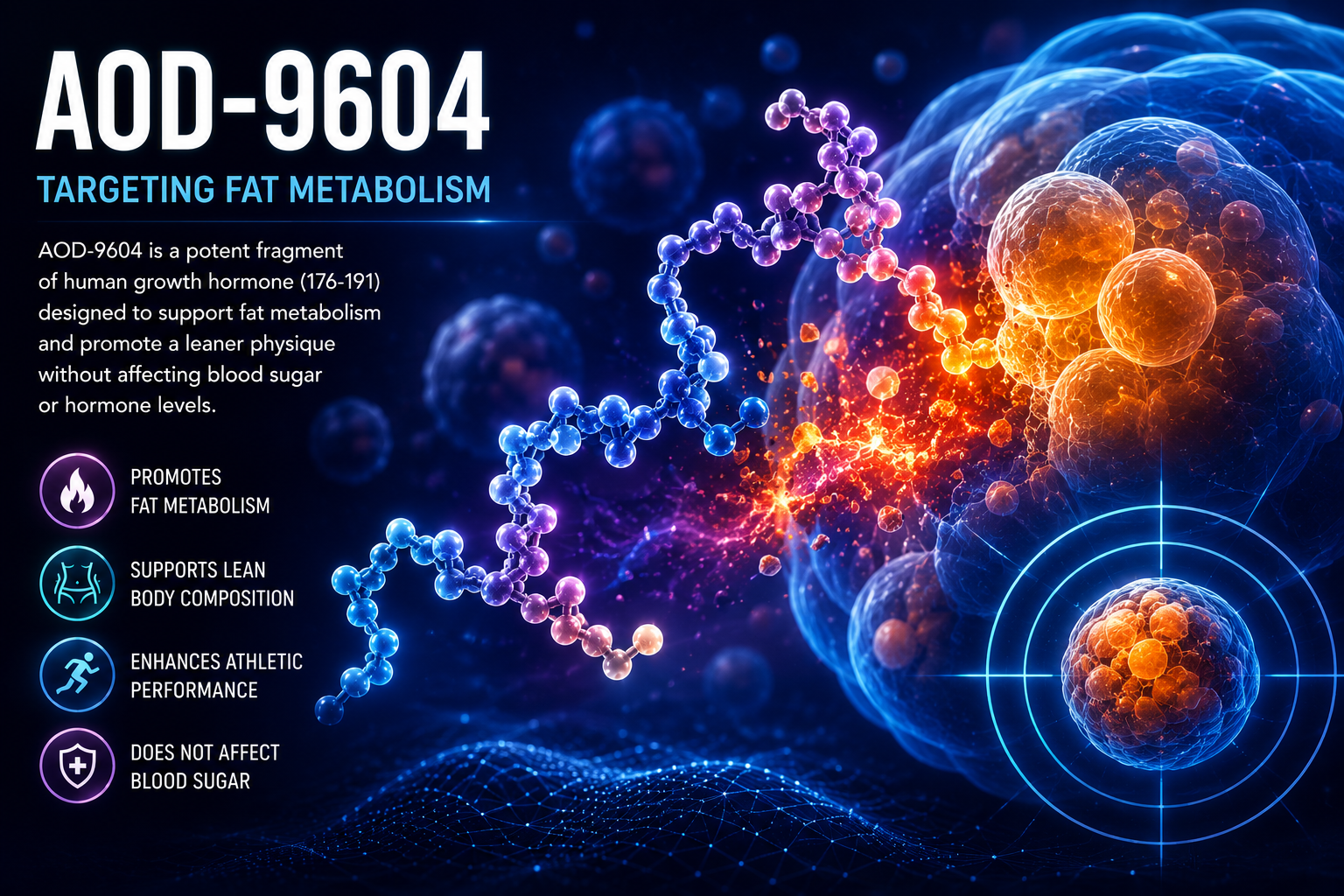
AOD-9604 is a synthetic peptide derived from a specific fragment of human growth hormone (HGH), commonly associated with amino acids 176–191 of the growth hormone molecule. It was originally developed as an “anti-obesity” research compound intended to retain the fat-metabolism effects of HGH while minimizing many of HGH’s broader hormonal effects.
Unlike full HGH, AOD-9604 was designed to focus primarily on fat metabolism signaling rather than growth-related pathways. Researchers have investigated it for potential roles in:
- Fat metabolism and body composition
- Lipolysis (fat breakdown)
- Lipogenesis inhibition (reduced fat formation)
- Metabolic efficiency
- Stubborn fat and obesity-related research
AOD-9604 is not FDA approved for medical use and remains an investigational/research peptide.
How Does AOD-9604 Work?
AOD-9604 was engineered to isolate the lipolytic (fat metabolism) portion of HGH while avoiding many of the hormone’s growth-promoting actions. Research suggests it may influence fat metabolism through signaling pathways involving adipose (fat) tissue and beta-adrenergic activity.
Researchers believe AOD-9604 may:
- Increase lipolysis (fat breakdown)
- Reduce lipogenesis (new fat storage)
- Increase fat oxidation and energy utilization
- Influence adipose tissue metabolism without acting like full HGH
In simple terms, researchers study AOD-9604 as a compound that may help encourage the body to mobilize stored fat more efficiently.
AOD-9604 vs Human Growth Hormone (HGH)
AOD-9604 is often misunderstood as “growth hormone,” but they are not the same.
Full HGH:
- Broad systemic hormone effects
- Increases growth signaling
- Can elevate IGF-1
- Influences muscle, metabolism, tissue growth, and glucose pathways
AOD-9604:
- Small peptide fragment of HGH
- Primarily studied for fat metabolism pathways
- Minimal or no meaningful IGF-1 stimulation in research settings
- Not designed to mimic the full hormonal effects of HGH
This distinction is one reason AOD-9604 gained attention in metabolic and body-composition research.
The Relationship Between AOD-9604 and IGF-1
One major area of interest is that AOD-9604 appears to function without significantly increasing IGF-1.
Insulin-like growth factor 1 (IGF-1) is involved in growth signaling and many of the anabolic effects associated with HGH.
Preclinical and clinical investigations suggested AOD-9604 may preserve fat-metabolism signaling while avoiding meaningful IGF-1 elevation, which researchers viewed as a differentiating feature compared with full HGH.
Potential Research Areas of Interest
1. Fat Metabolism and Body Composition
AOD-9604 is most commonly researched for its possible effects on body fat regulation.
Researchers have explored whether it may:
- Promote fat oxidation
- Improve fat mobilization
- Reduce fat accumulation signaling
- Support lean body composition research
Animal studies demonstrated increased lipolytic activity and reductions in body fat, though translation to humans has been mixed and remains under investigation.
2. Obesity and Metabolic Research
AOD-9604 advanced into human clinical studies for obesity and metabolic research.
Early studies suggested modest benefits in some participants; however, later clinical outcomes were less compelling, and commercial pharmaceutical development was eventually discontinued.
Because of this, AOD-9604 is generally viewed as an experimental metabolic compound rather than an established therapy.
3. Stubborn Fat Research
AOD-9604 is frequently discussed in research communities in relation to stubborn fat areas such as:
- Abdomen
- Waistline
- Hips
- Lower body fat distribution
The theory is that its lipolytic signaling may support fat mobilization in metabolically resistant areas, though robust human evidence remains limited.
Why Is AOD-9604 Compared to GLP-1 Compounds?
AOD-9604 is often discussed alongside compounds such as:
- Semaglutide
- Tirzepatide
However, the compounds target very different mechanisms.
GLP-1 compounds:
- Appetite suppression
- Slower gastric emptying
- Blood sugar regulation
- Reduced calorie intake
AOD-9604:
- Fat metabolism signaling research
- Lipolysis and fat oxidation pathways
- Not primarily appetite-focused
Researchers generally view them as targeting different metabolic pathways.
Potential Side Effects in Research Settings
Human safety data remains limited, though studies generally reported tolerability comparable to placebo in some trials. More research is needed to establish long-term safety.
Researchers evaluating AOD-9604 may monitor for:
- Injection site irritation
- Headache
- Fatigue
- Gastrointestinal discomfort
- Individual metabolic variability
Frequently Asked Questions
Is AOD-9604 the same as HGH?
No. AOD-9604 is a fragment derived from HGH, not full growth hormone. It does not reproduce the broad hormonal effects of HGH.
Does AOD-9604 build muscle?
It is not generally studied as a muscle-building peptide and does not appear to act like anabolic HGH pathways.
Does AOD-9604 suppress appetite?
No. Unlike GLP-1 medications, AOD-9604 is not primarily associated with appetite suppression and is studied more for fat-metabolism signaling.
Is AOD-9604 FDA approved?
No. AOD-9604 is not FDA approved for the treatment of obesity or other conditions.
Final Thoughts
AOD-9604 is a research peptide derived from a specific fragment of human growth hormone that has attracted attention for its potential role in fat metabolism, lipolysis, and body-composition research. Early research showed promise for metabolic applications, but later clinical outcomes were mixed, and development did not progress to pharmaceutical approval.
For educational purposes, AOD-9604 is best understood as a metabolic research peptide under investigation rather than an established medical therapy.