GLOW Peptide Blend: What It Is, How It Works, Benefits, and Research Overview
A comprehensive, evidence-graded review of GLOW, a nonstandardized research blend most commonly formulated with GHK-Cu, BPC-157, and TB-500 for studies involving extracellular-matrix remodeling, collagen signaling, cellular migration, angiogenesis, epithelial repair, and soft-tissue recovery biology.
What Is GLOW?
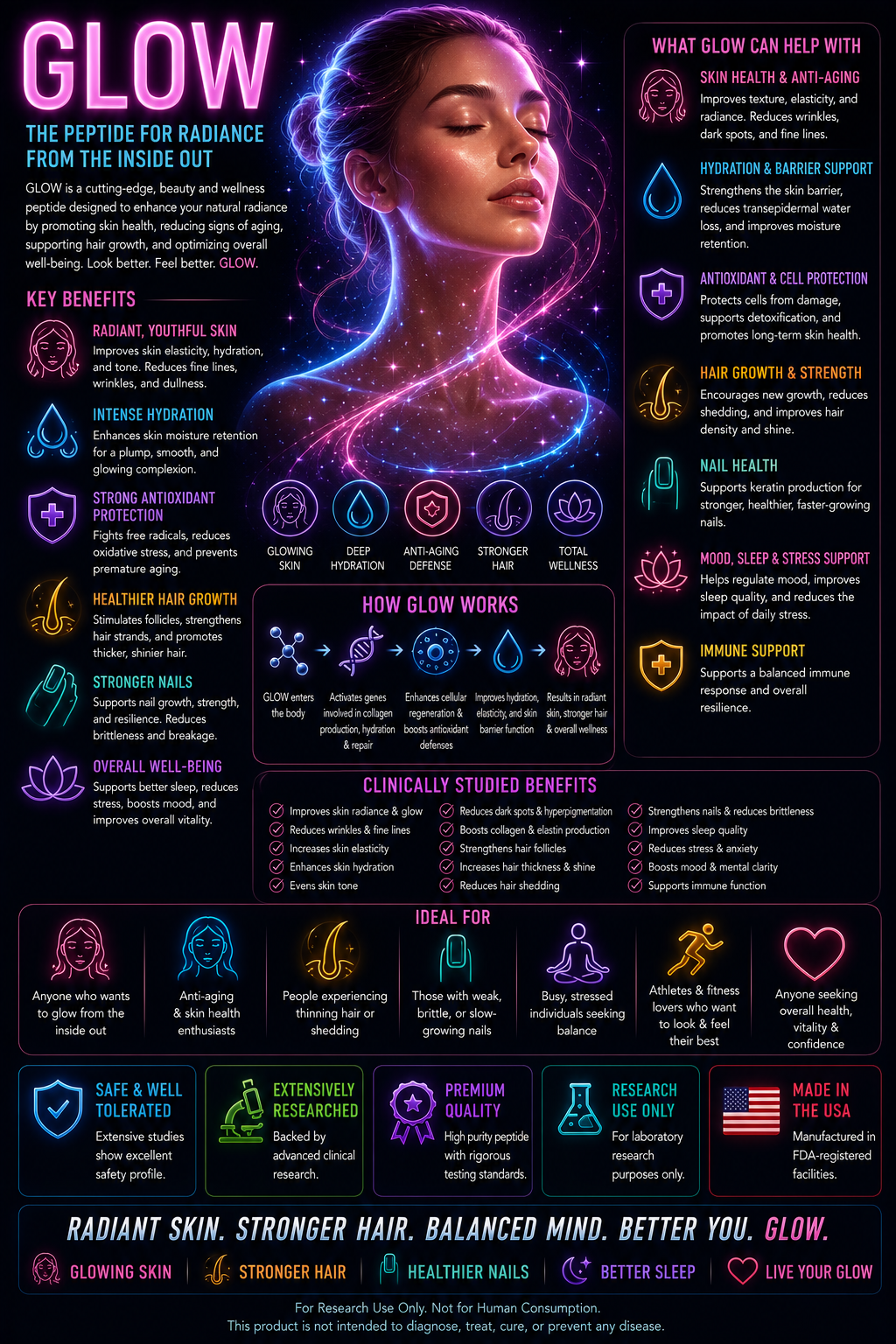
GLOW is a commercial shorthand for a three-component peptide blend. It is commonly marketed for research involving skin appearance, collagen, extracellular-matrix signaling, angiogenesis, migration, soft-tissue repair, and generalized “recovery” pathways.
70 mg
GHK-Cu, BPC-157, TB-500
Multi-peptide blend
No
None established
No
Why combine these three components?
- GHK-Cu: Extracellular-matrix remodeling, collagen, elastin, copper signaling, angiogenesis, skin biology, and wound repair
- BPC-157: Experimental cytoprotective, vascular, tendon, muscle, nerve, and gastrointestinal signaling
- TB-500: A commercial research term linked to thymosin-β4-related actin, cell migration, angiogenesis, and repair biology
Typical GLOW Composition
| Component | Common amount | Percentage by labeled mass | Primary research theme |
|---|---|---|---|
| GHK-Cu | 50 mg | 71.4% | Matrix remodeling, collagen, skin, copper signaling |
| BPC-157 | 10 mg | 14.3% | Cytoprotection, vascular and soft-tissue research |
| TB-500 | 10 mg | 14.3% | Actin-associated migration and regenerative signaling |
| Total | 70 mg | 100% | Common commercial blend total |
🧬 Component Chemistry and Identity
GHK-Cu
Gly-His-Lys coordinated with Cu²⁺
| Peptide length | 3 amino acids |
|---|---|
| Free GHK formula | C₁₄H₂₄N₆O₄ |
| Free GHK molecular weight | 340.38 Da |
| Complex identity | Exact apparent mass depends on coordination, hydration, protonation, and counterions |
| Key issue | Free GHK, free copper, and intact GHK-Cu must be distinguished analytically |
BPC-157
GEPPPGKPADDAGLV
| Length | 15 amino acids |
|---|---|
| Representative formula | C₆₂H₉₈N₁₆O₂₂ |
| Molecular weight | Approximately 1419.5 Da |
| Structure | Linear pentadecapeptide with no disulfide bond |
TB-500
The name “TB-500” is chemically ambiguous. Some suppliers use it for full-length synthetic thymosin-β4, while others use it for a shorter fragment, modified analogue, or proprietary sequence.
Full-length thymosin-β4: SDKPDMAEIEKFDKSKLKKTETQEKNPLPSKETIEQEKQAGES
| Full-length size | 43 amino acids |
|---|---|
| Full-length molecular weight | Approximately 4963 Da |
| Major function | G-actin binding and cytoskeletal regulation |
| Critical COA requirement | Exact amino-acid sequence and molecular species |
📅 Research Background and Development Timeline
- 1970s–1980s: GHK was isolated from human plasma and identified as a copper-binding tissue-remodeling peptide.
- 1980s–1990s: Thymosin-β4 research established actin binding, migration, angiogenesis, and wound-repair functions.
- 1990s–2000s: BPC-157 was studied extensively in animal gastrointestinal, vascular, tendon, ligament, muscle, and nerve-injury models.
- 1999 onward: Thymosin-β4 studies demonstrated accelerated wound healing, collagen deposition, angiogenesis, and keratinocyte migration.
- 2000s–2020s: GHK-Cu research expanded into skin aging, collagen, tissue remodeling, antioxidant signaling, and topical cosmetic applications.
- Commercial GLOW era: Vendors began combining GHK-Cu, BPC-157, and TB-500 in one lyophilized vial.
- Current status: The blend itself has no standardized formulation, formal development dossier, or controlled human clinical program.
🧠 Proposed Multi-Pathway Mechanism
1. Extracellular-matrix remodeling
GHK-Cu is studied for collagen, elastin, glycosaminoglycan, matrix-metalloproteinase, and fibroblast regulation.
2. Cell migration and cytoskeleton
Thymosin-β4-related molecules regulate actin dynamics and influence keratinocyte, endothelial-cell, fibroblast, and progenitor-cell migration.
3. Vascular signaling
GHK-Cu, BPC-157, and thymosin-β4 each have angiogenesis- or endothelial-related activity in experimental systems.
4. Cytoprotection and tissue response
BPC-157 is investigated for endothelial, nitric-oxide, gastrointestinal, tendon, muscle, nerve, and vascular repair pathways.
5. Skin and collagen focus
GHK-Cu gives GLOW a stronger cosmetic and dermal research identity than blends composed only of BPC-157 and TB-500.
6. Multi-component uncertainty
Overlapping pathways do not prove synergy. The ingredients may be additive, redundant, antagonistic, unstable together, or active at mismatched molar concentrations.
GHK-Cu Research
Collagen and extracellular matrix
GHK-Cu has been reported to increase collagen, elastin, and glycosaminoglycan synthesis while regulating matrix breakdown and remodeling.
Skin-aging research
Controlled topical studies and cosmetic research have reported improvements in skin firmness, elasticity, fine-line appearance, and dermal density.
Wound repair
GHK-Cu supports fibroblast activity, epithelial repair, angiogenesis, nerve outgrowth, and matrix organization in experimental systems.
Copper-dependent biology
Copper is required for enzymes involved in collagen cross-linking, antioxidant defense, mitochondrial function, and connective-tissue biology.
Research limitation
Evidence is strongest for topical and local applications. It does not establish the efficacy or safety of systemic use within GLOW.
BPC-157 Research
Gastrointestinal protection
Animal studies include ulcers, inflammatory damage, intestinal injury, fistulas, and gastrointestinal healing.
Tendon, ligament, and muscle research
Preclinical studies report effects on fibroblast migration, collagen organization, vascularization, and functional recovery.
Vascular and nitric-oxide pathways
BPC-157 has been investigated in models involving endothelial function, nitric oxide, vascular occlusion, and angiogenic signaling.
Nerve research
Animal studies include peripheral-nerve injury, spinal-cord injury, and neurobehavioral models.
Human evidence
Published human evidence remains extremely limited. Small uncontrolled observations and early safety work do not establish broad efficacy or long-term safety.
TB-500 and Thymosin-β4 Research
Actin binding
Thymosin-β4 binds monomeric G-actin and regulates cytoskeletal organization and cell movement.
Cell migration
It promotes migration of keratinocytes, endothelial cells, fibroblasts, and progenitor cells.
Wound and corneal repair
Full-length thymosin-β4 has been studied in dermal wounds, pressure ulcers, venous ulcers, epidermolysis bullosa, and corneal injury.
Clinical tissue-repair studies
Topical thymosin-β4 has reached phase 2 wound-healing studies and demonstrated repair-related signals in selected human populations.
TB-500 identity problem
Those data apply to defined thymosin-β4 preparations and cannot automatically be transferred to every commercial product labeled “TB-500.”
Skin, Collagen, and Cosmetic Research
Why GLOW is marketed for skin
GHK-Cu is the dominant ingredient by mass and has the strongest direct connection to collagen, skin density, elasticity, matrix repair, and cosmetic research.
Potential complementary roles
- GHK-Cu: Fibroblast and matrix signaling
- Thymosin-β4: Keratinocyte and endothelial migration
- BPC-157: Experimental vascular and cytoprotective signaling
Topical evidence cannot be assumed for injection
Local skin exposure, systemic exposure, distribution, concentration, and safety are fundamentally different.
Hair research
GHK-Cu has been investigated for follicular and scalp-related signaling, but direct evidence for the full GLOW blend in hair restoration is absent.
Soft-Tissue and Wound-Repair Research
Dermal wounds
GHK-Cu and thymosin-β4 each have substantial preclinical wound-healing literature, with thymosin-β4 also reaching selected human wound studies.
Tendon and ligament models
BPC-157 research includes tendon-to-bone healing, ligament injury, fibroblast migration, and collagen organization.
Muscle models
BPC-157 and thymosin-β4-related research include muscle injury, migration, vascularization, and regeneration.
Angiogenesis
All three components may influence new-vessel formation. This may support repair in some models but raises concerns in cancer, proliferative disease, and abnormal fibrosis.
No direct GLOW trial
No peer-reviewed study has established that the three-component blend improves wounds, tendons, ligaments, muscle, skin, or hair in humans.
Potential Synergy and Research Rationale
Matrix plus migration
GHK-Cu primarily supports matrix and fibroblast biology, while thymosin-β4 emphasizes actin dynamics and cell migration.
Repair plus vascular signaling
BPC-157 and thymosin-related peptides overlap in endothelial and angiogenic pathways.
Skin plus deeper tissue pathways
GHK-Cu supplies the dermal and collagen emphasis, while BPC-157 and TB-500 are marketed toward broader soft-tissue signaling.
Potential redundancy
Multiple pro-angiogenic or migratory signals may not provide proportional benefit and could increase biological uncertainty.
No proven ratio
There is no published evidence that 50/10/10 mg, 70/10/10 mg, or any other ratio is optimal.
Formulation Compatibility and Stability Challenges
Copper-mediated oxidation
GHK-Cu contains redox-active copper. Copper may catalyze oxidation of methionine, histidine, aromatic residues, or other susceptible sites in neighboring peptides.
TB-500 methionine vulnerability
Full-length thymosin-β4 contains methionine, making oxidation particularly relevant in a copper-containing blend.
Different optimal pH ranges
A pH favorable to GHK-Cu coordination may not be optimal for BPC-157 or thymosin-β4 stability.
Adsorption and aggregation
Peptides may adsorb to glass, rubber, filters, and plastics. Copper complexes can also interact with buffers and excipients.
Lyophilization complexity
A stable blend must retain each component’s identity, amount, potency, complexation state, redispersion, and low aggregate level through freeze-drying and storage.
Visual appearance is insufficient
A clear blue solution can still contain oxidized, decomplexed, hydrolyzed, truncated, or biologically weakened components.
Major Evidence Limitations
- GLOW is a commercial name rather than a defined scientific entity
- No controlled GLOW efficacy trials
- No GLOW pharmacokinetic or biodistribution studies
- No established human dose or ratio
- BPC-157 human evidence remains extremely limited
- TB-500 identity varies by seller
- Most GHK-Cu evidence is topical or preclinical
- Potential copper-mediated degradation in the blend
- Potential angiogenic, fibrotic, immune, and cancer-related complexity
- No proof that a one-vial blend is superior to separate formulations
- No FDA-reviewed manufacturing specification
Potential Side Effects and Safety Considerations
No established blend safety profile
Combining three research compounds can create new exposure patterns, degradation products, immune effects, and pharmacology not predicted from separate studies.
Potential direct risks
- Injection-site pain, redness, swelling, or irritation
- Hypersensitivity and anti-drug antibodies
- Endotoxin or microbial contamination
- Incorrect component identity or ratio
- Copper-related oxidative degradation
- Unknown liver and kidney handling
- Unknown reproductive and developmental risk
Angiogenesis concern
Angiogenesis is important to healing but can also support tumors, proliferative disorders, and inappropriate vascular growth.
Fibrosis and matrix concern
Increasing collagen or matrix signaling is not universally beneficial and could theoretically worsen fibrotic processes in susceptible tissues.
Regulatory and sports concerns
BPC-157 and TB-500 are unapproved, and related substances are prohibited in sport under anti-doping rules.
🧪 Laboratory Testing Methods
| Method | Purpose | Important limitation |
|---|---|---|
| Component-specific LC-HRMS | Confirms GHK/GHK-Cu, BPC-157, and the TB-500 species | A single total-ion result cannot quantify all components |
| Orthogonal RP-HPLC/UPLC methods | Separates each peptide and related degradants | One gradient may not resolve all three components |
| MS/MS peptide mapping | Confirms BPC-157 and TB-500 sequences | Requires component-specific validated methods |
| ICP-MS copper assay | Measures total copper | Total copper does not prove correct GHK-Cu coordination |
| GHK-Cu speciation assay | Measures copper-bound GHK, free GHK, and free copper | Coordination changes with pH, buffer, and dilution |
| TB-500 identity assay | Determines whether the material is full thymosin-β4, fragment, or analogue | The product name alone is chemically insufficient |
| Component net-content assays | Quantify each component separately | Total vial weight cannot establish ratios |
| Counterion and water analysis | Corrects TFA, acetate, salts, and moisture | Gross powder weight may overstate active mass |
| SEC-HPLC / DLS | Measures aggregates and particles | Components differ greatly in size and charge |
| Oxidation panel | Detects copper-catalyzed oxidation, including methionine oxidation | Requires stressed reference controls |
| pH and osmolality | Evaluate final solution conditions | Acceptable values do not prove compatibility |
| GHK-Cu fibroblast/matrix assay | Measures matrix-related functional activity | Does not establish other components’ potency |
| BPC-157 migration/endothelial assay | Measures component-related activity | No universally accepted compendial assay |
| Thymosin-β4 actin-binding assay | Confirms actin-related function | Not applicable if TB-500 is a different fragment |
| Sterility, endotoxin, and particles | Required for finished injectable evaluation | Raw-powder purity cannot establish injectable safety |
| Stability-indicating blend study | Tracks each component through mixing, lyophilization, storage, and reconstitution | Separate-component stability cannot predict blend stability |
📄 How to Interpret a GLOW COA
- Confirm the exact formula and ratio. Do not assume every GLOW vial is 50/10/10 mg.
- Identify TB-500 chemically. Require the exact sequence and molecular weight.
- Require separate identity testing for all three components.
- Require separate quantitative assays for GHK-Cu, BPC-157, and TB-500.
- Do not accept one “99% purity” value for the entire blend.
- Confirm BPC-157’s complete 15-residue sequence.
- Confirm copper concentration, free copper, free GHK, and intact GHK-Cu.
- Measure oxidation products, especially methionine oxidation if full thymosin-β4 is present.
- Correct each component for TFA, acetate, water, and salts.
- Require component-specific potency assays where available.
- Perform blend-specific stability testing, not only separate-ingredient testing.
- For a finished injectable, require sterility, endotoxin, particles, fill accuracy, container closure, and post-reconstitution stability.
- A COA does not prove clinical efficacy, human safety, or FDA equivalence.
📊 Comparison Tables
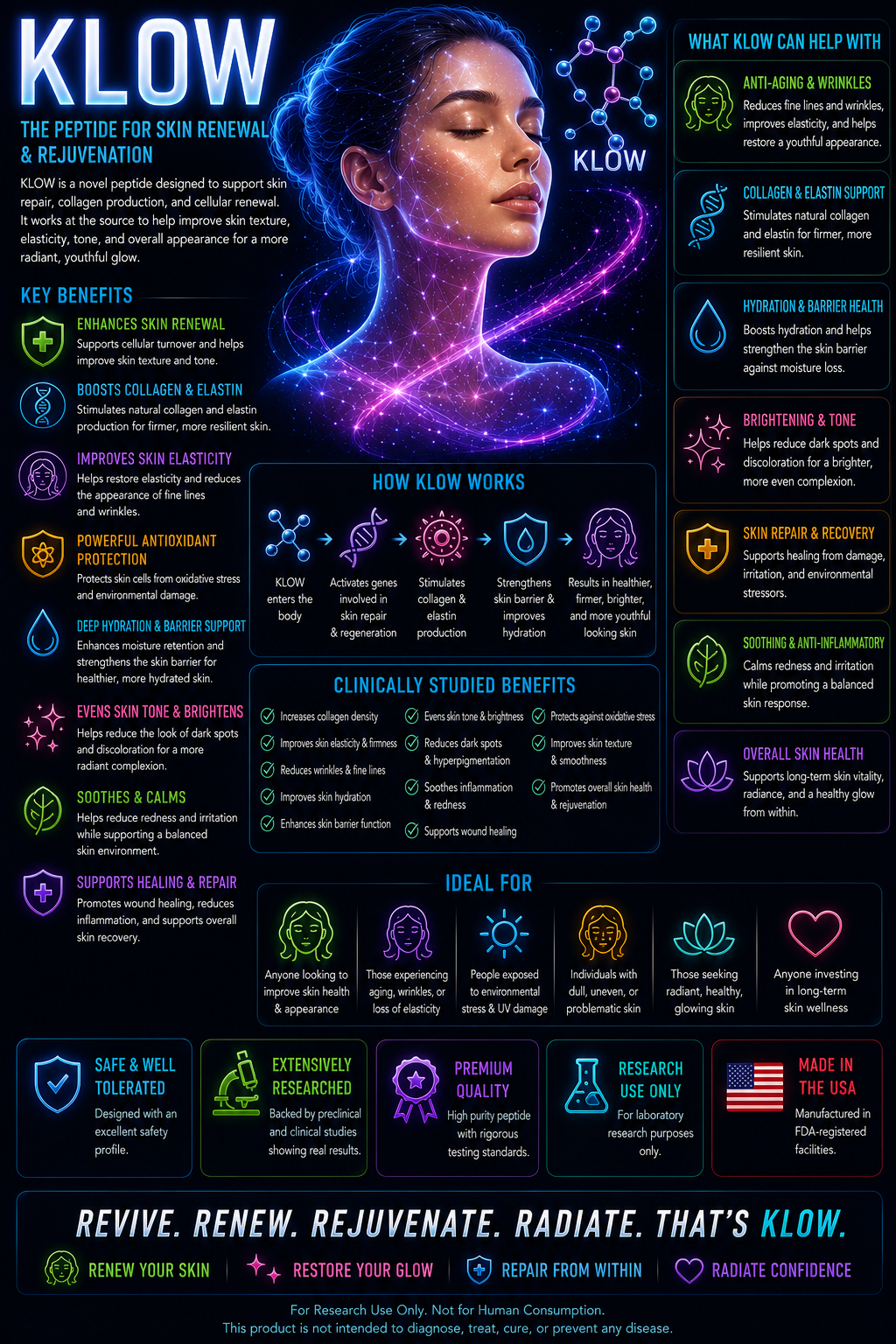
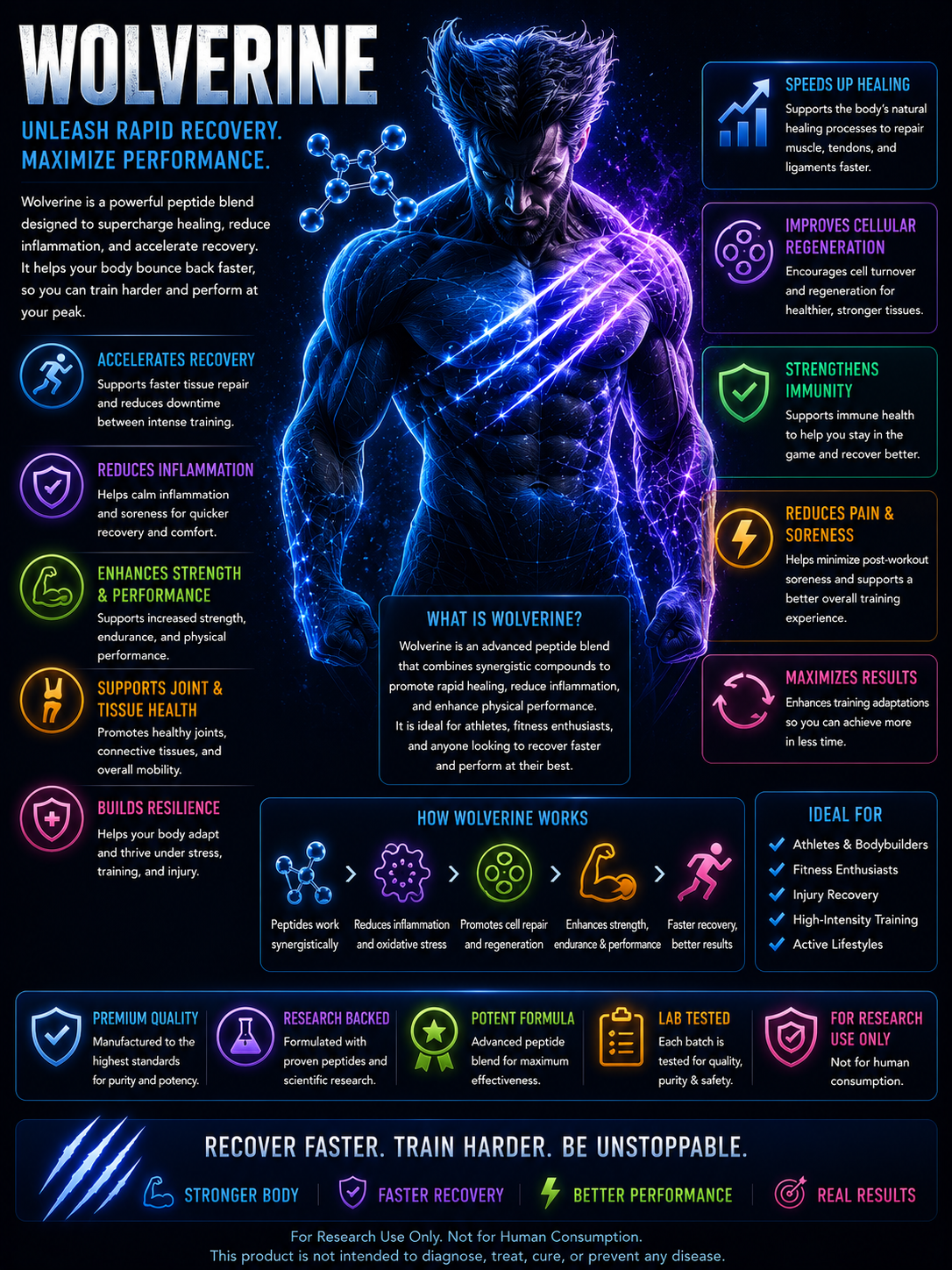
GLOW vs KLOW vs Wolverine Blend
| Feature | GLOW | KLOW | Wolverine blend |
|---|---|---|---|
| Typical components | GHK-Cu + BPC-157 + TB-500 | GHK-Cu + BPC-157 + TB-500 + KPV | BPC-157 + TB-500 |
| Distinctive feature | GHK-Cu skin/matrix emphasis | Adds KPV inflammatory signaling | Simpler two-component blend |
| Common total | 70 mg | 80 mg | Variable |
| Standardized? | No | No | No |
GLOW Components at a Glance
| Component | Size | Main research pathway | Human evidence |
|---|---|---|---|
| GHK-Cu | Tripeptide copper complex | Matrix, skin, collagen, remodeling | Some topical/cosmetic and wound data |
| BPC-157 | 15 aa | Cytoprotection, vascular and repair models | Very limited |
| TB-500 / Tβ4 | Variable; Tβ4 is 43 aa | Actin, migration, angiogenesis, wound repair | Some defined Tβ4 clinical research |
One-Vial GLOW vs Separate Components
| Feature | One-vial GLOW | Separate validated components |
|---|---|---|
| Convenience | Higher | Lower |
| Ratio flexibility | Fixed | Adjustable for experiments |
| Copper compatibility risk | Higher | Lower before mixing |
| Analytical complexity | High | Lower per component |
| Root-cause analysis | Difficult | Easier |
Raw GLOW vs Research-Qualified GLOW
| Attribute | Basic blend claim | Research-qualified blend |
|---|---|---|
| Identity | Product name and total mass | Three separate identities and exact TB-500 sequence |
| Content | Total vial weight | Individual net-content values |
| Purity | Single percentage | Component-specific purity and degradants |
| Stability | Assumed | Blend-specific real-time and accelerated data |
| Human equivalence | Neither establishes an FDA-approved medicine | |
🖼️ Original Diagram Specifications
- GLOW composition wheel: GHK-Cu 50 mg, BPC-157 10 mg, and TB-500 10 mg.
- Three-pathway mechanism: Matrix remodeling, vascular/cytoprotective signaling, and actin-dependent migration.
- Molecular-size comparison: GHK-Cu, BPC-157, and full thymosin-β4.
- Skin-repair cascade: Fibroblast activation, collagen, keratinocyte migration, angiogenesis, and remodeling.
- Compatibility risk: Copper-mediated oxidation, pH, aggregation, and surface adsorption.
- Evidence pyramid: Component studies versus absent direct GLOW trials.
- COA workflow: Three identities, three contents, copper speciation, degradants, potency, sterility, and stability.
❓ Frequently Asked Questions
Is GLOW one peptide?
No. It is a commercial blend name.
What is usually in GLOW?
Most commonly GHK-Cu 50 mg, BPC-157 10 mg, and TB-500 10 mg.
Is the formula standardized?
No. Totals and ratios vary.
What does GLOW stand for?
There is no universally recognized scientific expansion. It is primarily a branded descriptive name.
Is GLOW FDA approved?
No.
Has the complete blend been studied in clinical trials?
No controlled clinical program for the commercial blend has been established.
What is GLOW studied for?
Commercial research descriptions focus on collagen, skin, extracellular matrix, tissue repair, angiogenesis, and cellular migration.
Is GLOW the same as KLOW?
No. KLOW commonly adds KPV.
What is TB-500?
The name is ambiguous. The exact amino-acid sequence must be stated.
Can GHK-Cu oxidize the other peptides?
Potentially. Copper can catalyze oxidation, especially of susceptible residues such as methionine.
Does a blue color prove authentic GHK-Cu?
No. Color cannot establish peptide identity, copper coordination, purity, or component amount.
Does a clear solution prove stability?
No. Degraded material can remain visually clear.
Does 99% HPLC purity prove the entire blend is correct?
No. Each component requires separate identity, quantity, purity, and preferably functional testing.
Is there an established human dose?
No.
Can separate component research prove GLOW works?
No. It provides a rationale but does not establish combination efficacy or safety.
Final Thoughts
GLOW is best understood as a commercial three-component research formulation rather than a single peptide. Its common design combines GHK-Cu matrix and copper biology, BPC-157 cytoprotective and vascular research, and thymosin-related migration and actin signaling.
The concept is biologically plausible, especially for skin, collagen, angiogenesis, and soft-tissue research. GHK-Cu and defined thymosin-β4 preparations each have meaningful wound and dermal literature. However, BPC-157 remains weakly supported by human data, TB-500 is inconsistently defined, and the complete GLOW blend has not been validated in controlled trials.
The mixture also creates significant formulation challenges. Copper may promote oxidation, component sizes and molar ratios differ substantially, and one chromatographic purity value cannot characterize the complete blend.
A credible GLOW evaluation must identify and quantify all three components separately, state the exact TB-500 sequence, verify copper coordination and free copper, measure oxidation and aggregation, correct for counterions and water, demonstrate component-specific potency, and establish sterility, particles, container compatibility, and real-time stability for the finished formulation.
📚 References
- Pickart L, Margolina A. Regenerative and Protective Actions of the GHK-Cu Peptide in the Light of New Gene Data. International Journal of Molecular Sciences. 2018.
- Pickart L. The Human Tripeptide GHK and Tissue Remodeling. Journal of Biomaterials Science, Polymer Edition. 2008.
- Dou Y, et al. The Potential of GHK as an Anti-Aging Peptide. 2020.
- Pickart L, Vasquez-Soltero JM, Margolina A. GHK Peptide as a Natural Modulator of Multiple Cellular Pathways. BioMed Research International. 2015.
- Mortazavi SM, et al. Topically Applied GHK as an Anti-Wrinkle Peptide. 2024.
- Malinda KM, et al. Thymosin β4 Accelerates Wound Healing. Journal of Investigative Dermatology. 1999.
- Goldstein AL, Kleinman HK. Advances in the Basic and Clinical Applications of Thymosin β4. Expert Opinion on Biological Therapy. 2015.
- Kleinman HK, et al. Thymosin β4 Promotes Dermal Healing. 2016.
- Treadwell T, et al. The Regenerative Peptide Thymosin β4 Accelerates Dermal Healing. 2012.
- Guarnera G, et al. Thymosin β4 and Venous Ulcers: Clinical Remarks on a European Prospective Study. 2007.
- McGuire FP, et al. Regeneration or Risk? A Narrative Review of BPC-157 for Musculoskeletal Healing. 2025.
- Gwyer D, et al. Gastric Pentadecapeptide BPC-157 and Tissue Healing. 2019.
- Xu C, et al. Preclinical Safety Evaluation of BPC-157. Regulatory Toxicology and Pharmacology. 2020.
- Lee E, et al. Safety of Intravenous Infusion of BPC-157 in Humans. 2025.
- Vasireddi N, et al. Emerging Use of BPC-157 in Orthopaedic Sports Medicine. 2025.
- Rahman OF, et al. Therapeutic Peptides in Orthopaedics. 2026.
- Mayfield CK, et al. Injectable Peptide Therapy: A Primer for Orthopaedic and Sports Medicine Physicians. 2026.
- International Council for Harmonisation. ICH Q1A(R2), Q2(R2), Q3A, Q3B, Q3C, and Q6B.
- United States Pharmacopeia General Chapters <621>, <71>, <85>, and <788>.
GLOW nomenclature, commercial composition, component chemistry, skin and repair evidence, compatibility, safety, and analytical recommendations were reviewed in July 2026.