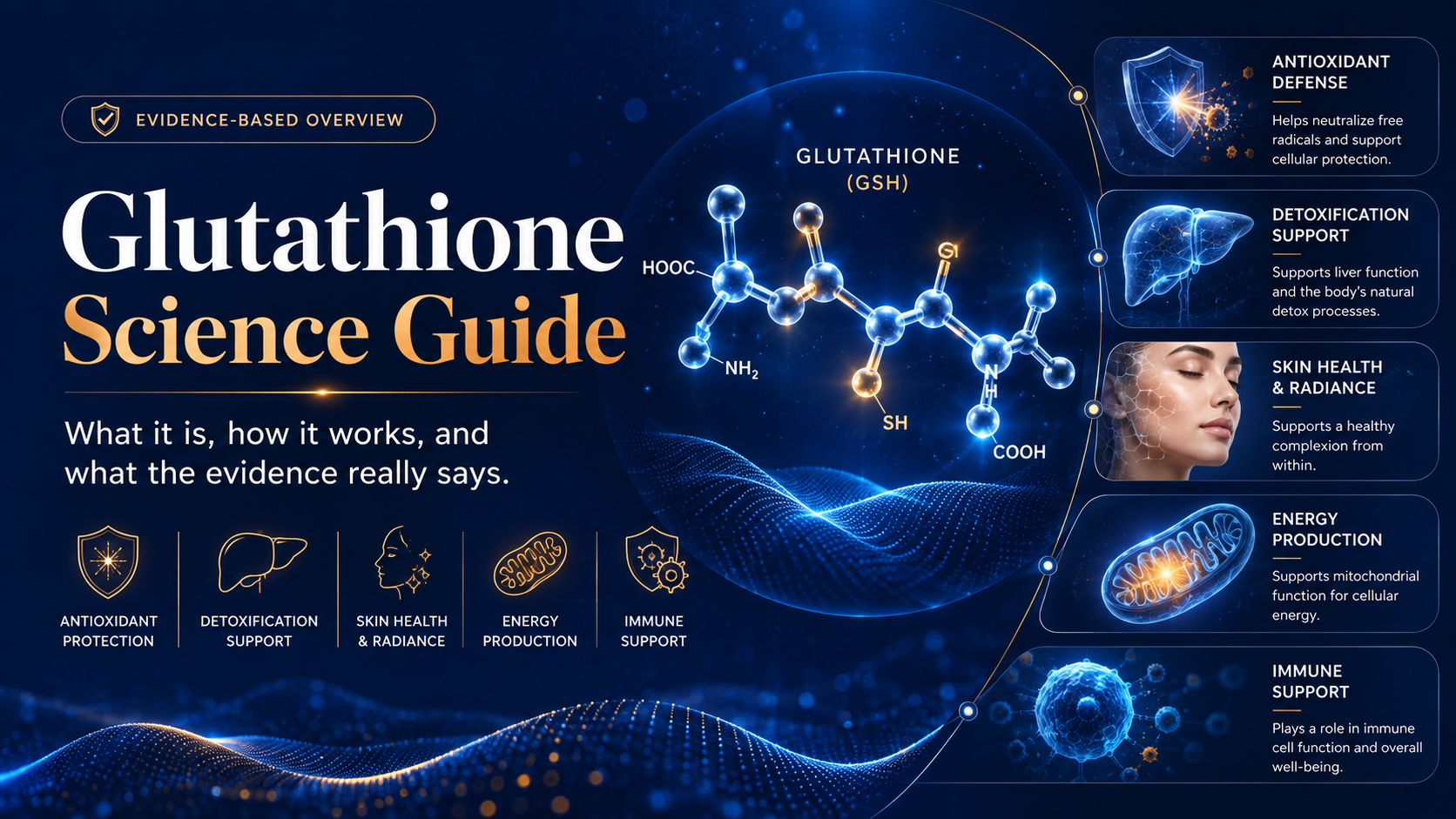
Healthy aging · muscle · metabolism · recovery · intimacy
Peptides for Seniors:A Research-First Guide to Healthy Aging, Recovery & Performance
A detailed guide to the biology of aging, peptide signaling in recovery, muscle, metabolism, mitochondrial function and intimacy, and how to evaluate promising research without treating regulatory status as the only measure of scientific value.
Research and educational use only. Southern Aminos materials are sold for research use only and are not for human consumption. This article discusses scientific literature, mechanisms, study design and analytical quality. It does not diagnose, prescribe, recommend human use, or provide dosing, reconstitution or injection instructions.
Article contents
Peptides are not one treatment category and they are not one evidence category. They include endogenous signaling molecules, established medicines, investigational compounds, laboratory reference materials and research-use-only products. Those categories answer different questions; none should be used as a shortcut for judging the scientific value of a molecule.
FDA drug approval is product- and indication-specific. It provides important information about a particular formulation and use, but it is not the only way a molecule can have biological activity or research value. Vitamins and dietary supplements, for example, operate under a different regulatory framework and are not individually approved as drugs before sale. In the same way, a peptide can have compelling mechanistic or preclinical data before it ever becomes a marketed medicine. The correct conclusion is not “approved equals useful and unapproved equals useless.” The correct conclusion is that regulatory status, evidence strength, analytical quality and intended use must be evaluated separately.
For Southern Aminos, the boundary is clear: research materials are supplied for laboratory and analytical research only—not for human consumption. Within that research setting, the meaningful questions are whether the compound is correctly identified, whether the batch is consistent, whether the relevant purity and content tests were performed, and whether the experimental model can answer a well-defined question about aging biology.
This guide takes a research-first approach. It examines why BPC-157, TB-500, KPV, GHK-Cu, growth-hormone secretagogues, metabolic peptides, MOTS-c, PT-141 and related compounds attract interest in senior biology while keeping mechanism, translational evidence, human data and analytical quality in their proper lanes.
1Executive summary: peptide science is a continuum
Peptide research does not divide neatly into “FDA-approved and valid” versus “not approved and worthless.” A better framework separates four independent dimensions: biological plausibility, evidence stage, analytical quality and intended use. A compound can be highly informative in cell or animal models while still awaiting robust human trials, and a clinically established peptide can still be inappropriate when its findings are generalized beyond the population studied.
Ten conclusions worth remembering
- Aging is not one hormone deficiency. It involves inflammation, cellular senescence, mitochondrial dysfunction, loss of protein quality control, immune aging, dysregulated nutrient sensing and declining muscle function.
- Regulatory status and scientific value are different questions. Approval is meaningful for a particular drug product and indication, but lack of approval alone does not prove a molecule lacks biological activity or research potential.
- Evidence should be graded, not dismissed. Cell studies, animal models, human pharmacology and clinical outcomes each answer different questions.
- No peptide has been proven to reverse the full human aging process. That does not make pathway research unimportant; it defines the size of the unanswered question.
- Senior-focused research should prioritize function. Strength, gait, recovery, metabolic health and independence are more informative than a single biomarker.
- Repair peptides deserve rigorous study. BPC-157, TB-500, KPV and GHK-Cu have plausible mechanisms and meaningful preclinical signals, but each requires compound-specific study designs.
- Growth-hormone signaling is context-dependent. The research question is not simply whether GH or IGF-1 rises, but what happens to muscle, glucose, fluid balance, sleep and function.
- Research-use-only is a real boundary. RUO materials are for laboratory study, not a disguised human-use pathway.
- Batch documentation matters. Identity, purity, net content and appropriate contamination testing must correspond to the exact batch being studied.
- Foundational biology still matters. Exercise, protein intake, sleep, disease control and other variables should be measured or controlled because they strongly influence aging outcomes.
2Why aging changes the peptide question
Aging is not a single switch that can be turned back on. The modern “hallmarks of aging” framework organizes aging into interconnected processes such as genomic instability, telomere attrition, epigenetic alteration, loss of protein quality control, disabled macroautophagy, dysregulated nutrient sensing, mitochondrial dysfunction, cellular senescence, stem-cell exhaustion, altered cell-to-cell communication, chronic inflammation and dysbiosis.2 Peptides attract interest because biological signaling molecules can influence several of these pathways—but influence is not the same as clinical reversal.
| Aging process | What it can look like | Why peptide marketing focuses on it |
|---|---|---|
| Chronic inflammation | Low-grade “inflammaging,” slower recovery and greater disease burden. | KPV, BPC-157 and GHK-Cu provide distinct research tools for inflammatory, epithelial and repair signaling; translation should be evaluated compound by compound. |
| Cellular senescence | Damaged cells stop dividing yet release inflammatory signals. | Peptide research may influence senescence-related inflammation, metabolism or tissue signaling indirectly; direct senolytic activity is a separate question. |
| Mitochondrial dysfunction | Lower energetic efficiency, fatigue and reduced metabolic flexibility. | MOTS-c and metabolic peptides are especially relevant to mitochondrial communication, stress adaptation and metabolic flexibility. |
| Sarcopenia and dynapenia | Loss of muscle, strength, balance and reserve; strength may fall faster than mass. | GH-axis peptides offer research tools for endocrine signaling, while functional endpoints determine whether muscle biology actually improves. |
| Hormonal change | Menopause, lower testosterone in some men, altered GH/IGF-1 rhythms and thyroid changes. | Research should distinguish normal age-related signaling shifts from true endocrine deficiency and connect biomarkers to function. |
| Immune aging | Weaker response to new threats alongside more background inflammation. | Immune-modulating peptides are biologically interesting, and their evidence stage and material quality should be evaluated separately. |
Sarcopenia is the senior-health bottleneck
Modern consensus defines sarcopenia as a muscle disease centered on low strength, with low muscle quantity or quality helping confirm the diagnosis and poor physical performance identifying severe disease.3 It increases the risk of falls, fractures, disability and loss of independence. This is why any intervention that produces major weight loss, suppresses appetite or changes endocrine signaling must be judged partly by what happens to strength and lean tissue—not only by the scale.
Recovery slows for more than one reason
Older tissue can have lower blood flow, fewer responsive satellite cells, altered collagen turnover, chronic disease, medication effects, inadequate protein intake and less anabolic response to the same meal or exercise stimulus. A peptide may influence one pathway while structural injury, nerve compression, metabolic disease or rehabilitation continue to shape the result. Strong research designs measure those variables rather than assuming one mechanism explains the entire outcome.
3How to evaluate peptide research across evidence and quality stages
The word peptide describes chemistry, not a regulatory class and not a guarantee of effect. Insulin, collagen fragments, signaling peptides, peptide drugs and research reagents can all be peptides while serving completely different purposes. Drug approval tells us that a specific product and indication completed a defined review. It does not function as a universal verdict on every other molecule, and it should not replace reading the actual research.
The reverse is also true: a promising mechanism or positive animal study does not automatically establish human safety or effectiveness. The most useful approach is to keep four questions separate: What does the molecule do? What evidence supports that claim? What is the quality of the actual material? What is the material intended for?
Provides standardized human data for a defined formulation and population. It is a strong evidence stream, but its findings should not be generalized automatically to every use or formulation.
May serve individualized clinical needs. Evidence for the molecule and quality of the preparation remain separate questions.
Exists to answer unresolved scientific questions. Investigational status is not evidence of failure; it means the evidence is still being built.
Intended for laboratory, analytical or preclinical research—not human consumption. Its value depends on accurate identity, batch documentation, reproducibility and an appropriate experimental design.
Regulation, evidence and quality answer different questions
Regulatory status describes how a product may be marketed or used.
Evidence stage describes what has been demonstrated in cells, animals, human pharmacology or clinical outcomes.
Analytical quality describes whether the tested material is what the label says it is and whether the batch meets the stated specifications.
Intended use defines the boundary: Southern Aminos research materials are RUO and not for human consumption.
A research evidence ladder
- Replicated clinical outcomes: meaningful changes in function, disease events, symptoms or quality of life.
- Controlled human efficacy studies: validated benefits in a defined population.
- Human pharmacology and biomarker studies: exposure, signaling or laboratory changes that guide future trials.
- Animal models: whole-organism evidence that can reveal tissue effects, dose-response patterns and safety signals.
- Cell and molecular studies: mechanism, receptor activity and pathway mapping.
- Analytical reproducibility: confirmation that repeated experiments are using consistent, correctly characterized material.
Lower rungs are not worthless; they are where discovery begins. The mistake is not using preclinical evidence. The mistake is describing a preclinical result as though it already answered a human clinical question.
4Recovery and tissue-repair peptides: an active research frontier
BPC-157, TB-500, KPV and GHK-Cu are among the most discussed research peptides because aging tissues often show slower angiogenic responses, altered collagen turnover, chronic inflammatory signaling, reduced cellular migration and weaker repair capacity. These compounds do not all work the same way, and the evidence for one should never be borrowed to support another.
The current landscape is scientifically productive: extensive preclinical work has generated clear hypotheses, while early human observations and topical studies identify where controlled research should go next. The balanced position is neither to declare these peptides proven therapies nor to dismiss them because the human literature is incomplete.
| Peptide | Research focus | Evidence landscape | Research-quality considerations | Balanced interpretation |
|---|---|---|---|---|
| BPC-157 | Angiogenesis, nitric-oxide signaling, fibroblasts, gastrointestinal integrity and tendon, muscle, bone or nerve-repair models. | Broad animal and mechanistic literature; human data remain early, including a very small short-term tolerance report. | Sequence identity, assay, related impurities, stability and batch consistency are essential when comparing experiments. | High-priority translational research subject; human functional outcomes remain to be established. |
| TB-500 | Cell migration, actin biology, angiogenesis, flexibility of repair and scar-related processes. | Most mechanistic literature concerns thymosin beta-4 biology; the commonly studied fragment should be evaluated as its own material rather than treated as identical to the full-length protein. | Confirm fragment identity, sequence, net content and degradation profile. | Mechanistically interesting, with an important need for compound-specific translation. |
| KPV | A short alpha-MSH-derived tripeptide studied in inflammatory signaling, epithelial models and intestinal transport. | Strong mechanistic rationale and useful preclinical models; controlled human outcome data are limited. | Short peptides can be especially sensitive to identity, assay, counterion, moisture and storage conditions. | Valuable anti-inflammatory research tool with substantial room for translational study. |
| GHK-Cu | Copper transport, extracellular-matrix signaling, collagen and elastin biology, wound models, skin and hair research. | Mechanistic literature is extensive and topical cosmetic evidence is more developed than systemic research. | Copper loading, complex formation, color, assay method and free-copper control can alter interpretation. | One of the broader peptide research platforms, especially for skin and matrix biology. |
From observation to hypothesis: where anecdotes fit
Case reports and personal observations are not useless. They can reveal unexpected signals, help researchers choose endpoints and identify subgroups worth studying. What they cannot do by themselves is separate the compound from natural recovery, rehabilitation, expectancy, selection bias or simultaneous interventions. The correct scientific response to a strong anecdote is a better experiment.
Senior-specific research questions
Older tissue is not simply younger tissue moving more slowly. Vascular disease, diabetes, collagen cross-linking, medications, sarcopenia and immune aging can all change the response. Strong senior-focused research should measure not only molecular repair signals but also strength, range of motion, pain, gait, tissue quality and durability of the response.
5Muscle, growth-hormone signaling and sarcopenia
Growth hormone is released in pulses and influences the liver and other tissues to produce IGF-1. This axis affects protein turnover, connective tissue, sleep-linked endocrine rhythms, glucose handling and body composition. GH pulse amplitude and IGF-1 commonly change with age, which makes the pathway scientifically relevant—but “more GH” is not a complete research hypothesis.
Sarcopenia is defined by declining strength and physical performance, not by one hormone value. Strong research therefore needs functional endpoints: grip strength, chair-stand performance, gait speed, lean-mass quality, recovery and falls. A peptide that changes GH or IGF-1 without improving those outcomes may still teach us about signaling, but it has not answered the sarcopenia question.
Useful for studying what happens when GH signaling is pathologically low and how replacement differs from stimulation.
A physiologic shift involving pulse timing, sleep, body composition, activity and nutrition—not automatically a disease state.
Strength, mobility and muscle quality should remain central even when the experiment focuses on endocrine biomarkers.
Sermorelin
Sermorelin is a growth-hormone-releasing hormone analog that stimulates the pituitary. It is a useful research probe because it preserves more of the body's own signaling architecture than simply adding GH from outside the system. The key translational questions are whether changes in pulse behavior or IGF-1 are accompanied by improvements in sleep, body composition, recovery or function—and how those responses differ between true deficiency and normal aging.
CJC-1295 and ipamorelin
CJC-1295-related compounds prolong growth-hormone-releasing signaling, while ipamorelin activates the ghrelin receptor. Their complementary mechanisms explain the research interest in combining them. Human pharmacology has shown that the pathway can be moved; what remains less developed is long-duration evidence connecting those hormonal changes to strength, fall prevention, cognitive function or preserved independence in older populations.
For research, sequence definition and formulation matter. “CJC-1295” may refer to materially different forms with different half-lives, and results should not be pooled unless the exact molecule is specified. Ipamorelin studies likewise require clear characterization, exposure data and age-appropriate glucose and fluid-balance endpoints.
Tesamorelin as a translational benchmark
Tesamorelin demonstrates that a GH-releasing analog can produce measurable changes in visceral fat in a defined human population. That makes it valuable as a translational benchmark. It does not mean every GH-releasing peptide will produce the same response, or that visceral-fat reduction automatically equals stronger muscle or slower aging. The lesson is to match the pathway, population, formulation and endpoint precisely.
The functional foundation every muscle study should measure
A senior-focused peptide experiment that measures only IGF-1 is incomplete. The research becomes far more informative when hormonal changes are paired with objective measures of strength, muscle quality, glucose handling and daily function.
6Metabolic health, weight loss and diabetes: the deepest human peptide dataset
Metabolic peptides provide the clearest example of how a mechanistic idea can progress from receptor biology to large human programs. Obesity, type 2 diabetes, fatty-liver disease, cardiovascular disease, kidney disease and sleep apnea all threaten healthy aging, and incretin-based research has generated far more human outcome data than most other peptide categories.
Semaglutide and tirzepatide as research benchmarks
Semaglutide activates the GLP-1 receptor, while tirzepatide activates GIP and GLP-1 receptors. Their clinical programs show what mature peptide research can look like: receptor pharmacology, dose-response work, body-composition studies, large randomized trials and outcome measurement across glucose, weight, cardiovascular risk and sleep apnea.
For senior biology, the key lesson is not simply that these compounds reduce weight. It is that weight loss changes the entire research environment—food intake, hydration, medication requirements, lean tissue, gait and strength. A study that reports scale weight without tracking muscle quality and function can miss the outcome that matters most to an older organism.
The muscle-preservation question
Substantial weight loss includes both fat and lean tissue. That does not negate the metabolic benefits; it makes study design more demanding. Protein intake, resistance training, baseline sarcopenia, rate of loss and physical performance should be documented so researchers can distinguish healthier body composition from simple mass reduction.
Retatrutide, amylin combinations and next-generation signaling
Retatrutide combines GIP, GLP-1 and glucagon receptor activity, while cagrilintide-based combinations add amylin signaling. These programs illustrate the next research question: whether multi-receptor activity can improve metabolic outcomes while maintaining acceptable tolerability, nutritional intake and muscle function. Their value is not diminished by being investigational; their evidence is simply at a different stage from the older incretin programs.
MOTS-c and mitochondrial metabolic signaling
MOTS-c is a mitochondria-derived peptide studied in stress adaptation, metabolic signaling and exercise-related biology. Animal and mechanistic findings make it an especially interesting candidate for aging research because mitochondrial dysfunction is a central hallmark of aging. Human exposure and outcome data remain limited, which makes careful analytical characterization and transparent preclinical study design particularly important.
A naming reminder
Not every drug that acts on a peptide receptor is itself a peptide, and not every peptide in the same pathway has the same pharmacology. Receptor target, molecular structure, half-life and formulation all matter.
7Sexual health and intimacy: central signaling, vascular function and context
Sexual function in later life is shaped by central desire pathways, vascular health, nerve function, hormones, sleep, pain, medications, mood and relationship context. Peptide research is especially interesting here because some compounds act primarily in the brain rather than through the vascular mechanism emphasized by conventional erectile-function drugs.
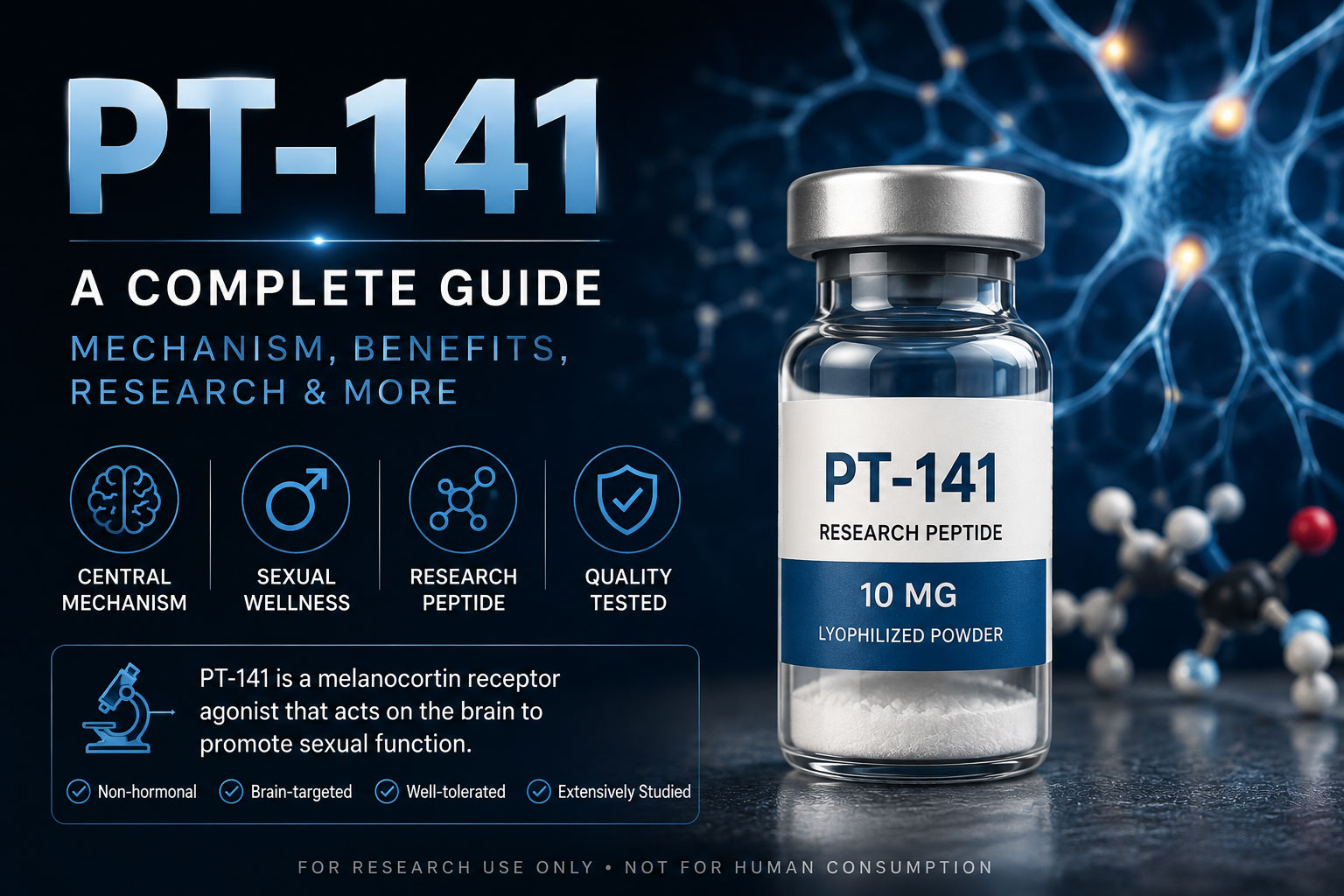
PT-141 (bremelanotide)
PT-141 activates central melanocortin pathways, particularly signaling associated with MC3R and MC4R. Human studies in women established measurable effects on desire and distress, while earlier male research explored erectile responses. These findings make PT-141 one of the clearest examples of a peptide affecting sexual motivation through neural signaling rather than acting only on blood flow.
Senior-focused research should examine whether age, cardiovascular disease, antihypertensive medication, menopause, testosterone status, depression and cognitive health change the response. Nausea, transient blood-pressure effects, pigmentation and gastric-emptying changes are relevant variables in human research, but they should not overshadow the core scientific point: melanocortin signaling is a distinct and legitimate route for studying desire.
Oxytocin and kisspeptin
Oxytocin research spans bonding, social salience, stress and reproductive physiology, yet outcomes are highly context-dependent. Kisspeptin is a reproductive signaling peptide under investigation for sexual and emotional processing. Both illustrate why experimental design must account for relationship context, expectancy, hormone status and the difference between desire, arousal and physical function.
PT-141 and melanotan II are not interchangeable
The two compounds emerged from related melanocortin research but have different development histories, selectivity and side-effect profiles. A study of one should not be cited as evidence for the other. This distinction is a recurring peptide-research principle: structural similarity does not erase pharmacologic differences.
Variables that can shape sexual-health research
8Representative evidence: what each research stage can tell us
This table is not a human-use recommendation. It shows why peptide evidence should be described by study stage and outcome rather than reduced to a single approved/unapproved label.
| Research subject | Evidence type | What it demonstrates | Open question | Evidence stage |
|---|---|---|---|---|
| Semaglutide | Large randomized metabolic and cardiovascular programs. | Sustained effects on weight, glucose and selected disease outcomes in defined populations. | How best to preserve muscle and function across different older-adult phenotypes. | Mature human outcome evidence. |
| Tirzepatide | Large diabetes, obesity and sleep-apnea programs. | Multi-receptor incretin signaling can produce major metabolic and body-composition changes. | Long-term functional outcomes in frail, sarcopenic and very old populations. | Mature human outcome evidence. |
| Tesamorelin | Controlled human studies in a defined lipodystrophy population. | A GH-releasing analog can alter visceral-fat biology in humans. | How far those findings translate to other populations, endpoints or related secretagogues. | Defined human efficacy evidence. |
| Bremelanotide / PT-141 | Controlled human studies of desire and distress, plus earlier male erectile-response research. | Central melanocortin signaling can influence sexual motivation and response. | Age-, sex-, cardiovascular- and medication-specific response patterns. | Human efficacy evidence in selected populations. |
| CJC-1295 / ipamorelin | Human pharmacology, endocrine signaling and limited clinical literature. | The GH/IGF-1 axis can be altered through complementary pathways. | Whether those changes improve strength, recovery, sleep or independence over time. | Human pharmacology; limited outcome evidence. |
| BPC-157 | Extensive animal and mechanistic research; very early human tolerance observations. | Multiple repair-related pathways can be influenced in experimental systems. | Controlled human efficacy, exposure-response, long-term safety and population selection. | Preclinical-to-early-translational stage. |
| GHK-Cu | Mechanistic matrix research, wound models and selected topical cosmetic studies. | Copper-peptide signaling can affect collagen, elastin and tissue-remodeling pathways. | Standardized systemic research, copper handling and long-term functional outcomes. | Mechanistic plus selected topical human evidence. |
| Retatrutide | Published phase 2 and later-stage human metabolic programs. | Triple-receptor signaling can produce very large average weight changes. | Complete long-term outcome, tolerability and senior-specific functional data. | Late-stage investigational human evidence. |
| MOTS-c | Mitochondrial, metabolic and stress-response models. | A mitochondria-derived peptide can function as a signaling molecule in experimental systems. | Human pharmacology, tissue exposure, reproducible endpoints and long-term effects. | Preclinical research stage. |
9Why senior biology changes research design and interpretation
A healthy 65-year-old and a frail 85-year-old are not one biological population. Age changes renal clearance, body composition, autonomic responses, appetite, balance, medication exposure and recovery reserve. A signal that looks minor in a young model can become important in an older one, while an effect seen in a metabolically unhealthy cohort may not generalize to a healthy senior.
Variables to control in senior-focused research
- Baseline strength, gait speed, body composition, nutrition and activity level.
- Glucose status, kidney and liver function, blood pressure and hydration.
- Cancer history, inflammatory disease, endocrine disorders and sleep quality.
- Concurrent medications, supplements, exercise programs and rehabilitation.
- Age range and frailty status rather than chronological age alone.
- Predefined stopping criteria and transparent adverse-event reporting in any human study.
Human research is not the same as self-experimentation
A controlled study defines the material, exposure, eligibility criteria, endpoints, monitoring and reporting plan. Research-use-only materials are not a substitute for that structure and are not intended for human consumption.
10Research material quality: the molecule name is only the beginning
A scientific conclusion is only as reliable as the material used to generate it. Peptides can oxidize, hydrolyze, aggregate, lose content, form sequence-related impurities or behave differently under different storage and formulation conditions. Two vials with the same printed name are not automatically equivalent research materials.
This is where a research-focused supplier should be judged: not by whether a compound has a drug approval, but by whether the exact batch is accurately identified, independently characterized and documented in a way that supports reproducible work. RUO is an intended-use classification; it should never be treated as permission to lower analytical standards.
What a strong batch-quality program should address
What a certificate of analysis can and cannot prove
- Identity of the tested sample
- Assay or net content
- Selected purity and impurity results
- Specified contaminant tests that were actually performed
- Traceability to the reported batch
- Every possible contaminant was tested
- All vials are identical without an adequate sampling plan
- A result will translate from one model to another
- Clinical effectiveness or medical suitability
- Integrity after improper storage or handling
The Southern Aminos research-use-only position
Southern Aminos supplies research materials for analytical and laboratory use. The company’s role is to support access, batch documentation and quality transparency—not to diagnose, prescribe or advise human use. That separation protects both scientific integrity and the clear boundary of research-use-only materials.
Avoid stacking experimental uncertainty
Combining many compounds in one experiment makes it harder to identify mechanism, interaction or causality. The strongest research design changes one meaningful variable at a time, uses appropriate controls, records batch information and attempts replication.
11Common myths and the more accurate research view
12A research-first framework for peptide studies in aging
A strong project starts with a question, not a vial. The goal is to design an experiment that can distinguish mechanism from noise, document the exact material used and produce a result that another researcher could attempt to reproduce.
- Define the biological question. Examples include collagen remodeling, inflammatory signaling, mitochondrial stress response, GH pulse behavior or melanocortin receptor activity.
- Choose the correct evidence level. Decide whether the project is analytical, cell-based, animal, translational or human observational research.
- Specify the exact molecule. Sequence, fragment, salt or counterion, copper complex, modification and formulation must be unambiguous.
- Verify the batch. Match the label and batch number to the analytical documentation and record storage and handling.
- Use appropriate controls. Include vehicle, comparator, baseline and positive or negative controls where the model allows.
- Measure meaningful endpoints. Pair pathway markers with tissue, functional or behavioral outcomes that answer the question.
- Control senior-biology variables. Age, frailty, nutrition, activity, medications, metabolic status and sex can all alter the result.
- Predefine analysis and stopping rules. Avoid changing the outcome after seeing the data.
- Replicate. A single experiment can generate a signal; repeatability creates confidence.
- Report uncertainty honestly. A result can be promising without being final.
| Signal | What it looks like | Research response |
|---|---|---|
| Green | Clear question, exact molecule, batch-specific documentation, appropriate controls, measurable endpoints and reproducible methods. | Proceed with transparent documentation and an attempt at replication. |
| Amber | Strong mechanism or animal signal but limited translation, small sample, uncertain formulation or incomplete quality data. | Treat the result as hypothesis-generating and design the next experiment to resolve the uncertainty. |
| Red | Unknown identity, mismatched batch, no controls, guaranteed claims, undisclosed stacking or results that cannot be reproduced. | Do not treat the conclusion as reliable evidence. |
Questions to ask before interpreting a peptide study
13Frequently asked questions
Does a peptide need FDA approval to have scientific value?
No. Approval applies to a specific marketed drug product and indication. Cell, animal, translational and investigational research can have substantial scientific value before approval exists. The evidence should be described at its actual stage.
Does “not approved” automatically mean unsafe or ineffective?
No. It means the product has not completed that particular drug-review pathway for a defined use. Safety and effectiveness remain compound-, formulation-, route-, population- and evidence-specific questions. Research-use-only materials, however, are not intended for human consumption.
Why are vitamins and supplements not FDA-approved like drugs?
They are regulated under a different framework. That difference illustrates why regulatory category should not be confused with a universal scientific score. Evidence and product quality still vary widely within every category.
What does research use only mean?
RUO materials are intended for laboratory, analytical or preclinical research. They are not for human consumption, diagnosis, treatment, self-administration or compounding for personal use.
Why are BPC-157, TB-500, KPV and MOTS-c still important?
They address biologically meaningful pathways and have generated substantial mechanistic or animal data. That makes them valuable research subjects and supports further translational work; it does not justify describing them as established human therapies.
Can growth-hormone secretagogues teach us about aging?
Yes. They are useful tools for studying pulse signaling, IGF-1, body composition, sleep and recovery. The best research pairs endocrine markers with strength, glucose, fluid balance and functional outcomes.
What makes peptide research different in seniors?
Frailty, sarcopenia, polypharmacy, kidney and liver function, vascular disease, nutrition and immune aging can all alter response. Chronological age alone is not an adequate description of the model or population.
Does a high-purity COA guarantee a good research material?
No. Purity is one attribute. Identity, net content, batch traceability, degradation, storage and relevant contaminant testing also affect reproducibility.
Are anecdotes useful?
They can reveal signals and generate hypotheses, but they cannot establish causation or quantify an effect without controls and replication.
Can peptides replace exercise, protein and sleep in aging research?
No. Those variables influence the same pathways and outcomes. They must be standardized, measured or controlled so a peptide-related effect can be interpreted correctly.
What is Southern Aminos’ role?
Southern Aminos supplies research-use-only materials and batch-focused analytical documentation. It does not diagnose, prescribe, provide dosing advice or sell materials for human consumption.
The bottom line
Peptide science does not divide neatly into “FDA-approved and valid” versus “everything else and worthless.” Regulatory status, evidence stage, analytical quality and intended use are separate dimensions. Mature human programs provide one kind of knowledge; preclinical and investigational compounds provide another, often revealing the mechanisms that shape the next generation of research.
For senior biology, the most valuable questions center on muscle, recovery, mitochondrial function, metabolic resilience, inflammation, skin integrity, cognition and sexual health. BPC-157, TB-500, KPV, GHK-Cu, CJC-1295, ipamorelin, MOTS-c, PT-141 and related compounds are scientifically interesting because they engage those pathways—not because every question has already been answered.
Southern Aminos supports this research landscape through research-use-only access, batch-focused analytical documentation and a clear separation between scientific research and human-use claims. The strongest position is neither automatic endorsement nor automatic dismissal. It is disciplined curiosity backed by reproducible methods and honest evidence grading.
14Selected scientific references and source notes
- López-Otín C, et al. (2013). The Hallmarks of Aging. Cell / PMC.
- López-Otín C, et al. (2023). Hallmarks of aging: An expanding universe. PubMed.
- Cruz-Jentoft AJ, et al. (2019). Sarcopenia: revised European consensus on definition and diagnosis. Age and Ageing.
- National Institute on Aging. How strength training builds healthier bodies as we age. NIA.
- Endocrine Society. Hormone replacement in hypopituitarism guideline. Guideline.
- Lee E, et al. (2025). Safety of Intravenous Infusion of BPC157 in Humans. PubMed.
- Dalmasso G, et al. (2008). PepT1-mediated tripeptide KPV uptake reduces intestinal inflammation. PubMed.
- Pickart L, Margolina A. (2018). Regenerative and protective actions of GHK-Cu. PubMed.
- Look M, et al. (2025). Body-composition changes during weight reduction with tirzepatide in SURMOUNT-1. PubMed.
- Jastreboff AM, et al. (2023). Triple–Hormone-Receptor Agonist Retatrutide for Obesity. NEJM.
- Protein and Aging: Practicalities and Practice (2025). Review of protein needs in older adults. PMC.
- Creatine supplementation and exercise in aging (2025). Review of strength and lean-mass evidence in older adults. PMC.
- DailyMed. VYLEESI (bremelanotide) source information for the studied clinical formulation and population. DailyMed.