Bronchogen: What It Is, How It Works, Benefits, and Research Overview
What Is Bronchogen?
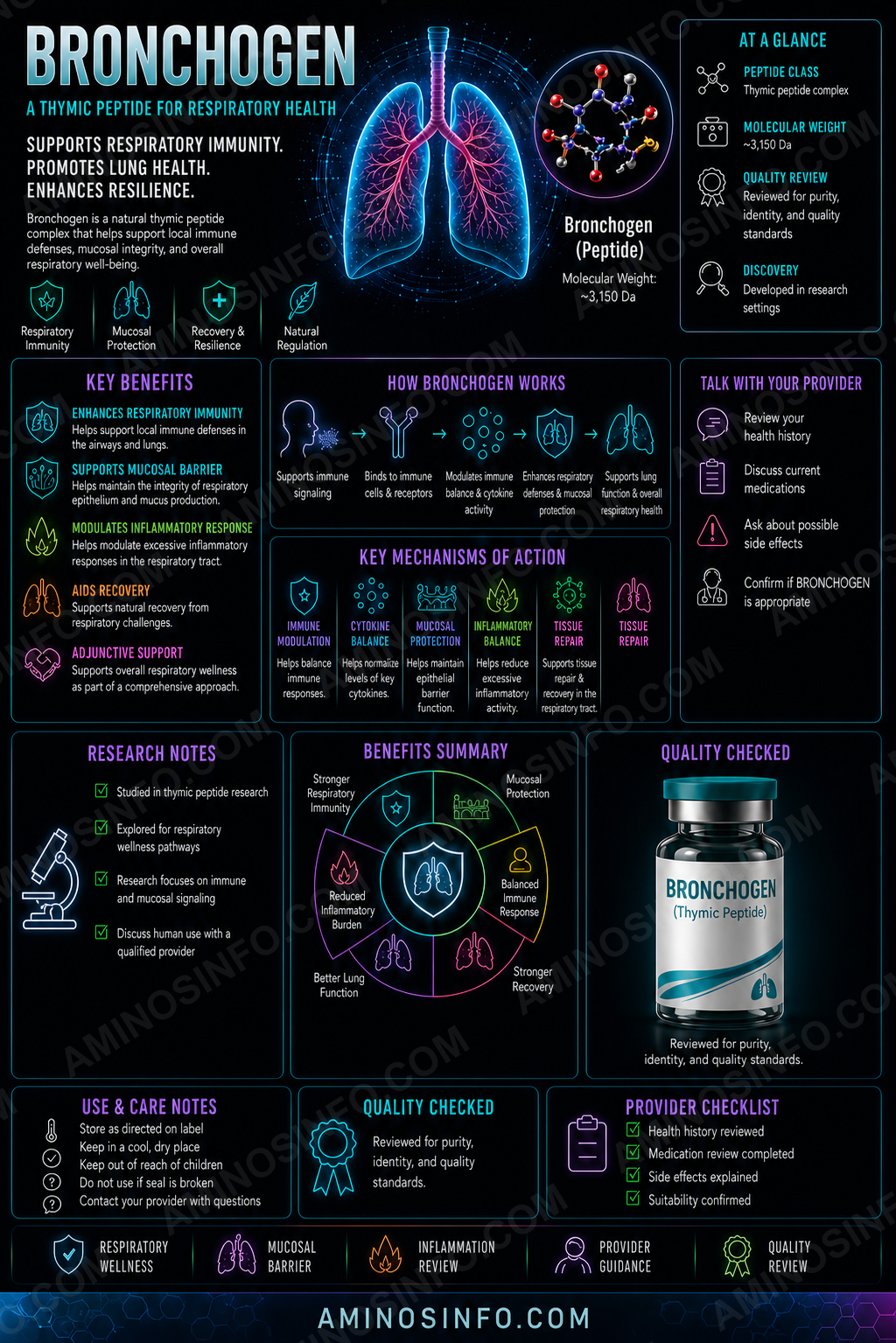
Bronchogen is a bioregulatory peptide commonly associated with respiratory and bronchial tissue research. It belongs to a class of peptide compounds often referred to as cytomedins or bioregulators, which are short peptide fragments investigated for their potential role in supporting normal cellular signaling and tissue-specific function.
Bronchogen is primarily studied in relation to:
- Bronchial and respiratory tissue support
- Cellular signaling in lung and airway tissues
- Respiratory system aging research
- Tissue regeneration and repair pathways
- Bronchial epithelial function
Unlike many common peptides used in metabolic or performance research, Bronchogen is generally discussed in the context of cellular bioregulation and tissue support research.
It is important to note that Bronchogen is a research peptide/bioregulator and is not approved by the FDA for the diagnosis, treatment, prevention, or cure of disease.
How Does Bronchogen Work?
Bronchogen is believed to function as a tissue-specific peptide bioregulator, meaning researchers investigate whether it may influence gene expression and cellular activity in bronchial tissues.
Bioregulatory peptides are theorized to help maintain normal cellular function by interacting with signaling pathways involved in:
- Cellular repair processes
- Protein synthesis regulation
- Tissue maintenance
- Cellular communication
- Age-related functional decline
In simple terms, Bronchogen is studied for whether it may help support normal bronchial tissue signaling and respiratory cellular health.
Researchers theorize that Bronchogen may:
- Support bronchial epithelial tissue function
- Influence respiratory cellular repair pathways
- Promote healthy cellular communication in airway tissue
- Help maintain normal tissue resilience during aging
Bronchogen and Respiratory Tissue Research
Bronchogen is most commonly associated with bronchial and lung tissue research.
Areas of investigation include:
- Bronchial epithelial support
- Respiratory tissue regeneration pathways
- Cellular responses to environmental stressors
- Aging-related respiratory decline
- Tissue-specific peptide signaling
Researchers studying peptide bioregulators are interested in whether short peptides like Bronchogen may influence the maintenance of normal tissue function over time.
Bronchogen vs Traditional Respiratory Medications
Bronchogen is not the same as common respiratory medications such as:
- Albuterol
- Prednisone
- Fluticasone
These medications are designed to treat diagnosed respiratory conditions or symptoms.
Bronchogen, by contrast, is generally discussed as a research bioregulator focused on cellular and tissue-level signaling, rather than immediate symptom control or disease treatment.
Potential Research Areas of Interest
1. Respiratory Tissue Support Research
Researchers investigate whether Bronchogen may:
- Support normal bronchial tissue function
- Promote healthy airway cellular signaling
- Influence tissue maintenance pathways
- Support respiratory tissue resilience
2. Aging and Cellular Longevity Research
Some peptide bioregulator research explores whether tissue-specific peptides may help maintain normal cellular function during aging.
Bronchogen has been discussed in relation to:
- Age-related respiratory changes
- Cellular maintenance pathways
- Tissue-specific peptide signaling
- Cellular resilience research
3. Environmental Stress and Tissue Recovery Research
Respiratory tissues are constantly exposed to environmental stressors such as pollutants and irritants.
Researchers are interested in whether tissue-specific bioregulators like Bronchogen may influence:
- Cellular recovery pathways
- Tissue repair signaling
- Respiratory cellular resilience
- Healthy epithelial function
Potential Side Effects in Research Settings
Published human safety data for Bronchogen is limited.
Because of this, a complete side effect profile has not been established. Researchers monitoring experimental peptide bioregulators generally observe for:
- Injection or administration-site irritation (if applicable)
- Individual sensitivity variability
- Gastrointestinal discomfort
- Mild headache or fatigue
More research is needed to better understand long-term safety and efficacy.
Frequently Asked Questions
Is Bronchogen a peptide?
Yes. Bronchogen is considered a short peptide bioregulator (cytomedin) investigated for respiratory and bronchial tissue research.
Is Bronchogen used for asthma or lung disease?
Bronchogen is not FDA approved for treating asthma, COPD, or respiratory disease. It is better understood as a research bioregulator under investigation.
Is Bronchogen the same as an inhaler?
No. Bronchogen is not a bronchodilator and is not designed for immediate symptom relief like common inhalers.
Is Bronchogen FDA approved?
No. Bronchogen is not FDA approved for medical use.
Final Thoughts
Bronchogen is a tissue-specific bioregulatory peptide associated with bronchial and respiratory cellular research. Interest in Bronchogen stems from its potential role in cellular signaling, respiratory tissue maintenance, and healthy aging pathways, though robust clinical research remains limited.
For educational purposes, Bronchogen is best viewed as a respiratory bioregulator under investigation rather than an established therapy.