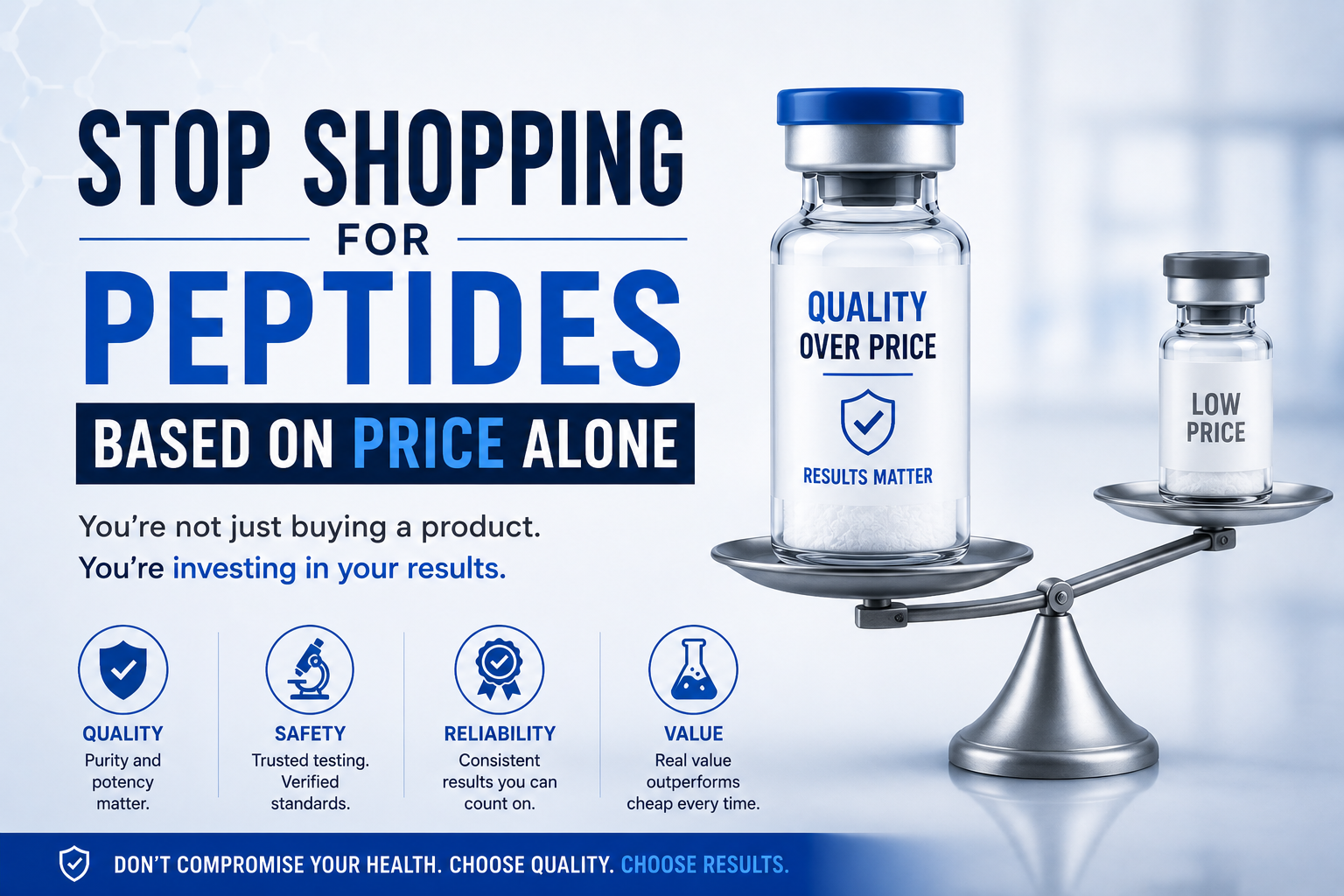
Stop Shopping for Peptides Based on Price Alone
Smart buyers compare cost and testing standards. A low price may look attractive, but without context it says very little about identity, purity, net content, batch consistency, contamination controls, or supplier quality systems.

Value is not simply the lowest sticker price. Meaningful value combines competitive pricing with verifiable testing, transparent documentation, and consistent quality controls.
Introduction
One of the most common mistakes buyers make is evaluating peptide products by price alone. The reasoning often sounds simple: why pay more when another seller lists the same peptide name and milligram amount for less?
“Why pay $80 when another company sells it for $35?”
“A peptide is a peptide, right?”
“If the label says 10 mg, they must all be basically the same.”
At first glance, this seems logical. Everyone wants to save money. But the price shown on a product page does not explain what is inside the vial, what testing was completed, how the product was handled, or whether the batch is consistent with its label.
A low-cost product that lacks meaningful verification can create larger costs through failed research, inconsistent findings, troubleshooting, replacement purchases, wasted time, and uncertainty about product integrity.
The “Cheapest Price Wins” Trap
Peptides are often treated like commodity products. Buyers see the same name, a similar vial, and the same advertised quantity, then assume the lowest price must be the best deal.
That assumption overlooks everything that occurs before the product reaches the customer. Sourcing, synthesis, purification, handling, analytical testing, documentation, storage, and batch controls can vary significantly between suppliers.
1 Similar Labels
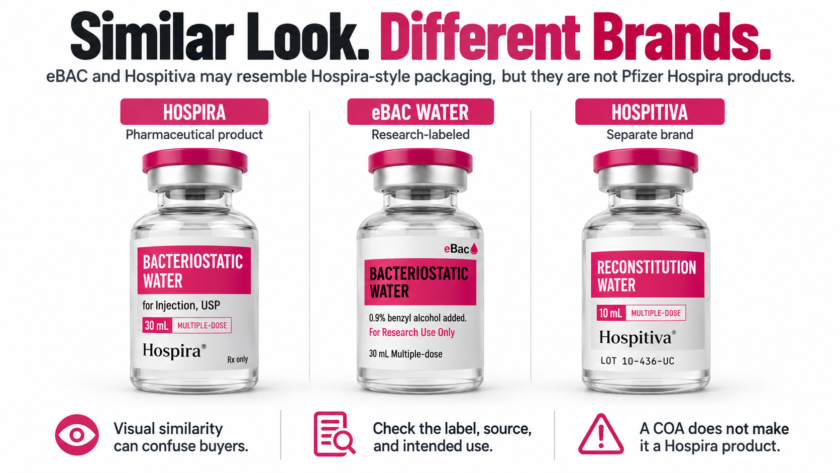
Two products can display the same peptide name and labeled amount while differing in identity verification, content, purity, and handling.
2 Similar Vials
Packaging appearance does not reveal whether a product was tested, stored correctly, or linked to a traceable batch.
3 Different Standards
One supplier may conduct multiple independent analyses while another may rely on a generic vendor document or no meaningful verification.
4 Different Outcomes
Variability in content, purity, contaminants, or storage can affect the reliability and interpretation of research results.
Why Price Alone Tells You Very Little
A peptide price tag does not automatically reveal any of the following:
- Identity confirmation
- Purity level
- Actual net peptide content
- Manufacturing consistency
- Endotoxin status
- Contamination or residual-solvent screening
- Batch-specific verification
- Storage and handling conditions
- Supplier quality systems
A low price may reflect efficient operations or a temporary promotion. It may also reflect limited testing, weak purification standards, poor batch controls, inconsistent sourcing, or reduced customer support. Without transparency, buyers cannot know which explanation applies.
What You Are Actually Paying For
Analytical Testing
Meaningful testing can include identity confirmation, HPLC purity analysis, mass confirmation, net content testing, endotoxin analysis, sterility testing, residual-solvent screening, and other contaminant evaluations when appropriate.
Each analysis adds cost. A company that conducts extensive third-party testing will usually operate with a different cost structure than one that performs little or no independent verification.
Batch Consistency
Reliable suppliers work toward repeatable manufacturing outcomes, defined quality thresholds, standardized handling, and batch-specific documentation.
Consistency reduces uncertainty and makes it easier to determine whether observed differences come from the research conditions rather than the product itself.
Manufacturing and Quality Controls
The country of origin alone does not establish product quality. More meaningful questions concern the production process, purification, contamination controls, environmental monitoring, quality assurance, and independent verification.
Certificates of Analysis
A useful COA should be connected to a specific batch and should identify the laboratory, analytical method, report number, test date, and relevant findings. Generic or unverifiable documents provide little meaningful assurance.
What a Meaningful COA Should Show
| COA Element | Why It Matters | Warning Sign |
|---|---|---|
| Batch or Lot Number | Connects the analytical report to the product being sold. | A generic report used for every batch. |
| Laboratory Identity | Allows the report and laboratory to be independently reviewed. | Missing lab information or an unverifiable laboratory. |
| Test Method | Explains how identity, purity, content, or contaminants were evaluated. | A purity number with no method or supporting data. |
| Report Number and Date | Supports traceability and helps determine whether the report is current. | Altered dates, hidden identifiers, or recycled reports. |
| Relevant Test Results | Shows what was actually measured rather than relying on marketing language. | Claims such as “pharmaceutical grade” without evidence. |
Why “Cheap” Can Become Expensive
A Inconsistent Research Outcomes
If batch quality changes, results can become difficult to reproduce or interpret. Researchers may not know whether a difference came from the compound or the product.
B Hidden Quality Concerns
Strong HPLC purity alone does not establish correct identity, exact content, sterility, acceptable endotoxin levels, or absence of unrelated contaminants.
C Lost Time
Troubleshooting inconsistent findings, repeating work, replacing materials, and reviewing conflicting documentation can exceed the initial savings.
D Reduced Confidence
When the product cannot be tied to transparent testing and traceable quality controls, every result becomes harder to evaluate.
The Smarter Question to Ask
Instead of asking, “Who has the cheapest peptide?” ask:
“Which supplier provides the best balance of fair pricing and verifiable quality?”
That question changes the comparison. Value is not identical to low cost. A product can be inexpensive and poor value, or competitively priced and excellent value, depending on the evidence supporting it.
What Smart Buyers Evaluate
- Reasonable pricing: Competitive and realistic rather than automatically the lowest.
- Transparent testing: Clear, batch-specific documentation rather than broad marketing claims.
- Identity and content: Evidence that the material is what the supplier says it is and that the tested sample contains the expected amount.
- Consistency: Repeatable standards and documented quality practices over time.
- Quality controls: Evidence that production, purification, handling, and storage are taken seriously.
- Supplier transparency: Clear answers, visible policies, and traceable records.
A Simple Supplier Comparison
| Evaluation Area | Supplier A: Cheapest Price | Supplier B: Slightly Higher Price |
|---|---|---|
| Pricing | Extremely low | Competitive and realistic |
| COA | Generic, limited, or absent | Batch-specific and traceable |
| Identity Testing | Unclear | Documented |
| Purity Testing | Marketing claim or limited report | Independent analytical result |
| Contamination Controls | No meaningful information | Testing or documented controls when applicable |
| Transparency | Vague answers | Clear quality practices and policies |
Supplier B may cost more per vial, but the added documentation, testing, and traceability may provide greater overall value. The lowest sticker price does not automatically represent the best purchasing decision.
Price Matters, but It Should Not Be the Only Factor
This is not an argument for overpaying. Expensive products are not automatically superior, and premium branding is not evidence of quality.
Price should remain part of the decision. It simply needs to be evaluated alongside testing, transparency, consistency, and documented quality systems.
The Simple Takeaway
Stop shopping for peptides based on price alone. A low price without quality evidence is only a number.
- Look for fair and competitive pricing.
- Review independent, batch-specific testing.
- Confirm that COAs are traceable and relevant.
- Evaluate consistency and quality controls.
- Choose documented value rather than the cheapest listing.
Quality Over Price Alone
A peptide product is only as credible as the evidence, testing, traceability, and quality controls supporting it.
Compare the full value—not just the number on the product page.