
5-Amino-1MQ: What It Is, How It Works, Benefits, and Research Overview
What Is 5-Amino-1MQ?
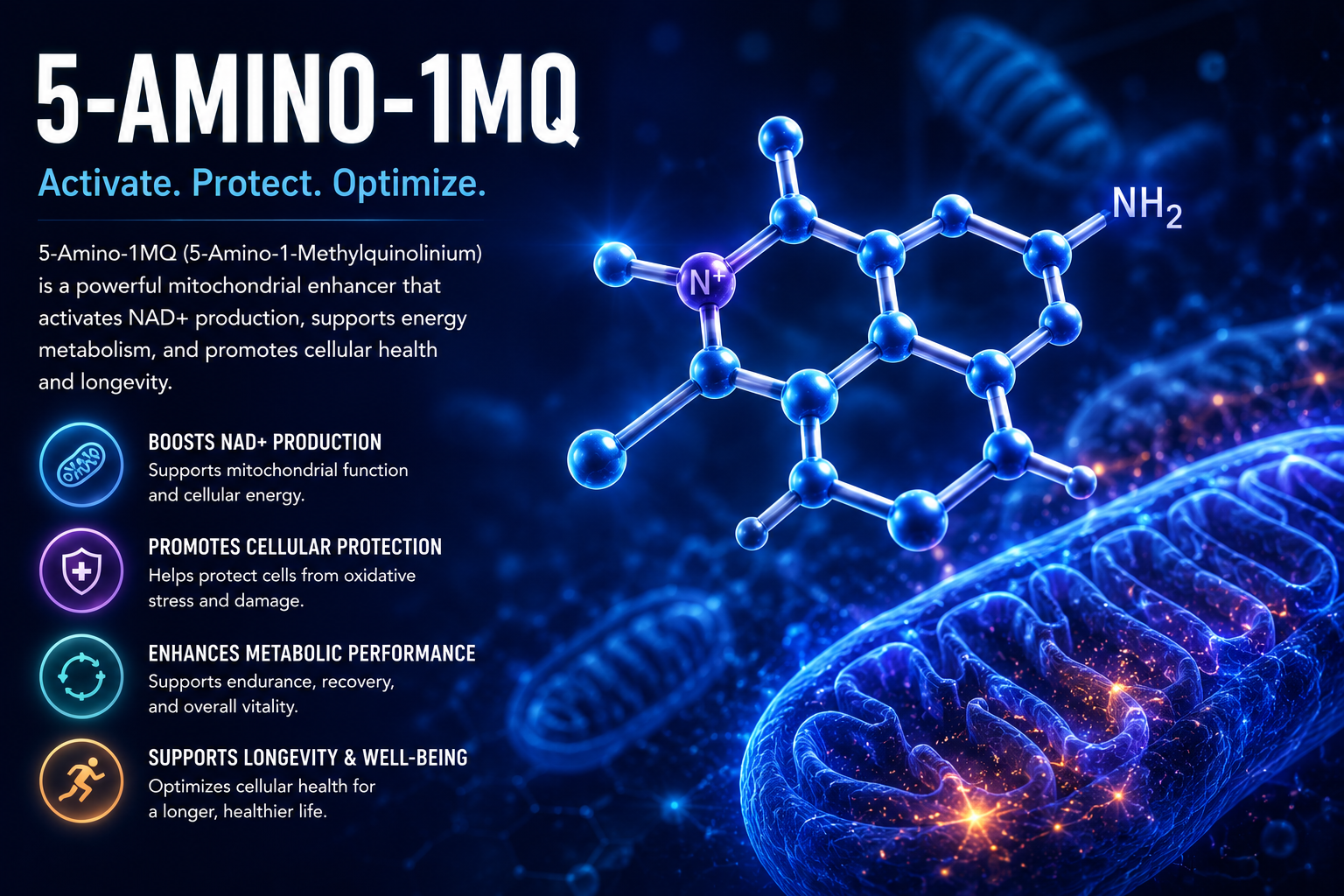
5-Amino-1MQ (5-Amino-1-Methylquinolinium) is a research compound that has gained attention for its potential role in metabolism, fat regulation, and cellular energy balance. Unlike peptides, 5-Amino-1MQ is a small molecule compound investigated primarily for its ability to inhibit an enzyme called NNMT (Nicotinamide N-Methyltransferase).
Researchers have explored 5-Amino-1MQ for its possible effects on:
- Fat metabolism and body composition
- Cellular energy utilization
- Insulin sensitivity and metabolic regulation
- Longevity and cellular health pathways
- NAD+ metabolism and mitochondrial function
It is important to understand that 5-Amino-1MQ remains a research compound and is not approved by the FDA for the diagnosis, treatment, prevention, or cure of disease in humans.
How Does 5-Amino-1MQ Work?
The primary mechanism of 5-Amino-1MQ centers around inhibition of NNMT, an enzyme involved in energy metabolism.
NNMT plays a role in regulating:
- Cellular methylation balance
- Energy expenditure
- Fat storage signaling
- NAD+ precursor utilization
When NNMT activity becomes elevated, some researchers theorize it may contribute to metabolic inefficiency and increased fat accumulation. By inhibiting NNMT, 5-Amino-1MQ may influence how cells manage nutrients and energy.
In simple terms, researchers believe 5-Amino-1MQ may help shift the body toward:
- Increased energy expenditure
- Improved metabolic efficiency
- Reduced fat storage signaling
- Better cellular energy utilization
The Relationship Between 5-Amino-1MQ and NAD+
One of the more interesting research areas involving 5-Amino-1MQ is its connection to NAD+ metabolism.
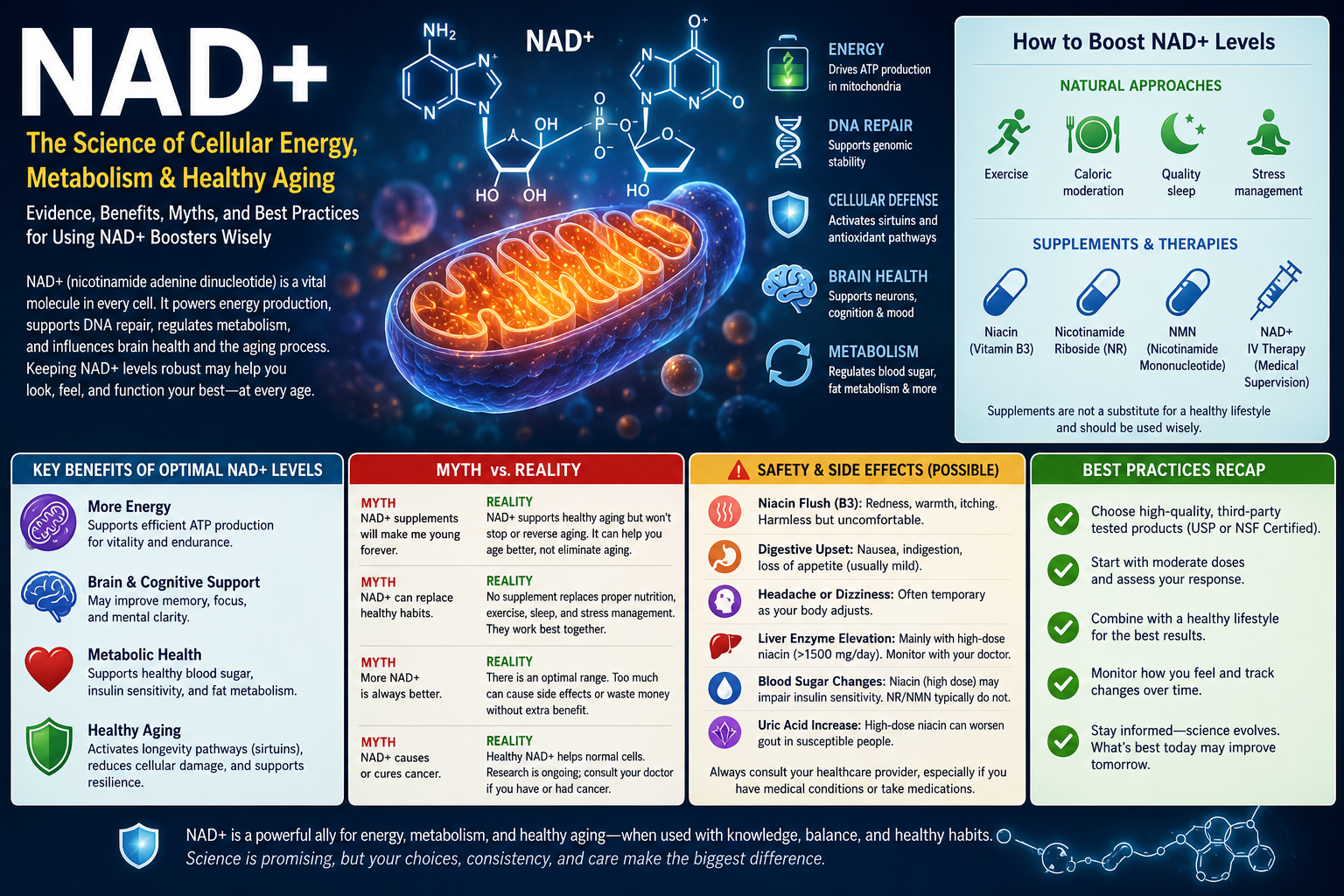
Nicotinamide adenine dinucleotide (NAD+) is a critical coenzyme involved in:
- Energy production
- Cellular repair
- Mitochondrial function
- Metabolic regulation
NNMT consumes nicotinamide, which is a precursor to NAD+. By reducing NNMT activity, researchers hypothesize that more nicotinamide may remain available for NAD+ production, potentially supporting cellular energy systems.
This has contributed to growing interest in 5-Amino-1MQ within metabolic and longevity-focused research communities.
Potential Research Areas of Interest
1. Body Composition and Fat Metabolism
Animal research has suggested that NNMT inhibition may influence fat storage and body composition.
Researchers have investigated whether 5-Amino-1MQ may:
- Support increased calorie expenditure
- Reduce fat accumulation signaling
- Improve metabolic flexibility
- Influence adipose (fat) tissue function
Some preclinical studies observed reductions in body fat while preserving lean mass, though more research is needed to understand how this translates outside laboratory settings.
2. Metabolic Health Research
5-Amino-1MQ has also been explored in relation to metabolic function.
Areas of interest include:
- Insulin signaling pathways
- Glucose metabolism
- Energy efficiency
- Cellular nutrient utilization
Researchers are studying whether NNMT inhibition could influence metabolic resilience and energy balance.
3. Cellular Energy and Mitochondrial Function
Because of its indirect relationship to NAD+ metabolism, 5-Amino-1MQ is also being examined for potential effects on:
- Mitochondrial efficiency
- Cellular energy production
- Fat oxidation pathways
- Age-related metabolic decline
Healthy mitochondrial function is essential for how cells convert nutrients into usable energy.
Why Is 5-Amino-1MQ Often Discussed Alongside GLP-1 Research?
Some research communities discuss 5-Amino-1MQ alongside compounds such as:
- Semaglutide
- Tirzepatide
The reason is that the compounds are believed to target different pathways:
GLP-1 compounds:
- Primarily appetite regulation
- Slower gastric emptying
- Calorie reduction through satiety
5-Amino-1MQ:
- Metabolic signaling research
- Cellular energy regulation
- Fat metabolism pathways
Researchers sometimes view them as mechanistically different areas of metabolic investigation rather than overlapping mechanisms.
Potential Side Effects in Research Settings
Human safety data on 5-Amino-1MQ remains limited. Because of this, a complete side effect profile has not been established.
Researchers monitoring experimental compounds generally evaluate for:
- Gastrointestinal discomfort
- Changes in appetite
- Fatigue or altered energy perception
- Headache
- Individual metabolic variability
More research is required to determine long-term safety and efficacy.
Frequently Asked Questions
Is 5-Amino-1MQ a peptide?
No. Despite being discussed in peptide communities, 5-Amino-1MQ is a small molecule research compound, not a peptide.
Does 5-Amino-1MQ burn fat?
Researchers are studying whether NNMT inhibition influences body composition and fat metabolism, but definitive human conclusions cannot currently be made.
Is 5-Amino-1MQ FDA approved?
No. 5-Amino-1MQ is not FDA approved for medical use.
Can 5-Amino-1MQ replace diet and exercise?
No research compound replaces foundational lifestyle factors such as nutrition, physical activity, sleep, and overall metabolic health.
Final Thoughts
5-Amino-1MQ is an emerging research compound that has attracted interest due to its potential role in NNMT inhibition, metabolism, fat regulation, and NAD+ pathways. While early preclinical findings are intriguing, much of the excitement remains exploratory and additional research is needed to better understand safety, effectiveness, and long-term implications.
For educational purposes, it is best viewed as a metabolic research compound under investigation rather than an established therapy.