KLOW Peptide Blend: What It Is, How It Works, Benefits, and Research Overview
A comprehensive, evidence-graded review of KLOW, a nonstandardized research blend most commonly formulated with GHK-Cu, BPC-157, TB-500, and KPV for multi-pathway studies involving tissue remodeling, cellular migration, inflammatory signaling, extracellular-matrix biology, and epithelial resilience.
What Is KLOW?
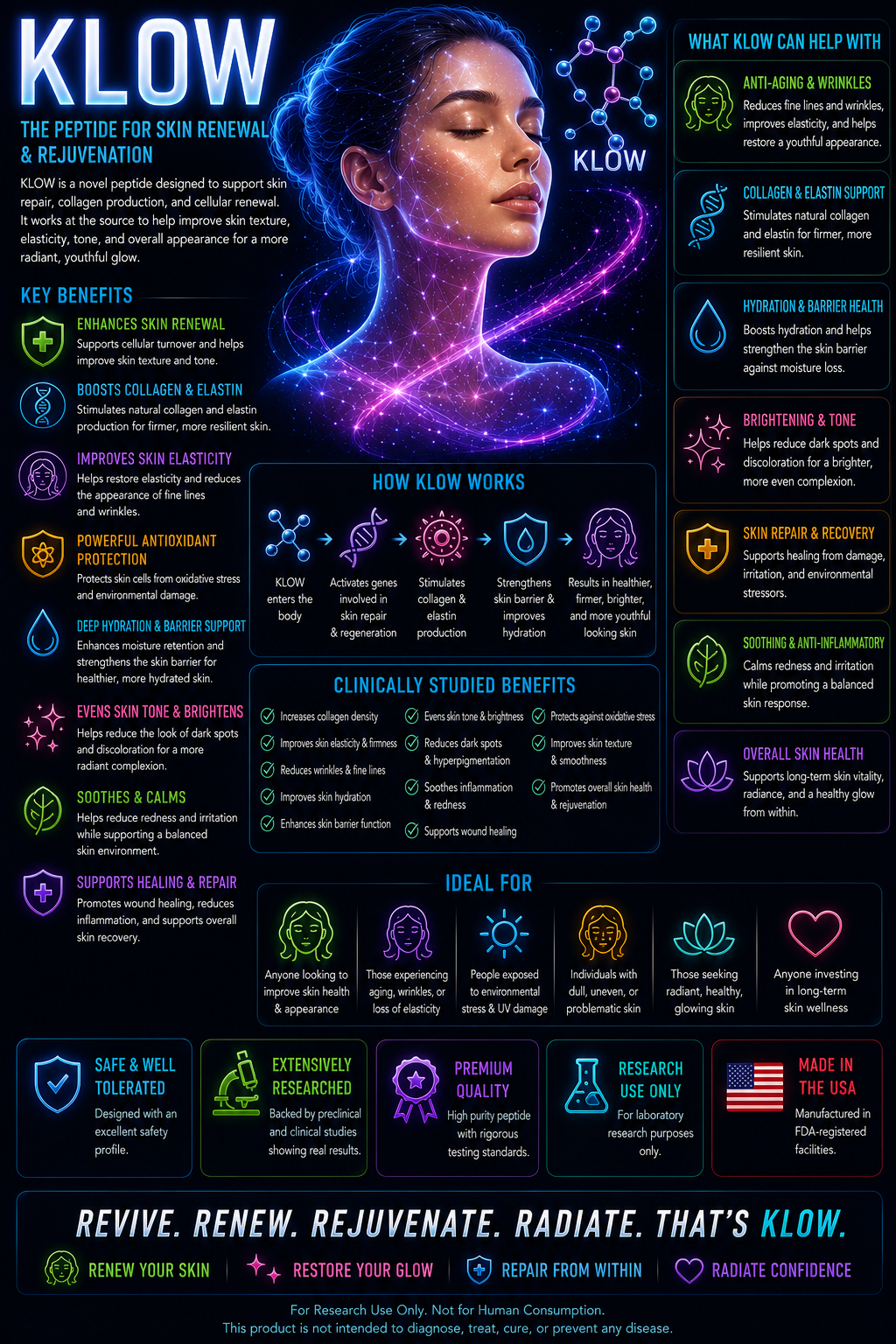
KLOW is a commercial shorthand for a four-component peptide blend. It is generally marketed for research involving overlapping repair, migration, matrix, vascular, anti-inflammatory, and epithelial pathways.
80 mg
GHK-Cu, BPC-157, TB-500, KPV
Multi-peptide blend
No
None established
No
Why combine these four components?
- GHK-Cu: Extracellular-matrix remodeling, collagen biology, copper signaling, angiogenesis, and skin repair
- BPC-157: Experimental cytoprotective, vascular, nitric-oxide, tendon, muscle, and gastrointestinal signaling
- TB-500: A commercial research term linked to thymosin-β4-related actin, migration, angiogenesis, and repair biology
- KPV: Anti-inflammatory tripeptide research involving PepT1, NF-κB, cytokines, gut epithelium, and skin signaling
Typical KLOW Composition
| Component | Common amount | Percentage by labeled mass | Primary research theme |
|---|---|---|---|
| GHK-Cu | 50 mg | 62.5% | Matrix remodeling, collagen, skin, copper signaling |
| BPC-157 | 10 mg | 12.5% | Cytoprotection, vascular and soft-tissue repair models |
| TB-500 | 10 mg | 12.5% | Actin-associated migration and regenerative signaling |
| KPV | 10 mg | 12.5% | Inflammatory and epithelial signaling |
| Total | 80 mg | 100% | Commercial blend total |
🧬 Component Chemistry and Identity
GHK-Cu
Gly-His-Lys coordinated with Cu²⁺
| Peptide length | 3 amino acids |
|---|---|
| Free GHK molecular weight | 340.38 Da |
| Copper complex | Exact analytical mass depends on protonation, counterion, hydration, and coordination representation |
BPC-157
GEPPPGKPADDAGLV
| Length | 15 amino acids |
|---|---|
| Molecular weight | Approximately 1419.5 Da |
| Structure | Linear pentadecapeptide, no disulfide bond |
TB-500
The name “TB-500” is chemically ambiguous. Some suppliers use it for full-length synthetic thymosin-β4; others use it for a shorter thymosin-β4 fragment or proprietary analogue.
Full-length thymosin-β4: SDKPDMAEIEKFDKSKLKKTETQEKNPLPSKETIEQEKQAGES
| Full-length length | 43 amino acids |
|---|---|
| Full-length molecular weight | Approximately 4963 Da |
| Critical COA requirement | Exact sequence and molecular species must be stated |
KPV
H-Lys-Pro-Val-OH
| Length | 3 amino acids |
|---|---|
| Molecular weight | 342.43 Da |
| Origin | C-terminal tripeptide of α-MSH |
📅 Research Background and Development Timeline
- 1970s–1980s: GHK was isolated from human plasma and identified as a copper-binding tissue-remodeling peptide.
- 1980s–1990s: Thymosin-β4 research established actin binding, cell migration, angiogenesis, and wound-repair functions.
- 1990s–2000s: BPC-157 was studied extensively in animal gastrointestinal, vascular, tendon, ligament, muscle, and nerve-injury models.
- 2000s: KPV research identified anti-inflammatory activity and PepT1-mediated uptake in inflamed intestinal cells.
- Commercial KLOW era: Vendors began combining the four compounds under the KLOW name, usually in fixed-ratio lyophilized blends.
- Current status: The blend itself has no standardized preclinical dossier or controlled human clinical program.
🧠 Proposed Multi-Pathway Mechanism
Extracellular-matrix remodeling
GHK-Cu is studied for collagen, elastin, glycosaminoglycan, matrix-metalloproteinase, and fibroblast regulation.
Cell migration
Thymosin-β4-related peptides influence G-actin sequestration, cytoskeletal dynamics, keratinocyte migration, endothelial migration, and repair-cell movement.
Vascular signaling
GHK-Cu, thymosin-β4, and BPC-157 are each associated with angiogenic or endothelial responses in experimental models.
Inflammatory signaling
KPV suppresses selected NF-κB, MAPK, cytokine, and epithelial inflammatory pathways.
Multi-component uncertainty
Overlapping mechanisms do not prove synergy. The components may be additive, redundant, antagonistic, unstable together, or active at mismatched concentrations.
GHK-Cu Research
GHK-Cu has been reported to increase collagen, elastin, and glycosaminoglycan synthesis while regulating matrix breakdown, fibroblast function, angiogenesis, antioxidant signaling, and skin repair. Clinical evidence is strongest for topical cosmetic and wound-related applications, not systemic multi-peptide injection.
BPC-157 Research
BPC-157 has been investigated in animal models of gastrointestinal injury, tendon, ligament, muscle, vascular, and nerve repair. Human evidence remains sparse; tiny safety or observational studies do not establish broad efficacy or long-term safety. BPC-157 is not FDA approved.
TB-500 and Thymosin-β4 Research
Thymosin-β4 binds monomeric actin and regulates cytoskeletal organization, cell migration, angiogenesis, wound repair, and fibrosis. Full-length thymosin-β4 has some human wound and corneal research, but a product labeled “TB-500” cannot be scientifically evaluated without its exact sequence.
KPV Research
KPV reduces selected NF-κB, MAPK, cytokine, and chemokine responses in cellular and animal models. As a tripeptide it can use PepT1, which may be elevated in inflamed colonic epithelium. No large controlled human trial has established KPV as treatment for inflammatory bowel or skin disease.
Potential Synergy and Research Rationale
The blend is intended to combine inflammatory control with matrix, cytoskeletal, vascular, epithelial, and migration pathways. However, no peer-reviewed study has established that the standard KLOW ratio is more effective or safer than separate components, another ratio, fewer ingredients, or placebo.
Formulation Compatibility and Stability Challenges
Copper-driven oxidation
GHK-Cu contains redox-active copper. In a mixed vial, copper may catalyze oxidation of methionine, histidine, aromatic residues, or other susceptible sites in neighboring peptides.
Different optimal pH ranges
Each peptide may have different solubility and stability profiles.
Adsorption and precipitation
Peptides can bind glass, rubber, filters, and plastic surfaces. Copper complexes may also interact with buffers or excipients.
Reconstitution is not proof of compatibility
A clear solution may still contain oxidized, hydrolyzed, decomplexed, aggregated, or biologically weakened components.
Major Evidence Limitations
- KLOW is a commercial name rather than a defined scientific entity
- No direct controlled KLOW efficacy trials
- No direct KLOW pharmacokinetic studies
- No established human dose or ratio
- BPC-157 human evidence is extremely limited
- TB-500 identity varies by seller
- Potential copper-mediated degradation
- No proof one-vial mixing is superior to separate formulations
- No FDA-reviewed manufacturing specification
Potential Side Effects and Safety Considerations
The combination can create new pharmacology, exposure, degradation products, and immune effects even when separate components have individual preclinical data.
- Injection-site irritation or hypersensitivity
- Endotoxin or microbial contamination
- Incorrect component amounts or substitutions
- Copper-related oxidative reactions
- Unknown kidney, liver, pregnancy, and long-term effects
- Potentially inappropriate angiogenesis
- Excessive inflammatory suppression
- Uncertain cancer and fibrosis effects
🧪 Laboratory Testing Methods
| Method | Purpose | Important limitation |
|---|---|---|
| Component-specific LC-HRMS | Confirms GHK-Cu/GHK, BPC-157, TB-500 species, and KPV | A single total-ion result cannot quantify all components |
| Orthogonal RP-HPLC/UPLC | Separates each peptide and degradants | One gradient may not resolve all four |
| MS/MS peptide mapping | Confirms BPC-157 and TB-500 sequences and KPV order | Requires component-specific methods |
| ICP-MS copper assay | Measures total copper | Total copper does not prove correct GHK-Cu coordination |
| GHK-Cu speciation | Measures copper-bound versus free GHK and free copper | Coordination changes with pH and buffer |
| TB-500 identity assay | Determines full thymosin-β4, fragment, or analogue | The product name alone is insufficient |
| Component net-content assays | Quantifies each peptide separately | Total vial weight cannot establish ratios |
| Counterion and water analysis | Corrects TFA, acetate, salts, and moisture | Gross mass may overstate active peptide |
| SEC-HPLC / DLS | Measures aggregation and particles | Components may behave differently |
| Oxidation panel | Detects copper-catalyzed and other degradants | Requires validated stressed controls |
| Component-specific potency assays | Evaluates matrix, migration, actin, PepT1, or NF-κB activity | No single assay proves blend efficacy |
| Sterility, endotoxin, particles | Finished injectable evaluation | Raw purity does not prove safety |
| Blend-specific stability study | Tracks each component through storage and reconstitution | Separate stability cannot predict blend stability |
📄 How to Interpret a KLOW COA
- Confirm the exact formula and ratio.
- Identify TB-500 chemically with an exact sequence and molecular weight.
- Require separate identity and quantity testing for all four components.
- Do not accept one “99% purity” result for the whole blend.
- Confirm KPV sequence order by MS/MS and BPC-157’s 15-residue sequence.
- Confirm total copper, free copper, free GHK, and intact GHK-Cu.
- Measure oxidation products before and after storage and reconstitution.
- Correct each component for TFA, acetate, water, and other counterions.
- Require component-specific potency assays where available.
- Perform blend-specific real-time and accelerated stability.
- For finished injection, require sterility, endotoxin, particles, fill accuracy, container closure, and post-reconstitution stability.
- A COA does not prove clinical efficacy, human safety, or FDA equivalence.
📊 Comparison Tables
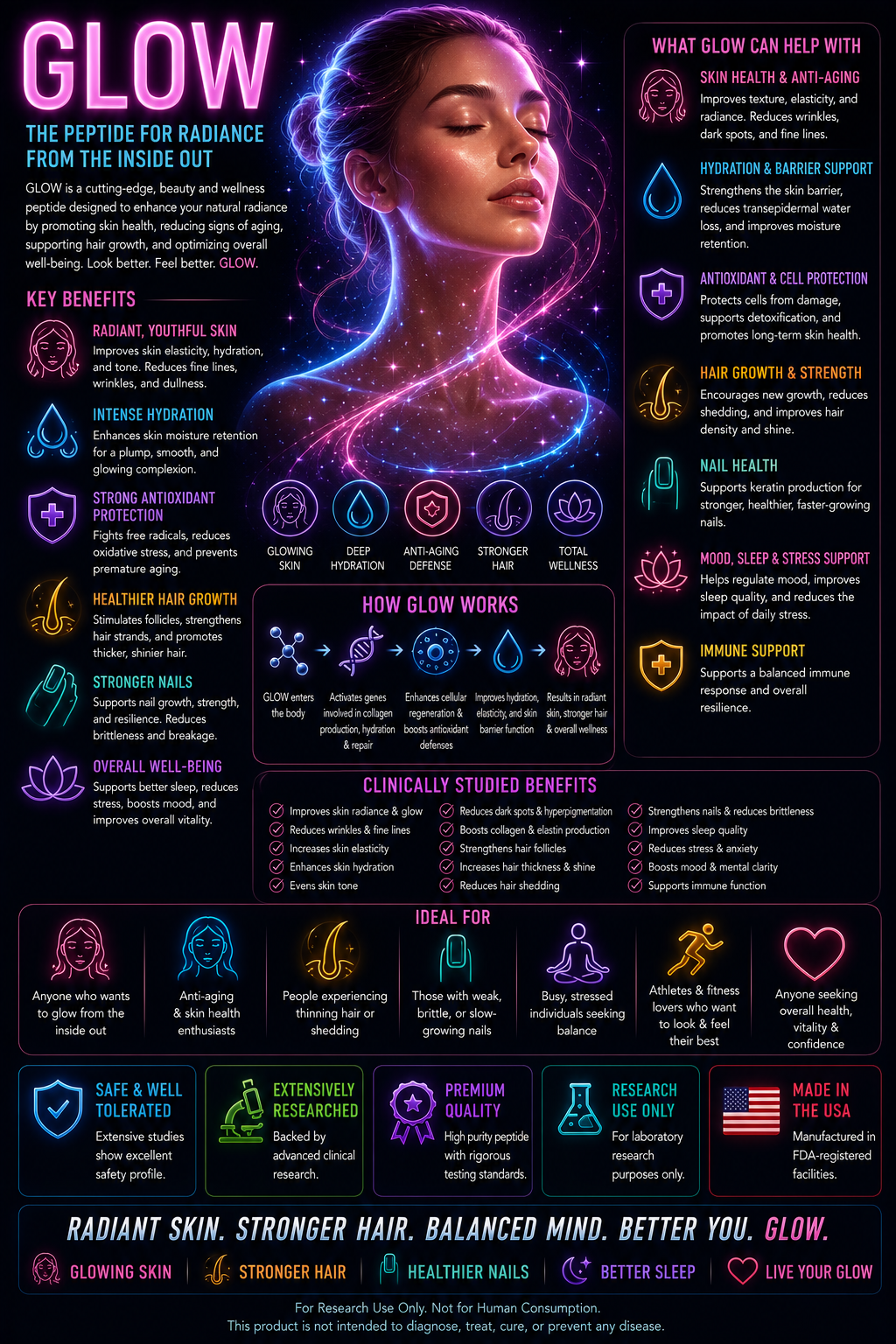
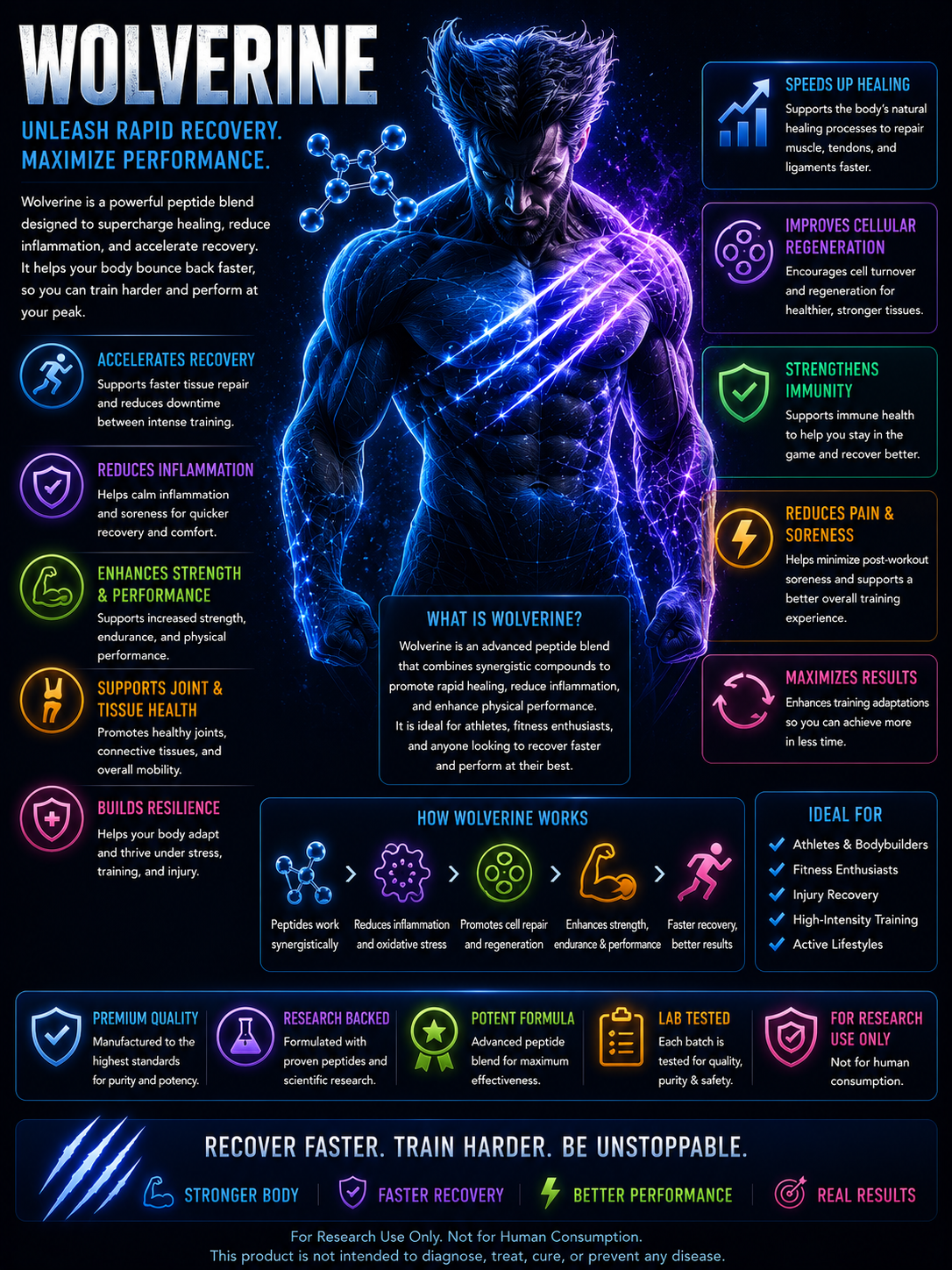
KLOW vs GLOW vs Wolverine Blend
| Feature | KLOW | GLOW | Wolverine blend |
|---|---|---|---|
| Typical components | GHK-Cu + BPC-157 + TB-500 + KPV | Usually GHK-Cu + BPC-157 + TB-500 | Usually BPC-157 + TB-500 |
| Distinctive addition | KPV | GHK-Cu | Two-component repair concept |
| Standardized? | No | No | No |
One-Vial Blend vs Separate Components
| Feature | One-vial KLOW | Separate components |
|---|---|---|
| Convenience | Higher | Lower |
| Ratio flexibility | Fixed | Adjustable |
| Compatibility risk | Higher | Lower before mixing |
| Root-cause analysis | Difficult | Easier |
🖼️ Original Diagram Specifications
- KLOW composition wheel showing 50/10/10/10 mg.
- Four-pathway mechanism: matrix, migration, vascular, inflammation.
- Molecular-size comparison of the four components.
- Repair cascade from injury through remodeling.
- Compatibility risk map for copper oxidation, pH, aggregation, and adsorption.
- Evidence pyramid showing component evidence versus absent direct KLOW trials.
- COA workflow with four identities, four contents, copper speciation, degradants, potency, sterility, and stability.
❓ Frequently Asked Questions
Is KLOW one peptide?
No. It is a commercial multi-peptide blend name.
What is usually in KLOW?
Most commonly GHK-Cu 50 mg, BPC-157 10 mg, TB-500 10 mg, and KPV 10 mg.
Is the formula standardized?
No.
Is KLOW FDA approved?
No.
Has the full blend been studied in clinical trials?
No controlled clinical program has been established.
Is KLOW the same as GLOW?
Usually not. KLOW commonly adds KPV.
What is TB-500?
An ambiguous commercial name requiring exact sequence confirmation.
Can GHK-Cu oxidize the other peptides?
Potentially, which is why blend-specific stability testing is essential.
Does a clear reconstituted solution prove stability?
No.
Does 99% HPLC purity prove the whole blend is correct?
No. Each component needs separate identity, quantity, purity, and preferably functional testing.
Is there an established human dose?
No.
Final Thoughts
KLOW is best understood as a commercial research formulation rather than a single peptide. Its typical design combines GHK-Cu matrix and copper biology, BPC-157 cytoprotective and vascular research, thymosin-related migration and actin signaling, and KPV anti-inflammatory pathways.
The concept is biologically plausible, but plausibility is not evidence of synergy. No direct controlled trial has established that the standard 50/10/10/10 mg ratio is effective, safer than separate ingredients, chemically stable, or clinically appropriate.
A credible KLOW evaluation must identify and quantify all four components separately, state the exact TB-500 sequence, verify copper coordination and free copper, measure oxidation and aggregation, correct for counterions and water, demonstrate component-specific potency, and establish sterility, particles, container compatibility, and real-time stability for the finished blend.
📚 References
- Pickart L, Margolina A. Regenerative and Protective Actions of the GHK-Cu Peptide. International Journal of Molecular Sciences. 2018.
- Pickart L. The Human Tripeptide GHK and Tissue Remodeling. 2008.
- McGuire FP, et al. Regeneration or Risk? A Narrative Review of BPC-157. 2025.
- Xu C, et al. Preclinical Safety Evaluation of BPC-157. 2020.
- Lee E, et al. Safety of Intravenous Infusion of BPC-157 in Humans. 2025.
- Goldstein AL, et al. Thymosin β4: A Multifunctional Regenerative Peptide. 2012.
- Malinda KM, et al. Thymosin β4 Accelerates Wound Healing. 1999.
- Dalmasso G, et al. PepT1-Mediated KPV Uptake Reduces Intestinal Inflammation. Gastroenterology. 2008.
- Viennois E, et al. KPV and Colitis-Associated Cancer. Cancer Research. 2016.
- Xiao B, et al. Oral Targeted KPV Nanoparticles for Colitis. Molecular Therapy. 2017.
- ICH Q1A(R2), Q2(R2), Q3A, Q3B, Q3C, and Q6B.
- USP <621>, <71>, <85>, and <788>.
KLOW nomenclature, common composition, component chemistry, evidence, compatibility, safety, and analytical recommendations reviewed in July 2026.