
Glutathione: What It Is, How It Works, Benefits, and Research Overview What Is Glutathione? Glutathione (GSH) is a tripeptide compos
Glutathione: What It Is, How It Works, Benefits, and Research Overview
What Is Glutathione?
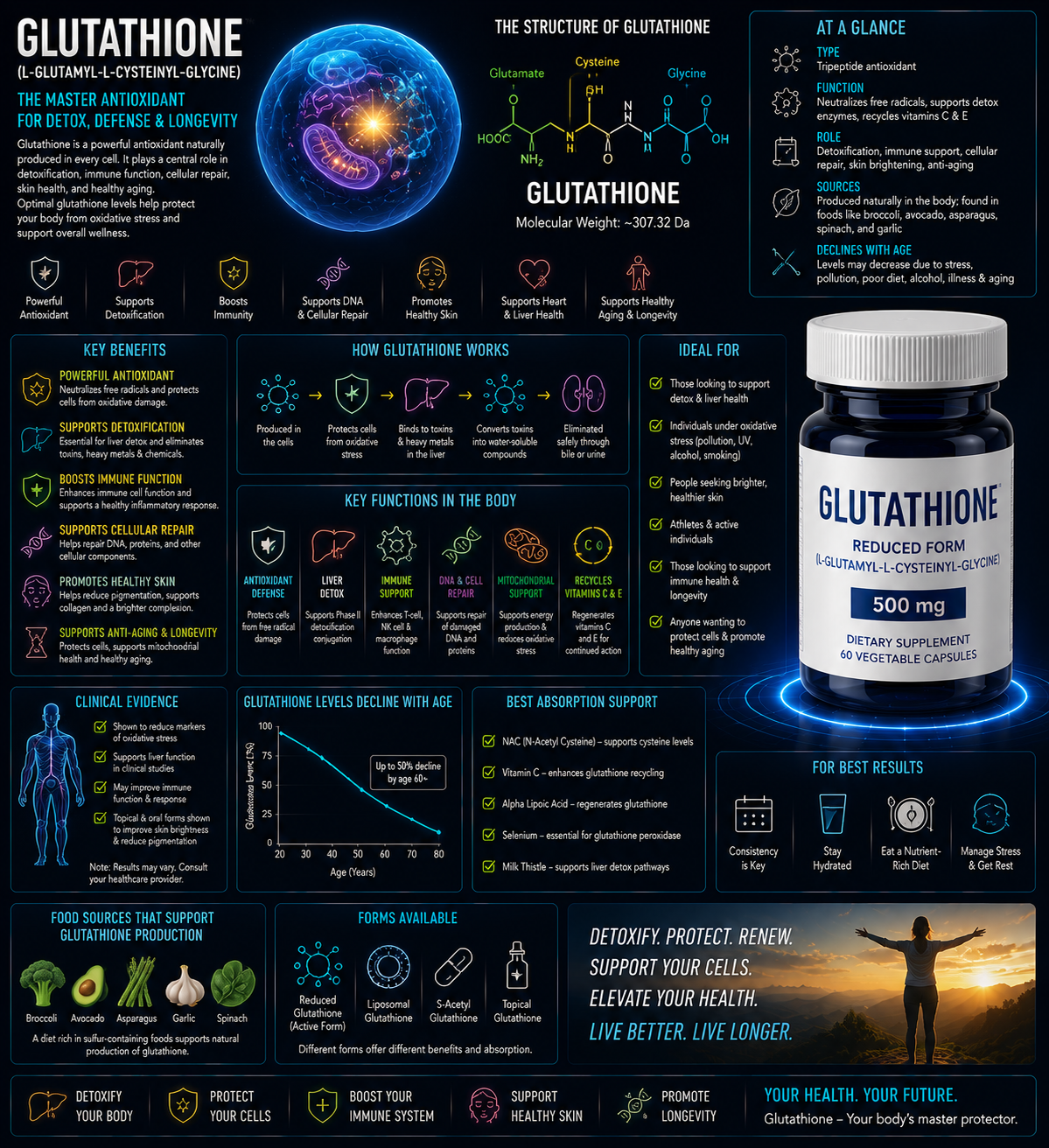
Glutathione (GSH) is a tripeptide composed of glutamine, cysteine, and glycine. It is considered the body’s master antioxidant because it plays a central role in neutralizing free radicals, supporting detoxification, and maintaining cellular redox balance. Glutathione is found in almost every cell, with particularly high concentrations in the liver, where it supports detoxification.
Researchers investigate glutathione for its potential role in:
- Antioxidant defense
- Detoxification of drugs and toxins
- Immune system support
- Skin health and anti-aging
- Cellular health and mitochondrial function (nih.gov)
How Does Glutathione Work?
Glutathione functions in several key ways:
1. Antioxidant Defense
- Directly neutralizes reactive oxygen species (ROS) and free radicals
- Maintains the redox balance in cells
- Regenerates other antioxidants, such as vitamin C and vitamin E
2. Detoxification
- Conjugates with toxic metabolites and heavy metals for excretion
- Facilitates liver detoxification via glutathione S-transferase enzymes
3. Immune System Support
- Supports the proliferation of lymphocytes
- Enhances natural killer (NK) cell function
- Modulates inflammatory signaling
4. Cellular Health and Mitochondrial Function
- Protects mitochondria from oxidative damage
- Maintains cellular energy production
- Prevents apoptosis caused by oxidative stress (nih.gov)
Benefits of Glutathione
- Powerful Antioxidant
- Neutralizes free radicals and oxidative stress
- Supports Liver Detoxification
- Helps metabolize drugs, environmental toxins, and heavy metals
- Immune System Support
- Enhances NK cell activity and immune regulation
- Skin Health and Anti-Aging
- May reduce oxidative damage in skin
- Commonly studied for brightening and pigmentation reduction
- Mitochondrial Protection
- Protects energy-producing organelles in cells
Methods of Administration
- Oral Supplements: Reduced glutathione (GSH) capsules or tablets
- Intravenous (IV): High-concentration therapy for systemic antioxidant support
- Liposomal Glutathione: Enhanced oral bioavailability
- Precursor Support: N-acetylcysteine (NAC) and glycine may increase endogenous glutathione
Note: Oral glutathione has limited bioavailability; IV and liposomal formulations are more effective for raising systemic levels.
Potential Side Effects and Safety
- Generally considered safe at recommended doses
- Mild gastrointestinal upset possible with oral forms
- Rare allergic reactions with IV administration
- No major toxicity reported in clinical studies (nih.gov)
Glutathione vs NAC vs GHK-Cu vs Alpha-Lipoic Acid
| Compound | Type | Primary Function | Administration | FDA Approved? |
|---|---|---|---|---|
| Glutathione | Tripeptide | Antioxidant, detoxification | Oral, IV, liposomal | No (dietary supplement) |
| NAC | Amino acid derivative | Precursor to glutathione | Oral, IV | Yes (acetaminophen overdose, mucolytic) |
| GHK-Cu | Peptide | Tissue repair, skin regeneration | Topical, injectable | No |
| Alpha-Lipoic Acid | Antioxidant | ROS neutralization, mitochondrial support | Oral | No |
Frequently Asked Questions
What is glutathione used for?
- Antioxidant defense, liver detoxification, immune support, skin brightening, and cellular protection.
Does glutathione help skin?
- Yes. Glutathione may reduce oxidative stress and pigmentation in the skin, contributing to a brighter appearance.
How can I increase glutathione levels?
- Direct supplementation (oral, IV, liposomal)
- Precursors like N-acetylcysteine (NAC), glycine, and glutamine
- Diet rich in sulfur-containing foods (garlic, onions, cruciferous vegetables)
Is glutathione safe?
- Yes. Generally well-tolerated with minimal side effects.
Final Thoughts
Glutathione is a master antioxidant and tripeptide critical for cellular health, detoxification, and immune function. It protects against oxidative damage, supports liver and mitochondrial function, and is commonly used in both wellness and clinical settings for its broad protective effects. While oral supplementation can be limited by bioavailability, IV and liposomal forms effectively raise systemic glutathione levels. Its applications range from anti-aging and skin health to cellular protection and detoxification.
