
NAD⁺ (Nicotinamide Adenine Dinucleotide): What It Is, How It Works, Benefits, and Research Overview What Is NAD⁺? NAD⁺ (Nicotinamide Adenine Dinucle
NAD⁺ (Nicotinamide Adenine Dinucleotide): What It Is, How It Works, Benefits, and Research Overview
What Is NAD⁺?
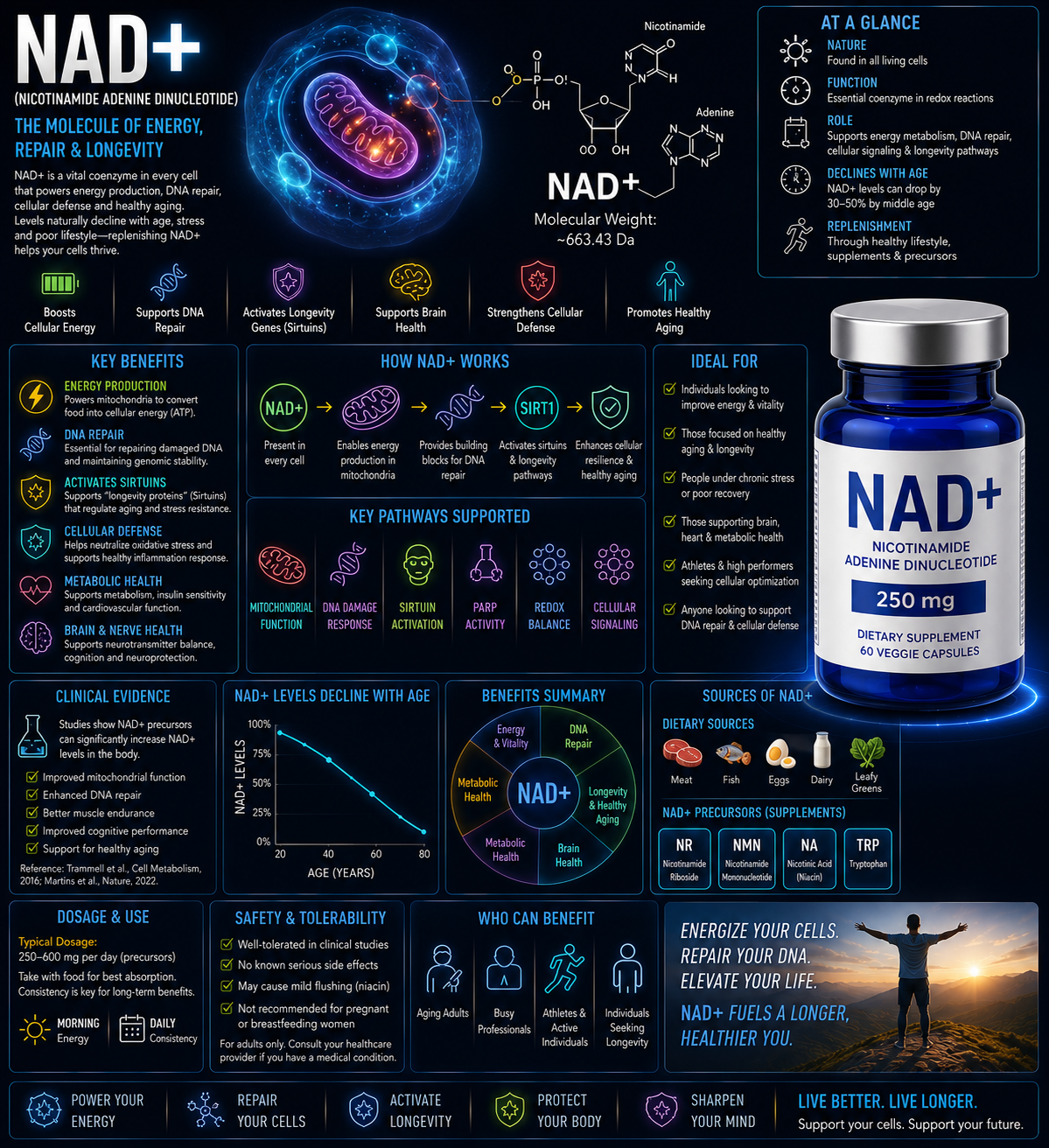
NAD⁺ (Nicotinamide Adenine Dinucleotide) is a coenzyme found in all living cells that plays a central role in cellular metabolism, energy production, and redox reactions. It exists in two forms: oxidized (NAD⁺) and reduced (NADH).
NAD⁺ is essential for:
- ATP production via mitochondrial oxidative phosphorylation
- Redox balance and electron transport
- DNA repair and genomic stability
- Sirtuin activation, which regulates aging and metabolic processes
- Cellular signaling and stress responses (nih.gov)
Because NAD⁺ levels naturally decline with age, researchers study its potential role in healthy aging, metabolic resilience, and neuroprotection.
How Does NAD⁺ Work?
NAD⁺ functions in several key biological processes:
1. Redox Reactions and Energy Production
- NAD⁺ accepts electrons during glycolysis, the TCA cycle, and fatty acid oxidation, converting to NADH
- NADH donates electrons to the electron transport chain, producing ATP
2. Sirtuin Activation
- Sirtuins are NAD⁺-dependent enzymes that regulate:
- DNA repair
- Gene expression
- Mitochondrial function
- Stress response pathways (nih.gov)
3. DNA Repair
- NAD⁺ serves as a substrate for poly(ADP-ribose) polymerases (PARPs)
- PARPs use NAD⁺ to repair DNA strand breaks, maintaining genomic stability
4. Cellular Signaling
- NAD⁺ participates in calcium signaling and acts as a precursor for cADPR and ADPR, molecules involved in metabolic and stress responses
Benefits and Potential Applications
- Supports Mitochondrial Function and Energy Production
- Higher NAD⁺ levels improve ATP synthesis and cellular energy efficiency
- Promotes DNA Repair and Genomic Stability
- May reduce age-related DNA damage accumulation
- Activates Sirtuins and Longevity Pathways
- Sirtuin activation is linked to metabolic health and longevity in animal models
- Neuroprotection
- NAD⁺ supports neuronal health and may protect against cognitive decline
- Metabolic Health
- May improve insulin sensitivity and lipid metabolism
- Cellular Stress Resistance
- Supports recovery from oxidative stress and inflammation
NAD⁺ Supplementation
Because NAD⁺ levels decline with age, supplementation is studied using precursors:
- Nicotinamide riboside (NR)
- Nicotinamide mononucleotide (NMN)
- Nicotinamide (NAM)
Direct NAD⁺ supplementation is challenging because NAD⁺ is poorly absorbed orally. Instead, intravenous NAD⁺ therapy is sometimes used in clinical or wellness settings.
Forms of administration:
- Oral precursors (NR, NMN)
- IV infusions of NAD⁺
- Sublingual or buffered formulations in research and wellness clinics
Potential Side Effects and Safety Considerations
- Oral NR and NMN are generally well-tolerated
- Mild side effects may include nausea, fatigue, or headaches
- IV NAD⁺ infusions can cause flushing, lightheadedness, or transient discomfort at infusion site
- Long-term safety data are still limited (nih.gov)
NAD⁺ vs NADH vs NMN vs NR
| Compound | Type | Function | Administration | FDA Approved? |
|---|---|---|---|---|
| NAD⁺ | Coenzyme | Electron transport, DNA repair, sirtuin activation | IV, limited oral | No |
| NADH | Reduced coenzyme | Electron donor for ATP production | Oral supplements | No |
| NMN | NAD⁺ precursor | Boost NAD⁺ levels in cells | Oral | No |
| NR | NAD⁺ precursor | Boost NAD⁺ levels in cells | Oral | No |
Researchers generally use precursors for oral supplementation because direct NAD⁺ is not well absorbed.
Frequently Asked Questions
What is NAD⁺ used for?
- NAD⁺ is critical for cellular energy production, DNA repair, metabolic health, and sirtuin activation.
Does NAD⁺ help with aging?
- Preclinical evidence suggests NAD⁺ supports healthy aging pathways, but human studies are ongoing.
How can NAD⁺ be supplemented?
- Oral precursors (NMN, NR) or IV NAD⁺ therapy are common research and wellness approaches.
Is NAD⁺ safe?
- Generally well-tolerated, but IV therapy may have mild side effects. Long-term safety is still being studied.
Final Thoughts
NAD⁺ is a central metabolic coenzyme crucial for energy production, DNA repair, and cellular health. It supports sirtuin activity, mitochondrial function, and stress resistance, making it a focus of research in aging, neuroprotection, and metabolic health. While supplementation with precursors like NR or NMN shows promise, NAD⁺ itself remains largely investigational, particularly in IV or therapeutic formulations, and its long-term clinical effects in humans are still under active study.
