Amylin Receptors Explained
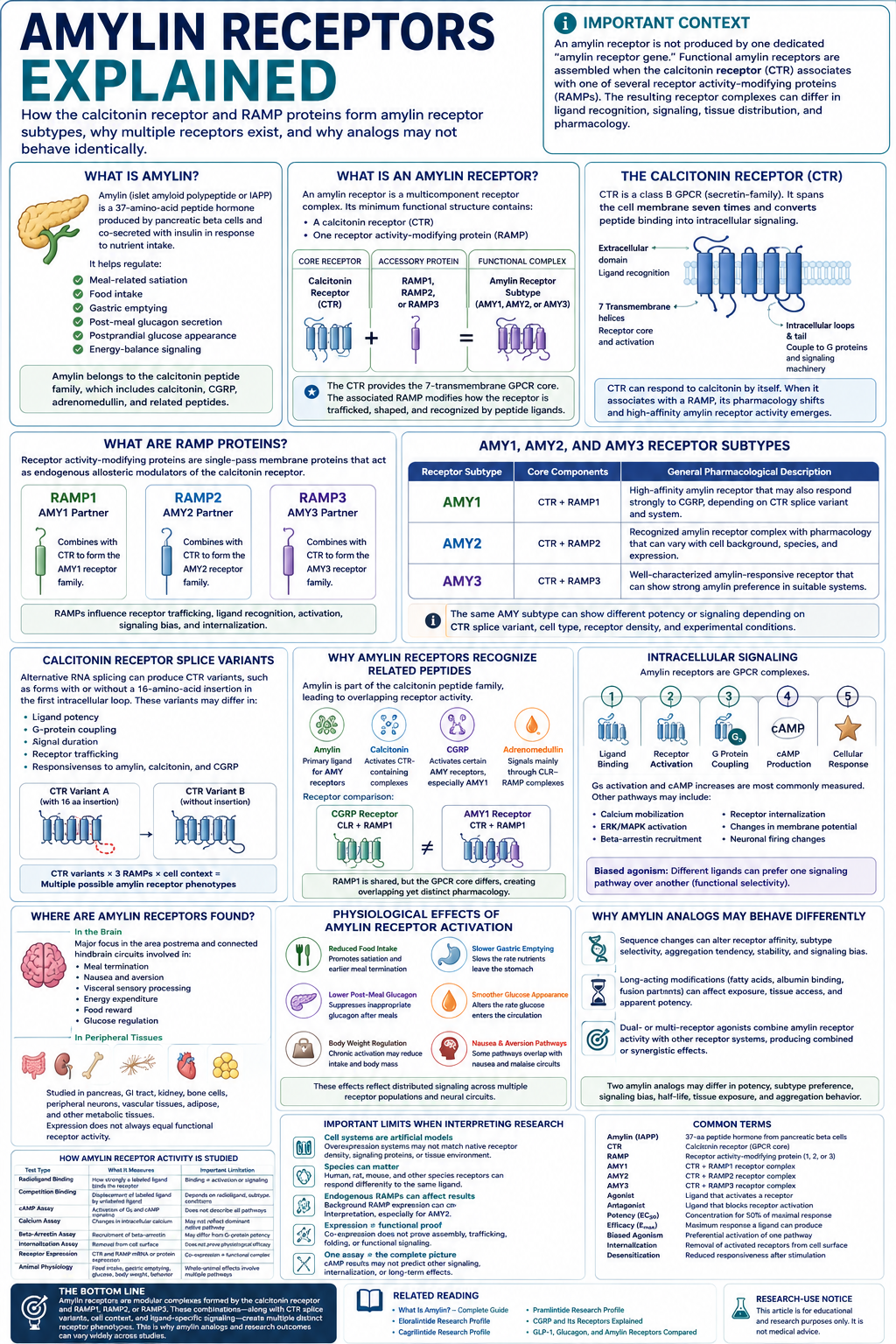
How the calcitonin receptor and receptor activity-modifying proteins combine to form amylin receptors, why multiple receptor subtypes exist, and why amylin analogs may not…
17 min readRead article
A closer look at the concepts, compounds, and questions that matter.
How the calcitonin receptor and receptor activity-modifying proteins combine to form amylin receptors, why multiple receptor subtypes exist, and why amylin analogs may not…
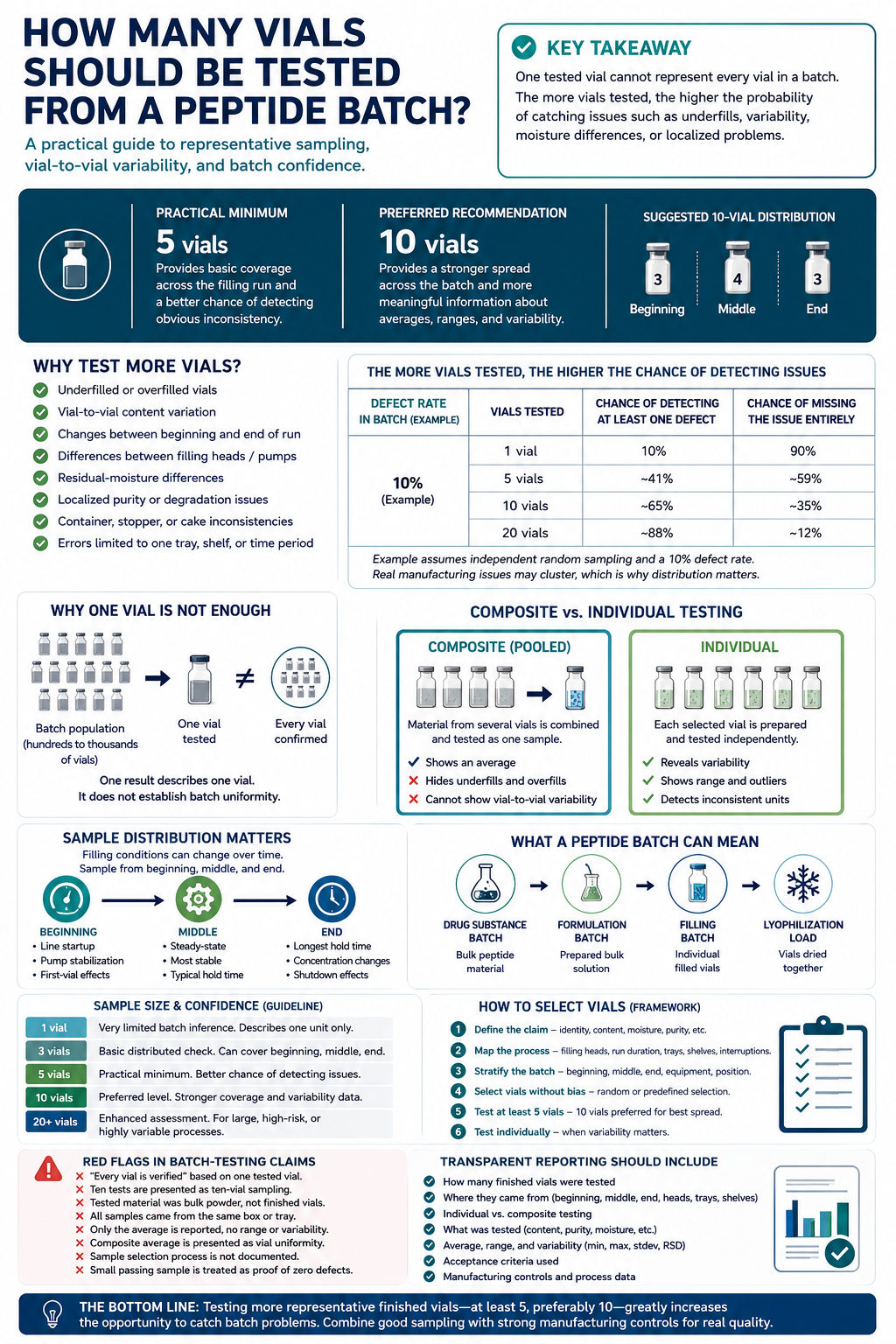
Why one tested vial cannot prove that every vial is identical, how representative sampling works, and why testing more vials increases the probability of…
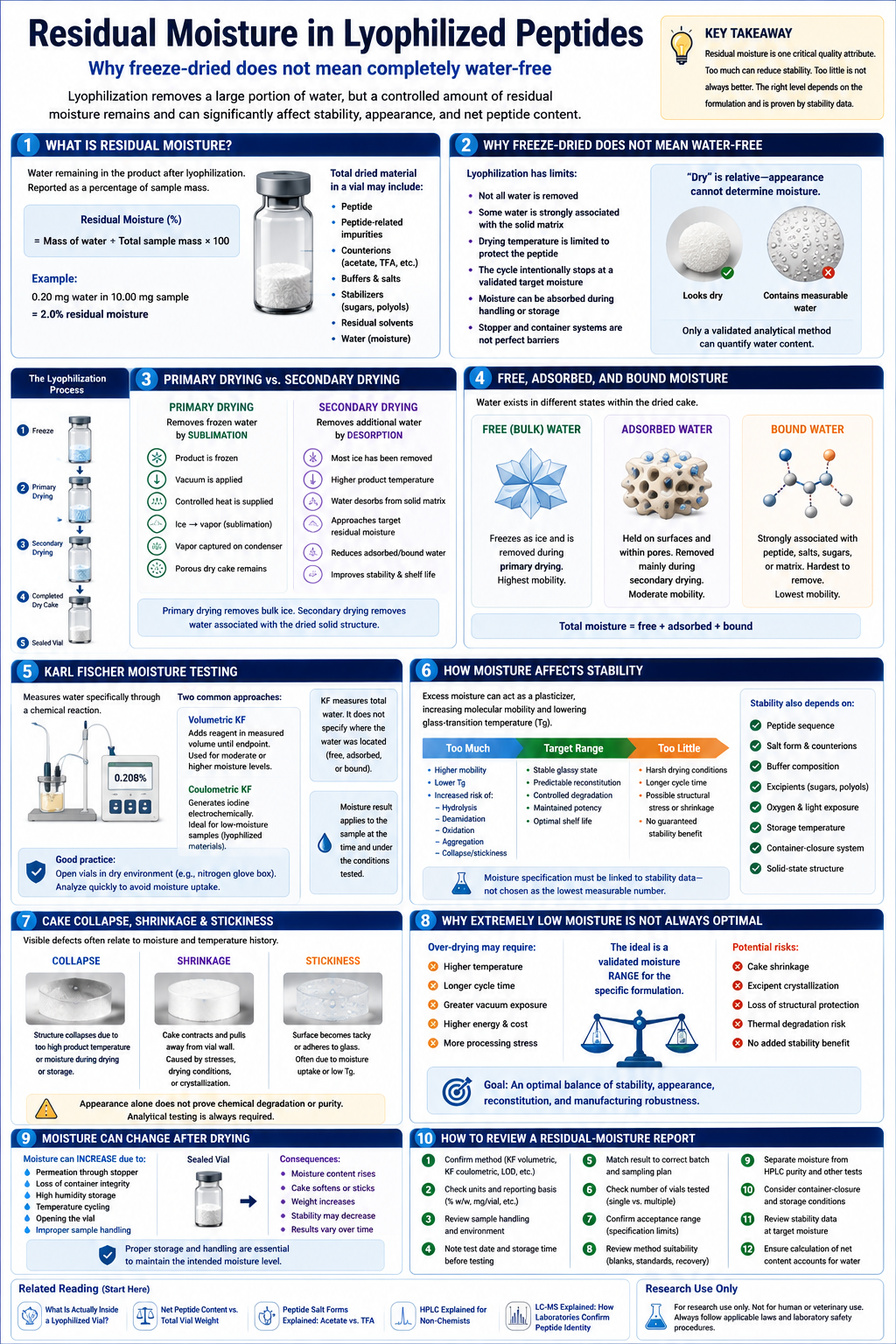
Lyophilization removes a large portion of water from a frozen formulation, but it does not ordinarily produce a material containing absolutely zero water. The…
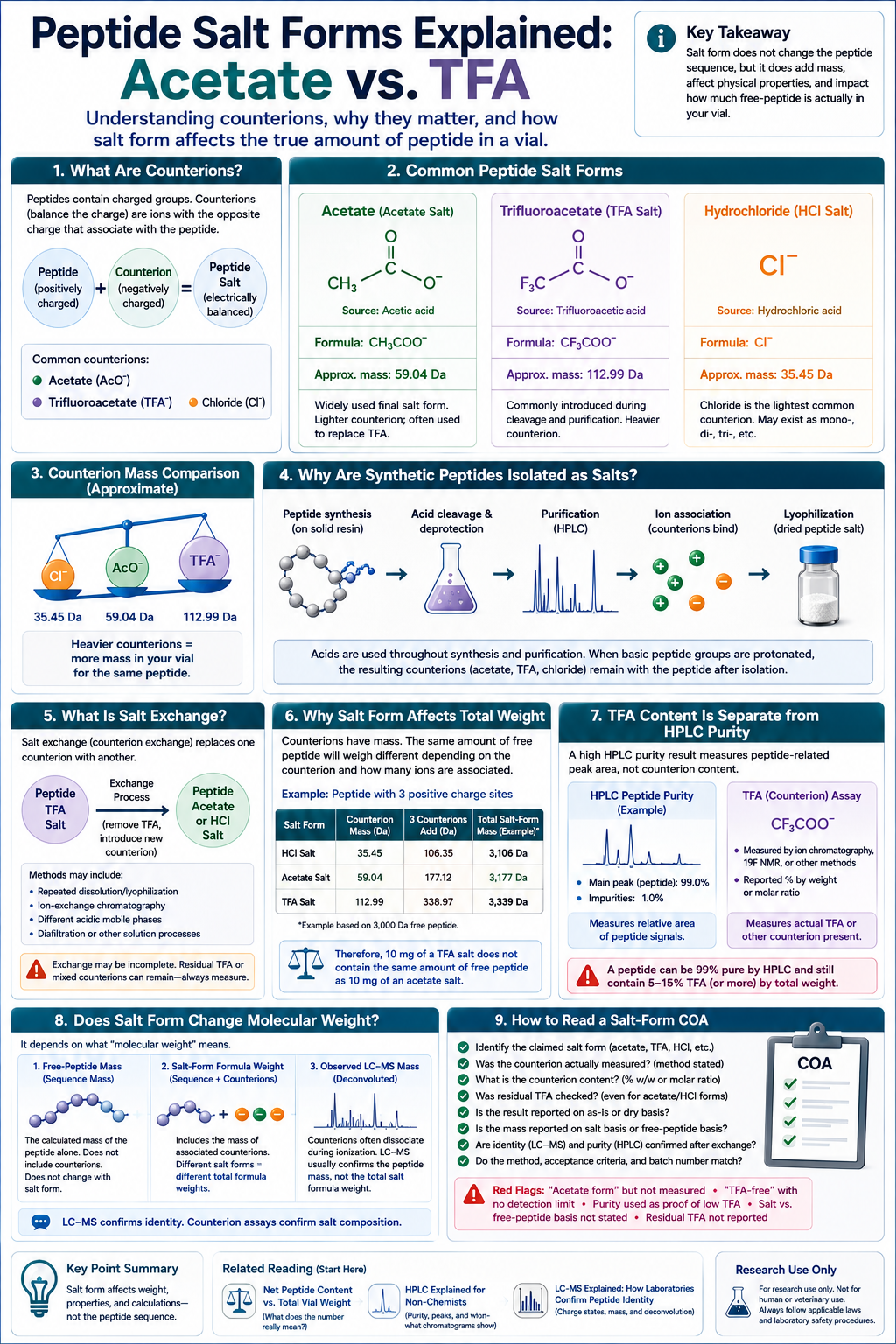
A peptide’s salt form is not the same thing as its amino-acid sequence or chromatographic purity. Counterions add measurable mass to dried material, can…
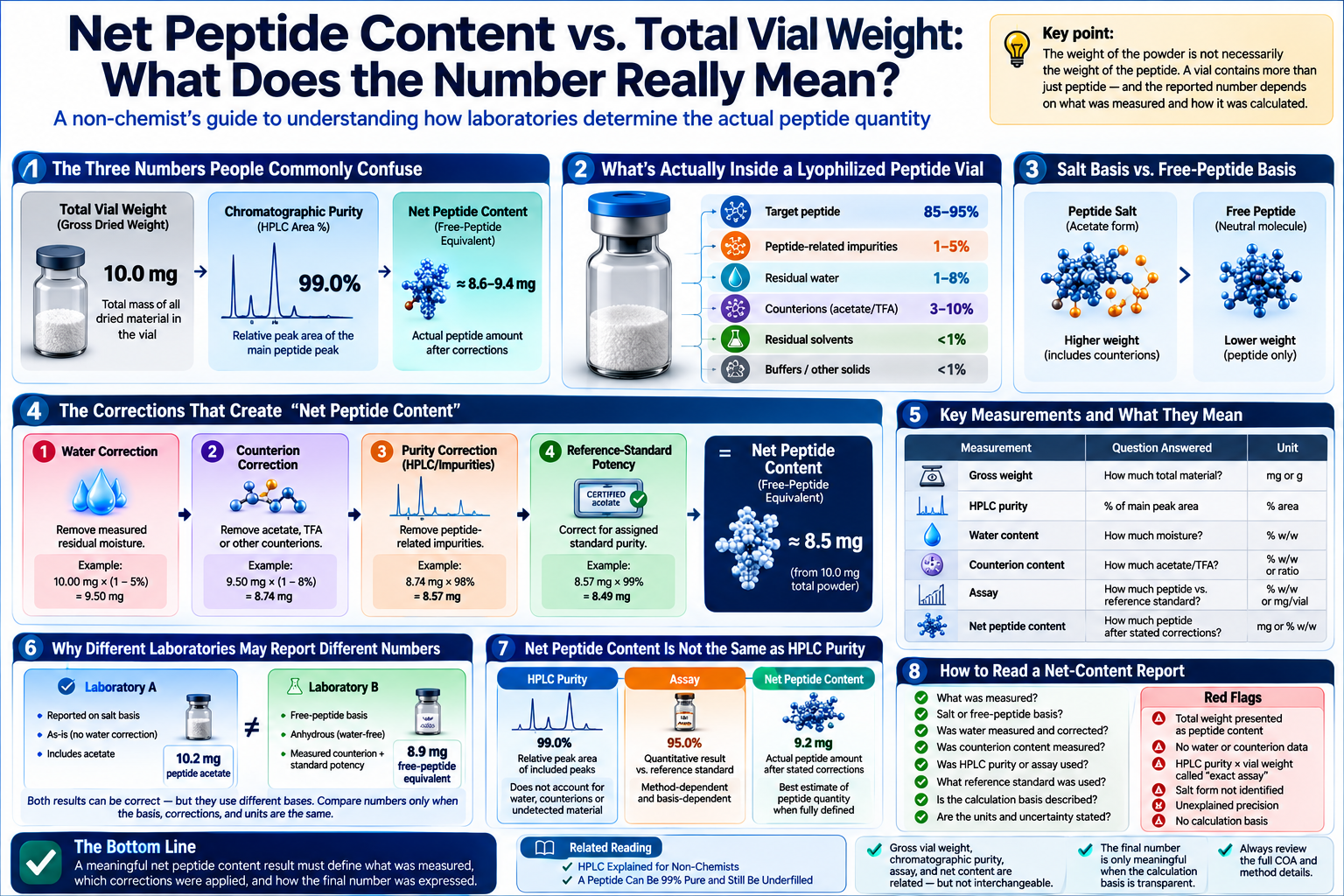
The weight of dried material in a vial is not automatically the weight of the peptide itself. A lyophilized sample may also contain water,…
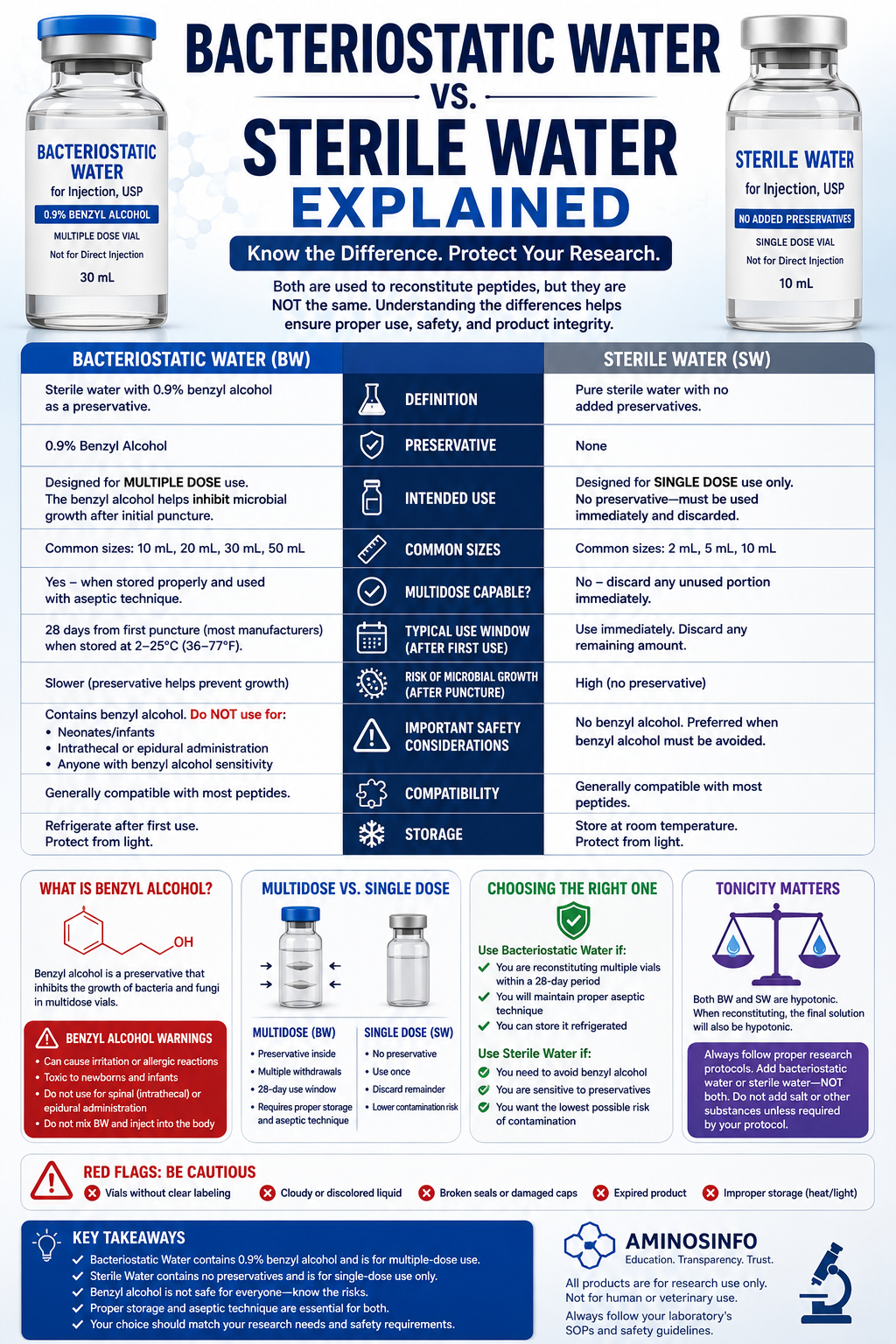
Both products can appear as clear, colorless water, but they are not identical. Their preservative content, package type, compatibility, withdrawal expectations, warnings, and intended…
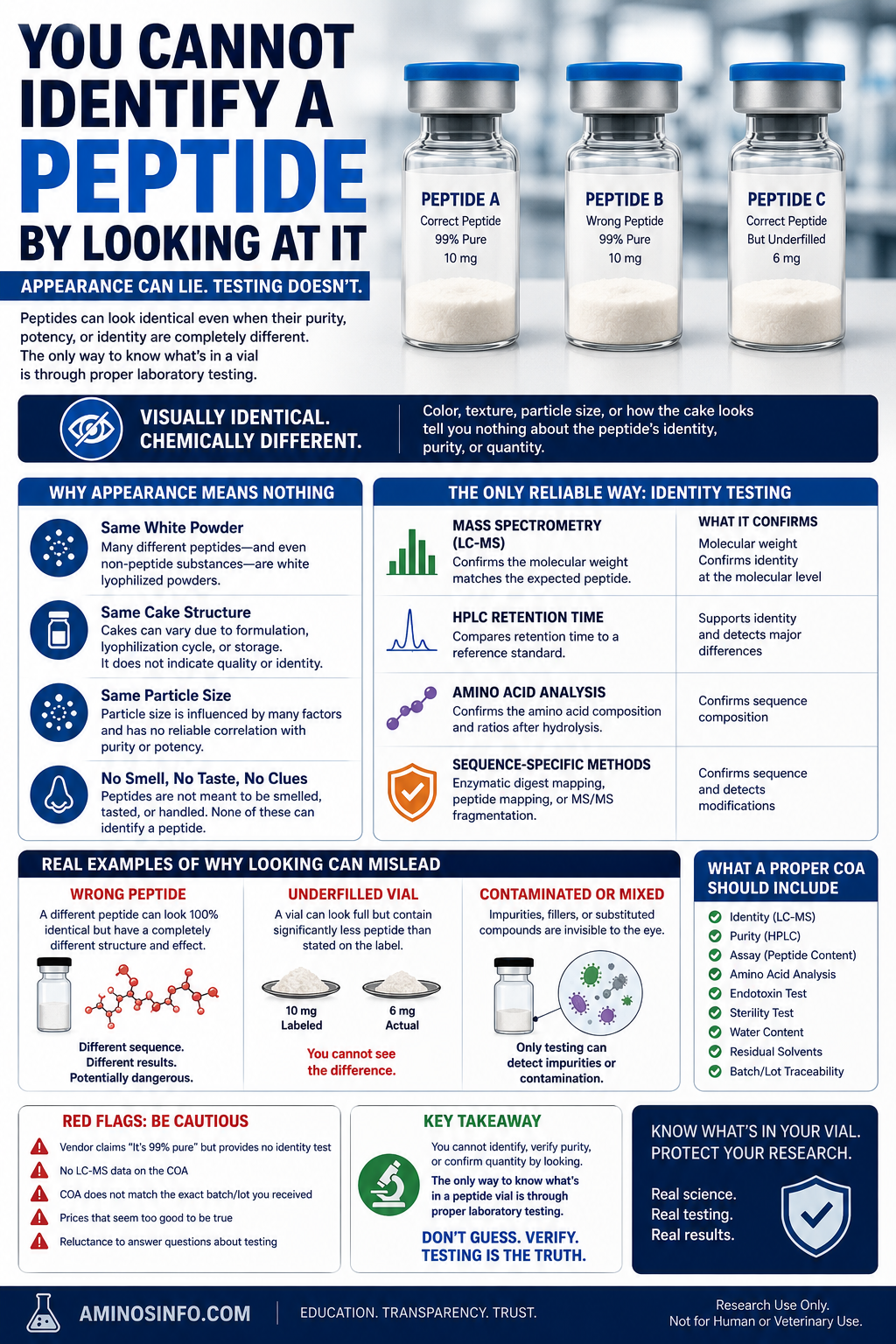
Color, cake size, powder texture, clarity, smell, packaging, and label claims can provide observations. They cannot prove which peptide is present. Identity requires analytical…
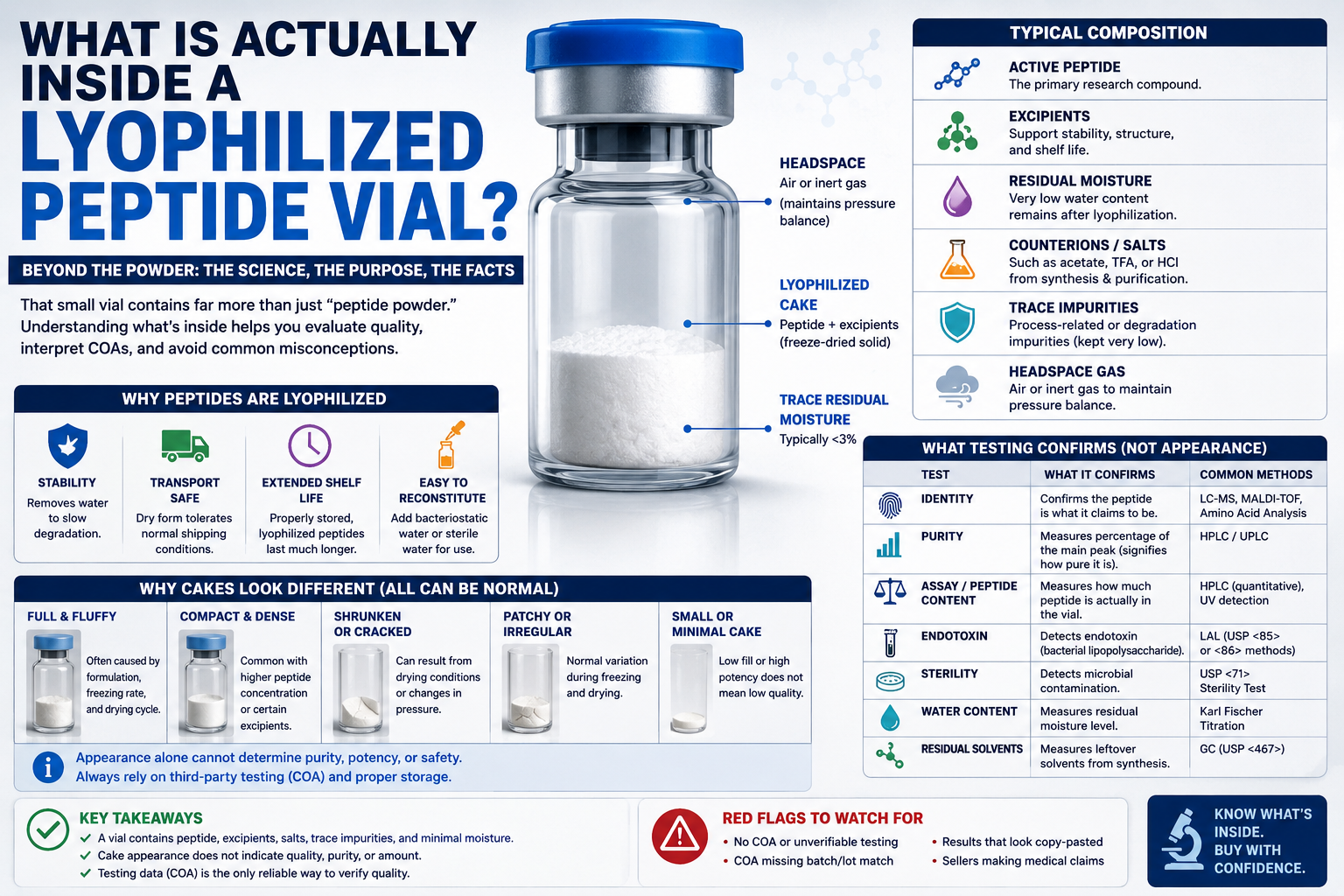
The visible cake is not necessarily pure peptide. A freeze-dried vial may contain the target peptide along with formulation ingredients, counterions, residual moisture, process…