
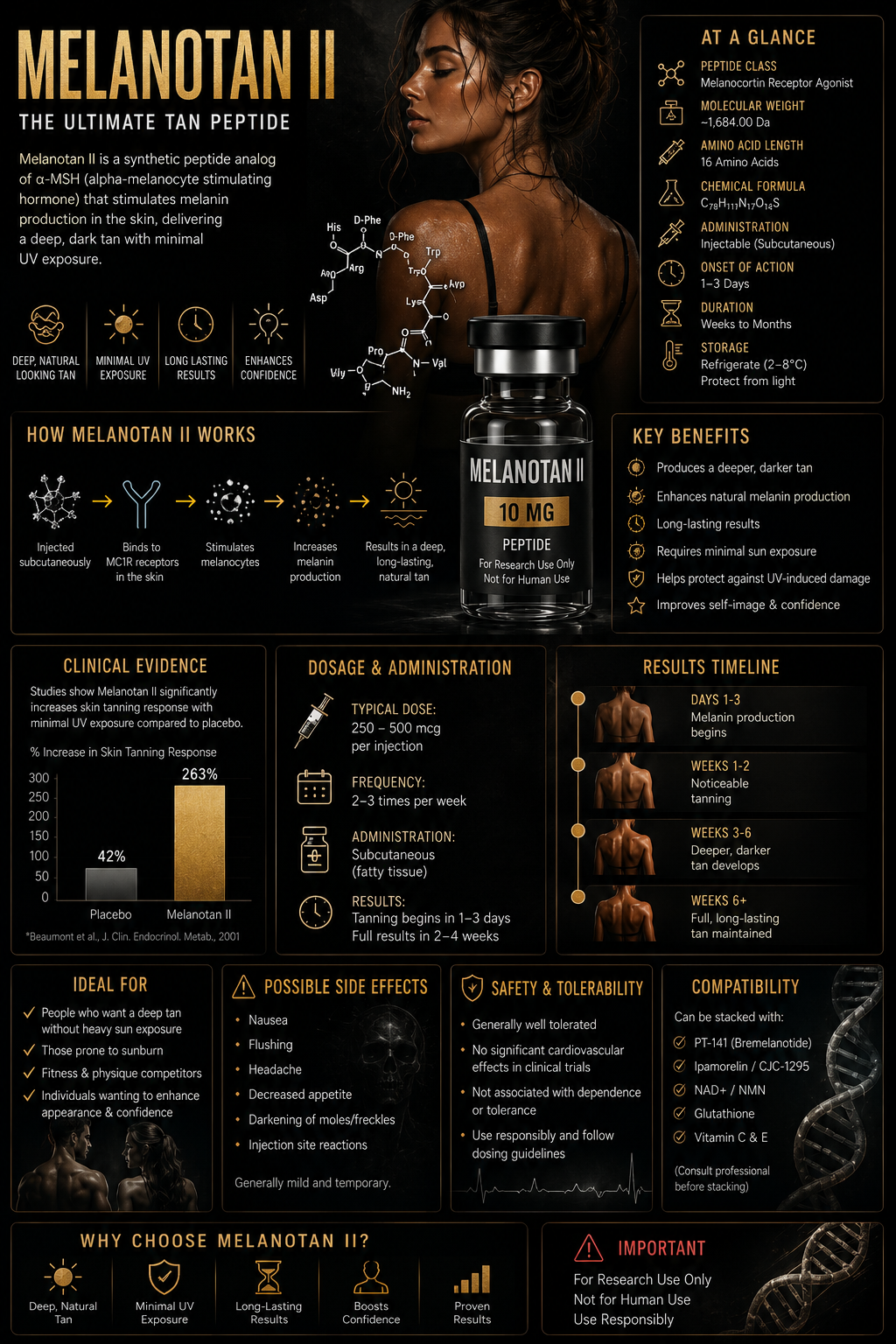
Melanotan II (MT-II): What It Is, How It Works, Benefits, and Research Overview What Is Melanotan II? Melanotan II (MT-II) is a synthetic analog of
Melanotan II (MT-II): What It Is, How It Works, Benefits, and Research Overview
What Is Melanotan II?
Melanotan II (MT-II) is a synthetic analog of α-melanocyte-stimulating hormone (α-MSH) designed to stimulate melanin production (tanning) and influence melanocortin signaling throughout the body. It became widely known as a “tanning peptide” or “Barbie drug” because of its ability to increase skin pigmentation, often with less UV exposure.
Unlike Melanotan I (Afamelanotide), Melanotan II is non-selective, meaning it activates multiple melanocortin receptors—not just skin pigmentation receptors—which contributes to additional effects such as libido changes, appetite suppression, and central nervous system activity.
Researchers investigate Melanotan II in relation to:
- Skin pigmentation and tanning
- Melanocyte biology and UV response
- Sexual arousal and libido signaling
- Appetite and metabolic signaling
- Melanocortin receptor biology
Important: Melanotan II is not FDA approved for any medical indication and is considered an unapproved drug in the United States. Warnings about safety and legality have been issued by multiple regulators.
What Is Melanotan II Made Of?
Melanotan II is a synthetic cyclic peptide analog of α-MSH.
It acts on:
Melanocortin receptors, including:
- MC1R → pigmentation/tanning
- MC3R & MC4R → appetite, libido, CNS signaling
- Other melanocortin receptors to lesser degrees
Because MT-II activates several receptors rather than primarily MC1R, it produces broader bodywide effects than Melanotan I.
How Does Melanotan II Work?
1. Skin Tanning and Pigmentation
Melanotan II stimulates:
Melanogenesis (melanin production)
through activation of melanocortin receptors on skin melanocytes.
This increases:
- Eumelanin production (darker pigment)
- Skin darkening/tanning
- Reduced susceptibility to burning in some users (though not elimination of UV damage risk)
In simple terms:
Melanotan II says:
“Produce more pigment.”
Importantly:
A darker tan is not the same thing as sun protection, and melanotan does not replace sunscreen or UV safety measures.
2. Libido and Sexual Arousal Signaling
Because Melanotan II crosses into central melanocortin pathways, researchers observed effects on:
- Sexual desire
- Erectile signaling
- Libido and arousal pathways
This research ultimately helped lead to development of:
Vyleesi (PT-141 / Bremelanotide), which originated from melanocortin research related to Melanotan II.
Some users report:
- Increased libido
- Spontaneous erections in men
- Heightened arousal signaling
3. Appetite and Metabolic Effects
Melanocortin receptors are involved in:
- Appetite regulation
- Energy homeostasis
- Feeding behavior
Researchers observed Melanotan II may contribute to:
- Reduced appetite
- Weight-loss signaling in some individuals
These effects are believed to occur through MC4R activation in the brain.
4. UV and Skin Biology Research
Researchers also investigate MT-II for:
- UV-mediated pigmentation responses
- DNA damage biology
- Melanocyte function and pigmentation disorders
However, unlike Melanotan I/Afamelanotide, Melanotan II has not been approved therapeutically.
Why Is Melanotan II Getting Attention?
Melanotan II attracts attention because it combines several high-interest effects:
- Rapid tanning/pigmentation
- Libido and sexual arousal signaling
- Reduced appetite in some users
- Central melanocortin activation
- Cosmetic tanning without prolonged UV exposure
Researchers are especially interested in how melanocortin signaling affects:
Pigmentation, metabolism, and sexual behavior simultaneously.
Potential Research Areas of Interest
1. Tanning and Pigmentation Research
Researchers investigate whether Melanotan II may influence:
- Melanin production
- Skin pigmentation signaling
- UV response biology
2. Libido and Sexual Function Research
Experimental work explores MT-II in relation to:
- Sexual arousal signaling
- Erectile function pathways
- Libido modulation
3. Appetite and Metabolic Research
Researchers investigate:
- Appetite suppression
- Melanocortin metabolism pathways
- Energy homeostasis signaling
Melanotan II vs Melanotan I vs PT-141
| Feature | Melanotan II | Melanotan I | PT-141 (Bremelanotide) |
|---|---|---|---|
| Main Focus | Tanning + libido | Tanning/photoprotection | Libido/arousal |
| Receptor Activity | Non-selective melanocortin agonist | More MC1R selective | MC4R-focused melanocortin agonist |
| Libido Effects | Higher | Minimal | High |
| Appetite Effects | Possible | Minimal | Minimal |
| Approved? | No | Limited approved medical use (Afamelanotide) | Yes (specific indication) |
Researchers generally view:
- Melanotan II → broad melanocortin/tanning peptide
- Melanotan I → pigmentation/photoprotection peptide
- PT-141 → libido/arousal melanocortin peptide
Potential Side Effects and Safety Considerations
Reported side effects include:
- Nausea
- Flushing
- Fatigue
- Headache
- Appetite suppression
- Increased libido or spontaneous erections in men
- Darkening of freckles/moles and hyperpigmentation
Potentially serious concerns reported include:
- Priapism (prolonged erection) in rare cases
- New or darkened pigmented lesions/moles
- Unknown long-term melanoma/skin risk
- Product quality concerns from unregulated sources
Because Melanotan II is unapproved and unregulated, safety, dosing consistency, sterility, and long-term outcomes remain uncertain.
Frequently Asked Questions
Is Melanotan II a peptide?
Yes. Melanotan II is a synthetic α-MSH analog peptide that activates melanocortin receptors.
Does Melanotan II make you tan?
Yes. It stimulates melanin production, which darkens skin pigmentation.
Does Melanotan II increase libido?
Research and reports suggest it may increase sexual arousal and libido in some individuals through melanocortin signaling.
Is Melanotan II FDA approved?
No. Melanotan II is not FDA approved for any indication.
Is Melanotan II the same as PT-141?
No. PT-141 was derived from melanocortin research but is a distinct compound focused on sexual desire/arousal signaling, whereas Melanotan II has broader melanocortin effects.
Final Thoughts
Melanotan II is an investigational melanocortin peptide studied for skin pigmentation, tanning, libido, appetite signaling, and melanocortin receptor biology. Its broad receptor activity explains why it affects more than tanning alone, including sexual and metabolic pathways. While interest remains high, Melanotan II is unapproved, safety data are limited, and long-term risks—especially involving pigmentation changes and product quality—remain areas of concern.
