
PT-141 (Bremelanotide): What It Is, How It Works, Benefits, and Research Overview What Is PT-141 (Bremelanotide)? PT-141, also known
PT-141 (Bremelanotide): What It Is, How It Works, Benefits, and Research Overview
What Is PT-141 (Bremelanotide)?
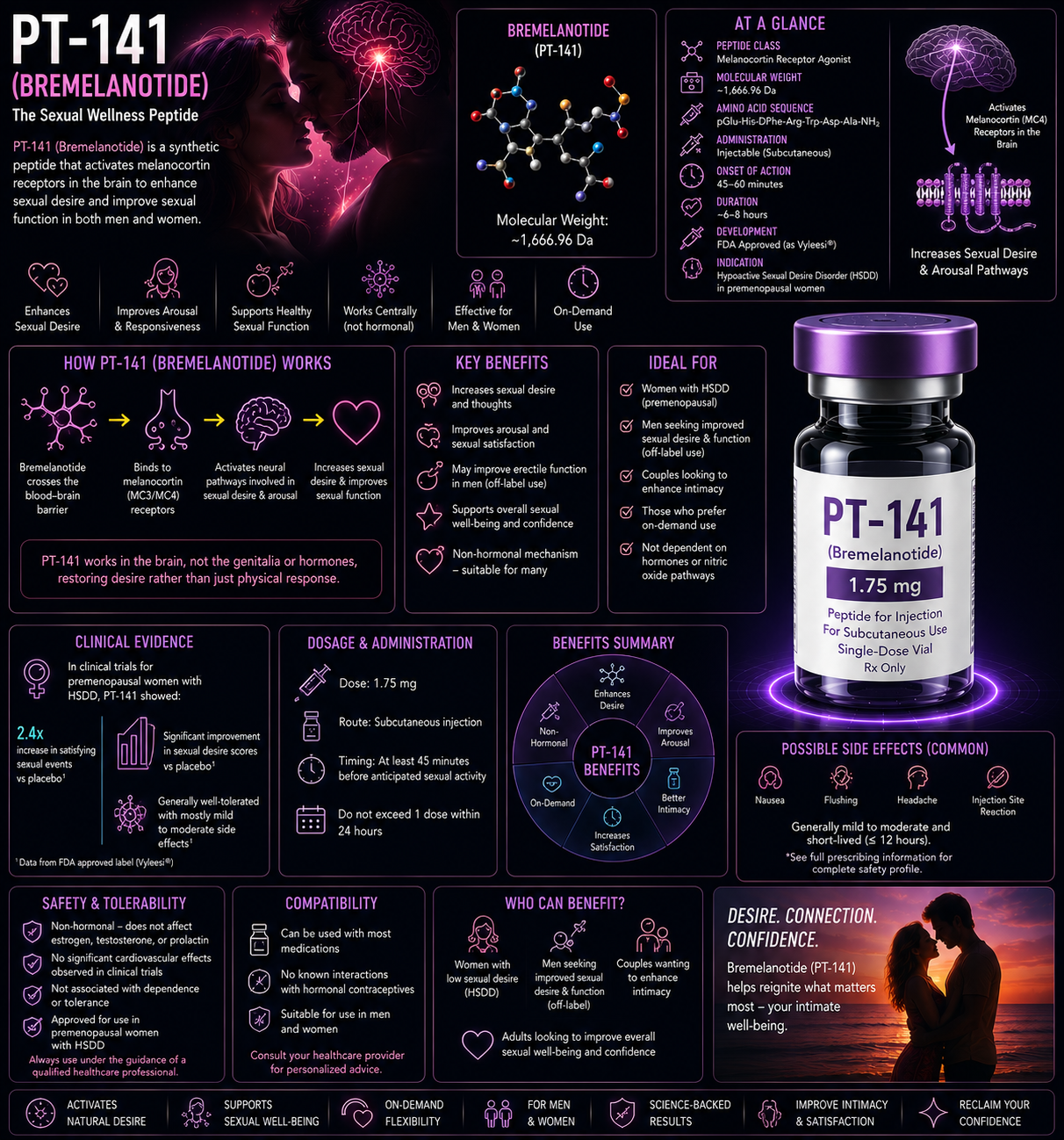
PT-141, also known as Bremelanotide, is a melanocortin receptor agonist peptide studied and used for its effects on sexual desire, arousal, libido, and sexual function. Unlike drugs that primarily affect blood flow (such as PDE5 inhibitors), PT-141 works centrally in the brain through neurochemical signaling pathways involved in sexual motivation and arousal.
PT-141 is derived from modifications of Melanotan II, but was developed specifically for sexual dysfunction research and treatment.
PT-141 has regulatory approval in a specific setting:
- Approved as Bremelanotide injection (Vyleesi) for acquired, generalized hypoactive sexual desire disorder (HSDD) in premenopausal women. Vyleesi
Researchers also investigate PT-141 in relation to:
- Sexual desire and libido signaling
- Erectile dysfunction and sexual arousal
- Central nervous system arousal pathways
- Reward, motivation, and dopamine-associated signaling
- Female and male sexual dysfunction research
Unlike many peptides discussed in wellness circles:
PT-141 is not a hormone and does not work like testosterone, estrogen, Viagra, or Cialis.
What Is PT-141 Made Of?
PT-141 is a synthetic cyclic peptide analog derived from:
Melanotan II
It acts on:
Melanocortin receptors, primarily:
- MC4R (Melanocortin-4 receptor)
- MC3R (to a lesser extent)
These receptors are involved in:
- Sexual arousal
- Motivation and reward signaling
- Appetite and behavioral regulation
How Does PT-141 Work?
PT-141 works very differently than erectile medications.
Instead of primarily increasing blood flow:
PT-141 acts centrally in the brain.
1. Melanocortin Receptor Activation
PT-141 activates melanocortin receptors in the:
- Hypothalamus
- Limbic system
- Sexual motivation pathways
Researchers believe this may influence:
- Libido and desire
- Sexual arousal signaling
- Motivation and reward pathways
In simple terms:
PT-141 says:
“Increase the brain’s sexual-interest signaling.”
2. Libido and Sexual Desire Signaling
PT-141 is most commonly associated with:
Sexual desire (libido)
Researchers investigate whether PT-141 may influence:
- Sexual motivation
- Desire and anticipation
- Arousal signaling
Importantly:
PT-141 does not directly force arousal.
Rather, it appears to influence:
Interest, desire, and central arousal pathways.
3. Erectile Function Research
In men, researchers investigate PT-141 for:
- Erectile dysfunction models
- Libido-associated erectile impairment
- Sexual performance signaling
Unlike PDE5 inhibitors:
Sildenafil or Tadalafil
PT-141:
- Does not primarily act through nitric oxide
- Does not primarily increase penile blood flow directly
This makes it mechanistically different from traditional ED drugs.
4. Female Sexual Desire Research
This is where PT-141 has the strongest clinical evidence.
PT-141/Bremelanotide was approved for:
Acquired, generalized hypoactive sexual desire disorder (HSDD) in premenopausal women.
Researchers observed improvements in:
- Sexual desire scores
- Sexual distress related to low libido
- Subjective arousal and satisfaction
However:
Results are modest and variable.
Why Is PT-141 Getting Attention?
PT-141 attracts attention because it combines several important research themes:
- Libido and sexual desire signaling
- Brain-based arousal pathways
- Female sexual dysfunction research
- Alternative erectile dysfunction mechanisms
- Motivation and reward neurobiology
Researchers are especially interested because:
PT-141 targets desire and arousal centrally rather than simply improving blood flow.
Potential Research Areas of Interest
1. Libido and Sexual Desire Research
Researchers investigate whether PT-141 may support:
- Sexual motivation
- Libido signaling
- Arousal and desire pathways
2. Erectile Dysfunction Research
Experimental and clinical work explores PT-141 in relation to:
- ED not responsive to PDE5 inhibitors
- Psychogenic erectile dysfunction
- Libido-related sexual dysfunction
3. Female Sexual Health Research
Researchers study PT-141 for:
- Low sexual desire
- HSDD
- Sexual distress and arousal dysfunction
4. Brain and Reward Signaling Research
Researchers investigate PT-141 for:
- Dopamine-associated pathways
- Motivation and reward signaling
- Neurobehavioral sexual signaling
PT-141 vs Sildenafil vs Kisspeptin vs Oxytocin
| Feature | PT-141 | Sildenafil | Kisspeptin | Oxytocin |
|---|---|---|---|---|
| Main Focus | Libido & arousal | Blood flow / ED | HPG axis signaling | Bonding & social signaling |
| Mechanism | Melanocortin receptor agonist | PDE5 inhibition | GnRH/LH/FSH stimulation | Oxytocin receptor activation |
| Acts in Brain? | High | Minimal | Moderate | High |
| Sexual Desire Effect | High | Low | Moderate | Variable |
| FDA Approved? | Yes (specific indication) | Yes | No | Yes (other uses) |
Researchers generally view:
- PT-141 → libido/arousal peptide
- Sildenafil → blood-flow ED medication
- Kisspeptin → reproductive hormone signaling peptide
- Oxytocin → bonding/social neuropeptide
Potential Side Effects and Safety Considerations
Reported side effects include:
- Nausea (common)
- Flushing
- Headache
- Temporary blood pressure elevation
- Injection-site irritation
Some users experience:
- Increased skin pigmentation with repeated exposure (melanocortin-related effect)
Because PT-141 acts centrally and affects melanocortin pathways:
Researchers continue evaluating:
- Long-term safety
- Cardiovascular effects
- Behavioral/neuroendocrine outcomes
Frequently Asked Questions
Is PT-141 a peptide?
Yes. PT-141 (Bremelanotide) is a synthetic melanocortin receptor agonist peptide.
Is PT-141 FDA approved?
Yes. Bremelanotide is approved as Vyleesi for acquired, generalized HSDD in premenopausal women.
Does PT-141 work like Viagra?
No. PT-141 works primarily in the brain (central arousal pathways), whereas Viagra works through blood-flow signaling.
Does PT-141 increase libido?
Research suggests PT-141 may increase sexual desire and arousal signaling, though responses vary.
Can men use PT-141?
Men have been included in research studies for erectile dysfunction and libido, but regulatory approval is for a specific female indication.
Final Thoughts
PT-141 (Bremelanotide) is a brain-acting melanocortin peptide studied and used for sexual desire, libido, arousal, and sexual function signaling. Unlike blood-flow medications, PT-141 targets central nervous system pathways involved in desire and motivation, making it mechanistically unique. While it has an approved medical use in a specific setting, broader applications in libido and sexual performance remain an area of ongoing research.
