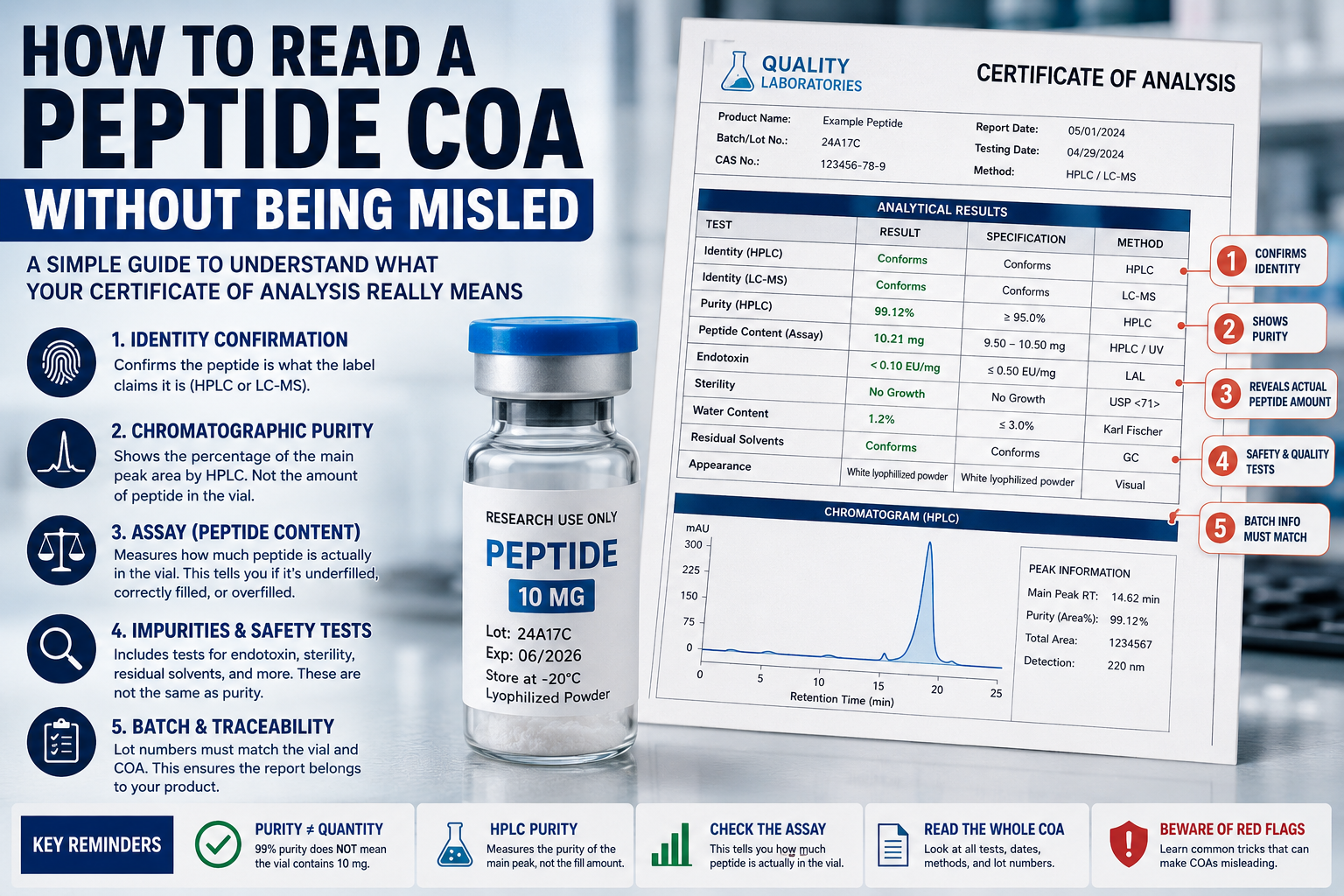
How to Read a Peptide COA Without Being Misled
A certificate of analysis can contain useful evidence—or create false confidence. This guide explains how to separate identity, chromatographic purity, assay, vial quantity, impurities,…
A closer look at the concepts, compounds, and questions that matter.
A certificate of analysis can contain useful evidence—or create false confidence. This guide explains how to separate identity, chromatographic purity, assay, vial quantity, impurities,…
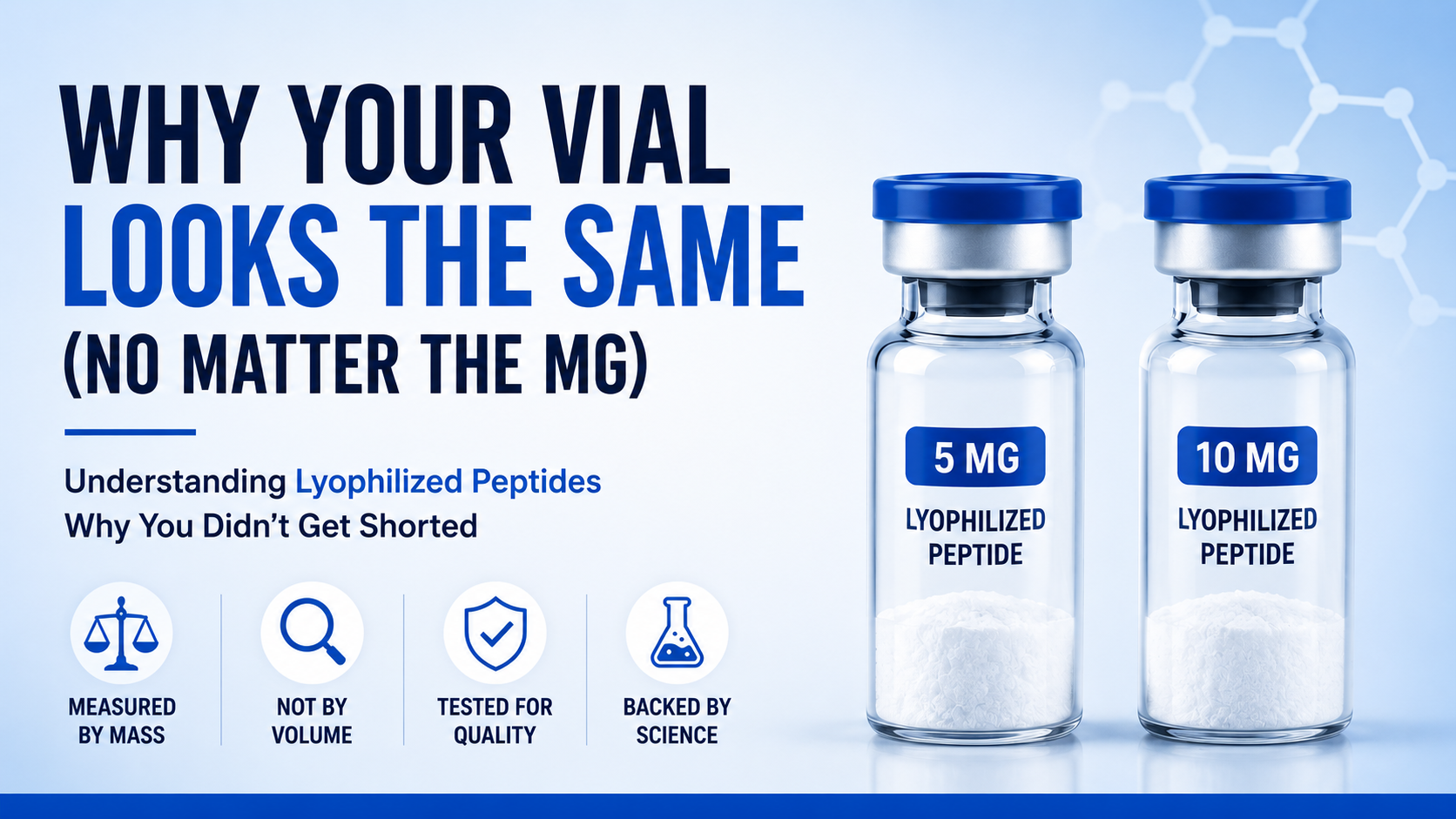
AminosInfo Lyophilization Guide Lyophilized Vial Powder Appearance: Why MG Can Look Similar However, lyophilized vial powder appearance can vary even when labeled milligram content…
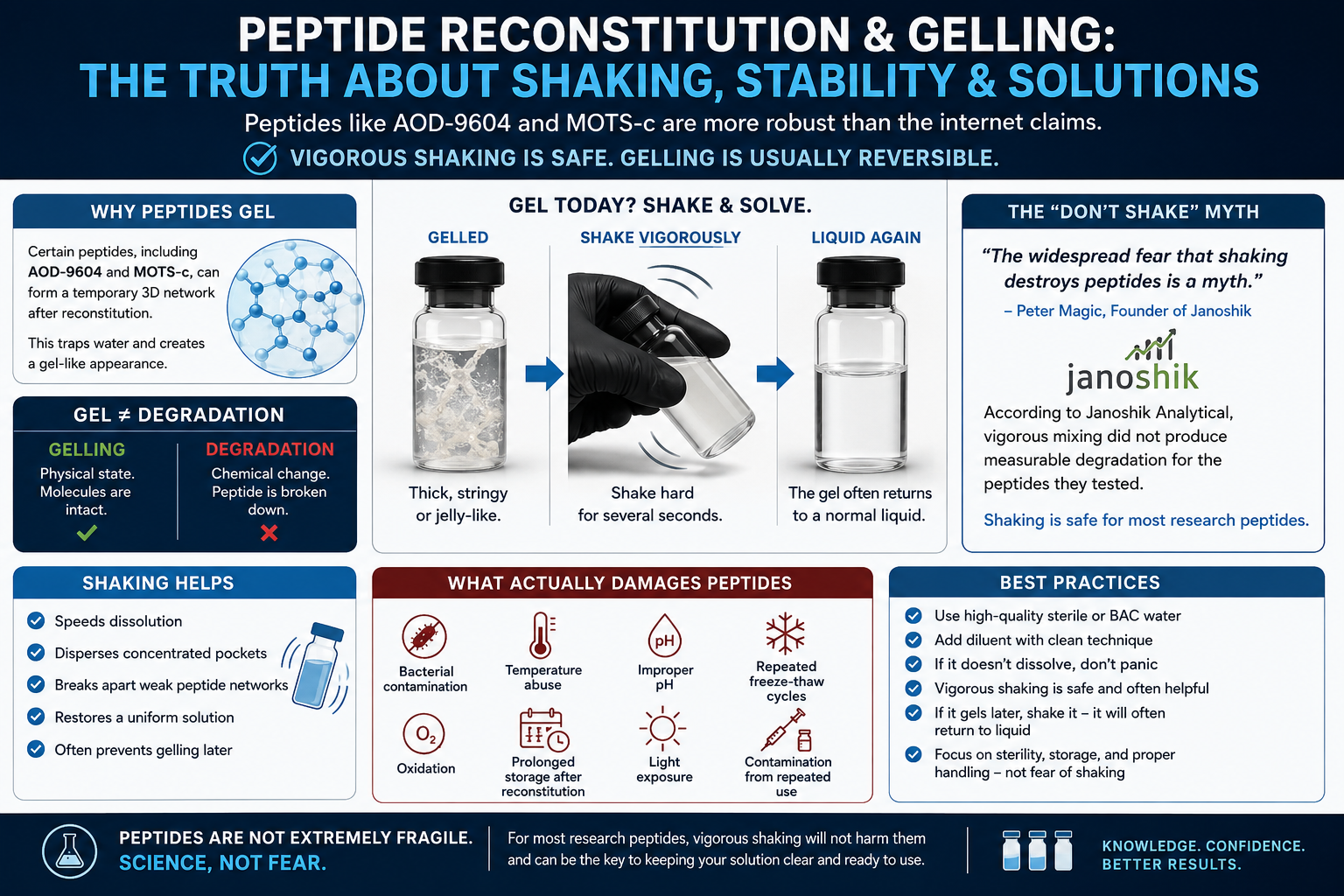
Skip to article Evidence note Reviewed July 14, 2026 Peptide formulation and stability Peptide Reconstitution and Gelling: What Visible Changes Mean Peptide reconstitution and…
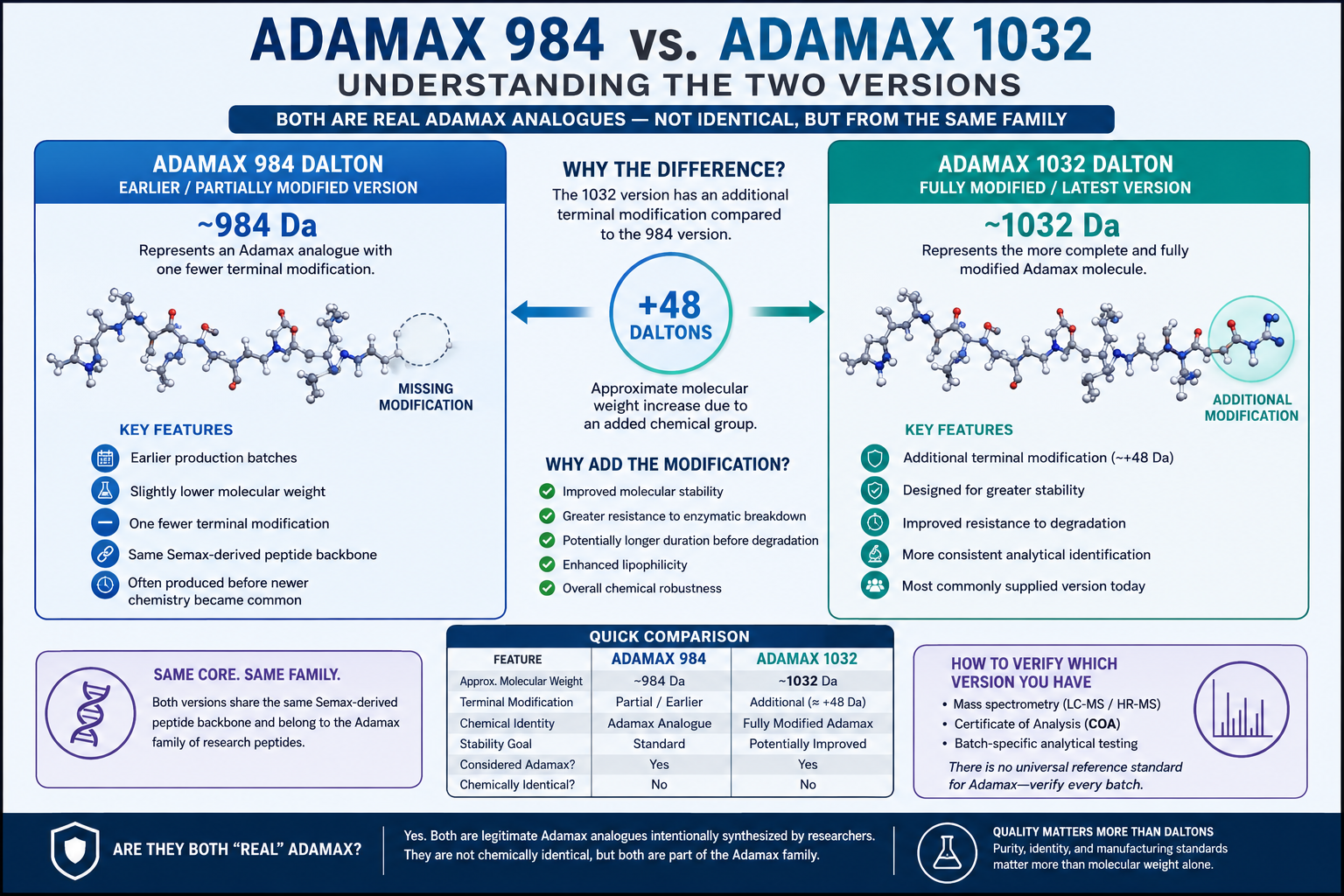
Skip to article DaIdentity brief Reviewed July 14, 2026 Analytical chemistry · evidence review Adamax 984 vs 1032 Da: What the Numbers Actually Mean…
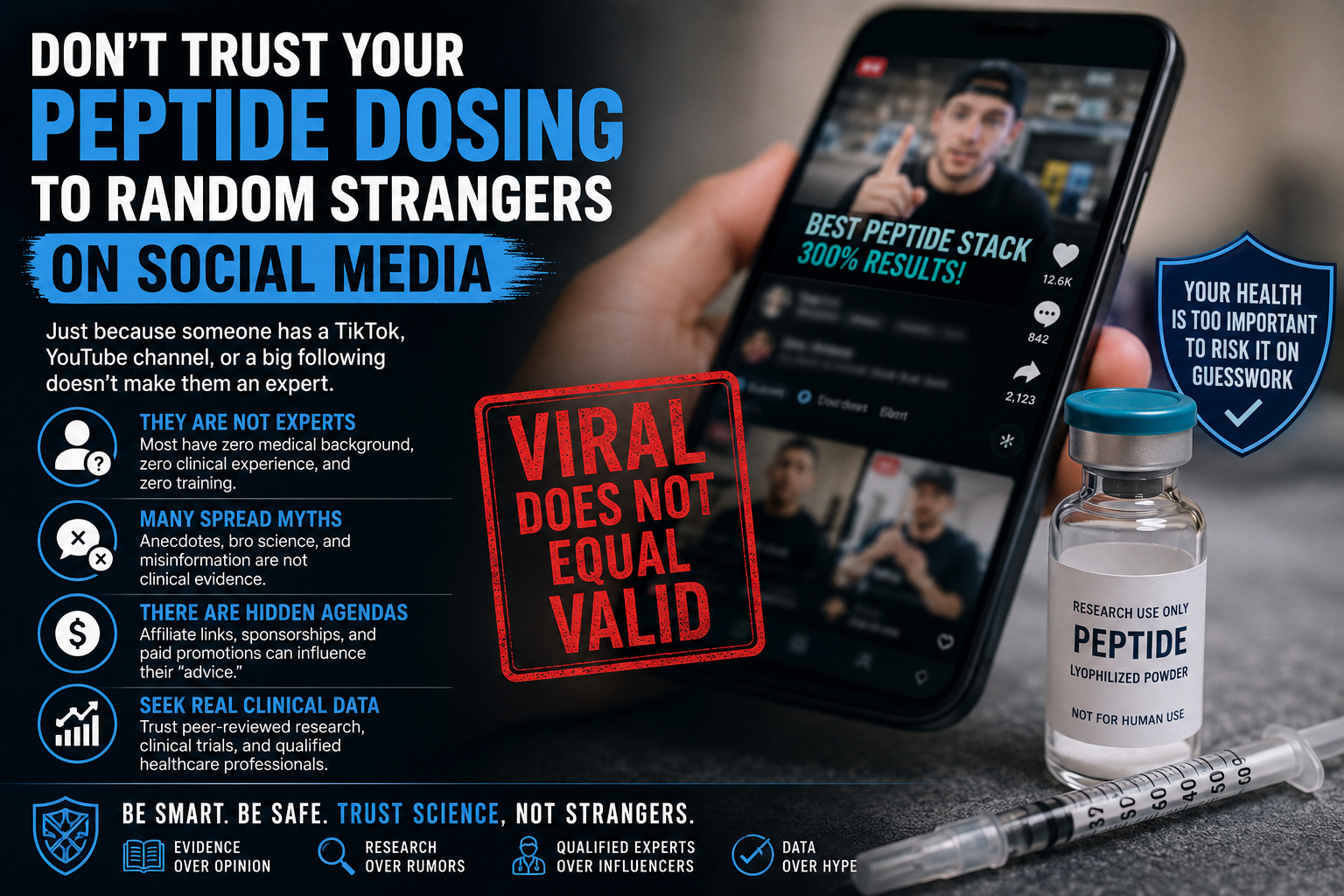
Buyer Education & Misinformation Awareness Social Media Peptide Dosing Advice: Why It Can Mislead Social media peptide dosing advice often sounds certain, yet it…
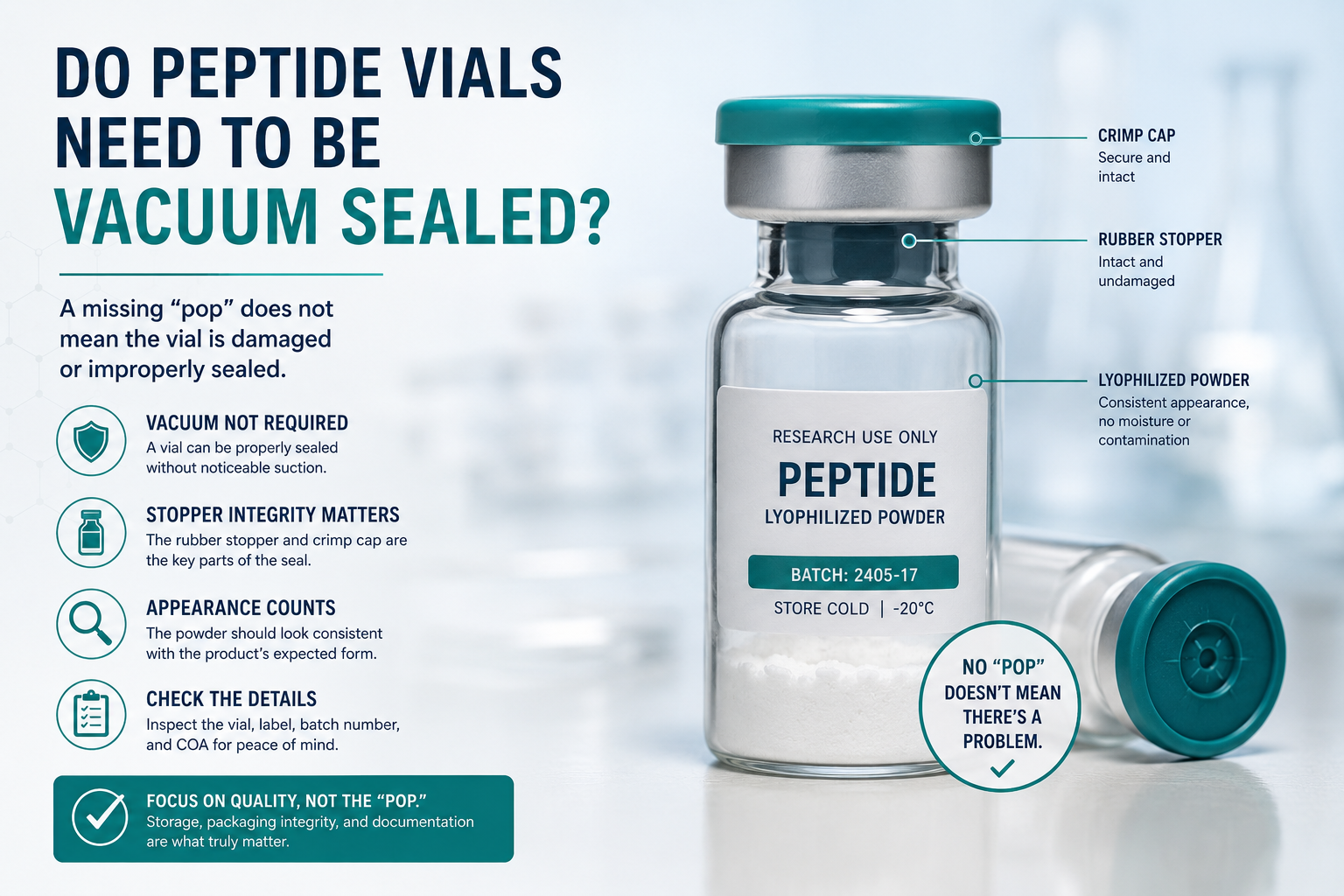
Peptide Vial Education Does a Peptide Vial Vacuum Seal Need to Make a “Pop”? A peptide vial vacuum seal may create noticeable suction, but…
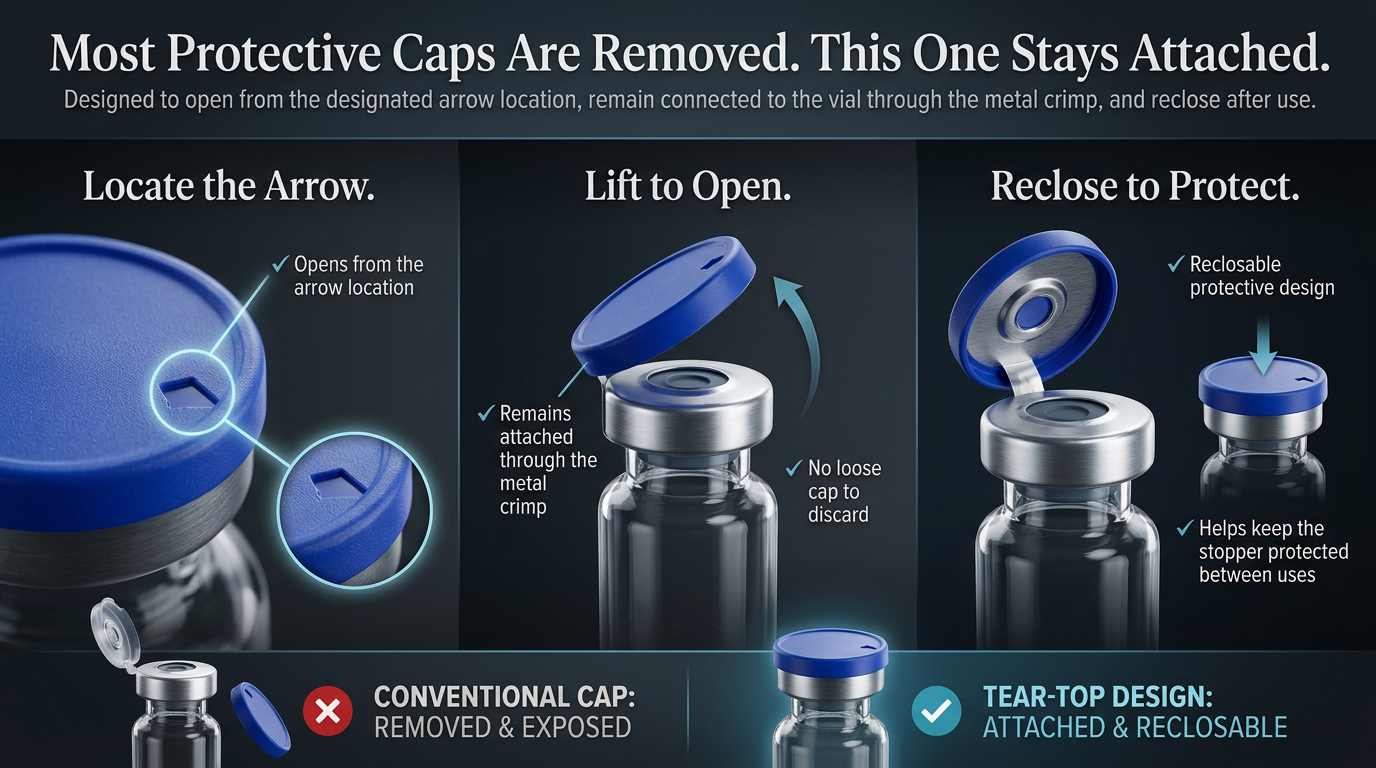
Vial Packaging & Handling Guide Attached Tear-Top Vial Cap: How to Open It Correctly An attached tear-top vial cap opens at a marked location…
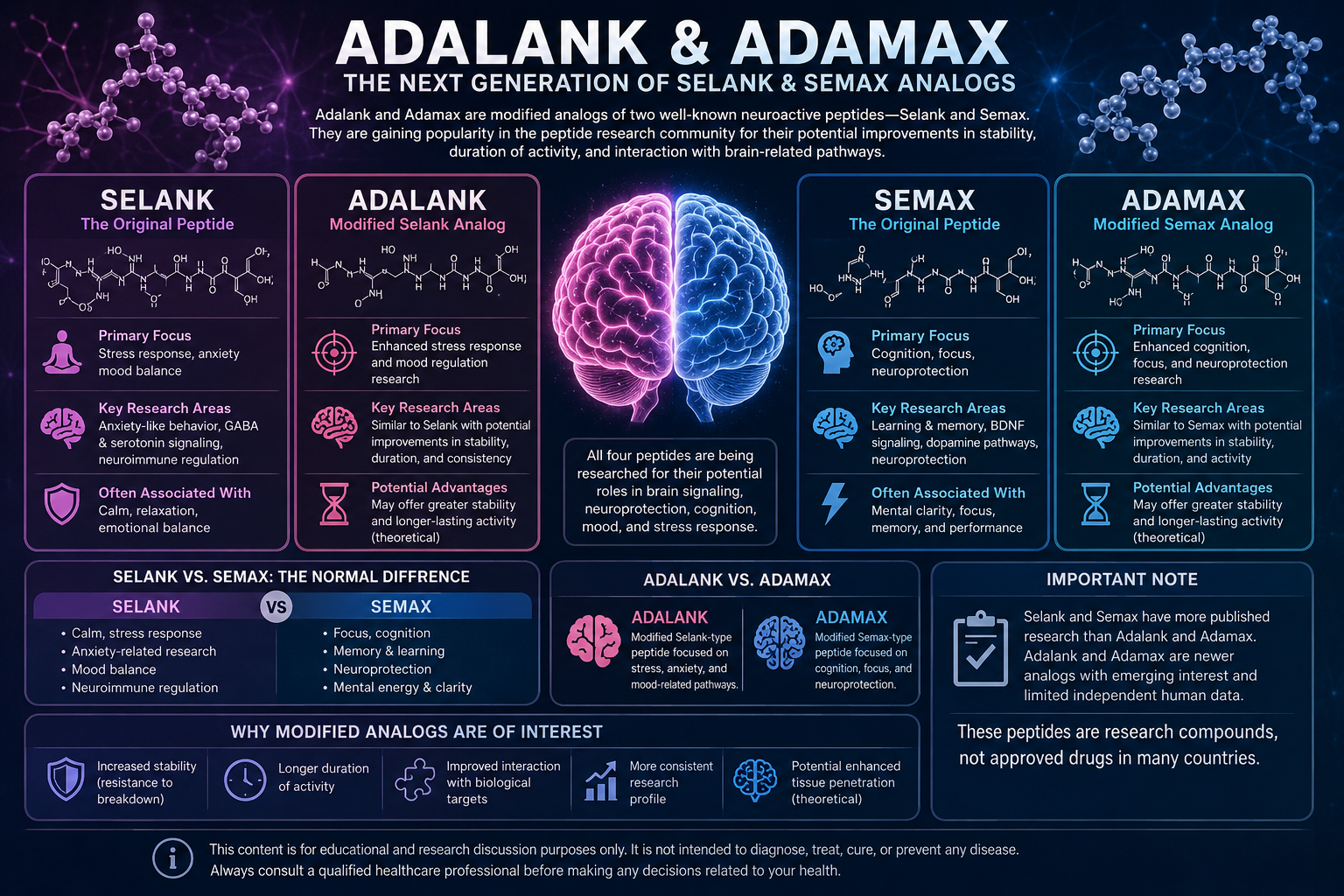
Neuropeptide Research Overview Adalank and Adamax: What Researchers Actually Know Adalank and Adamax are marketed as modified relatives of Selank and Semax. However, published…
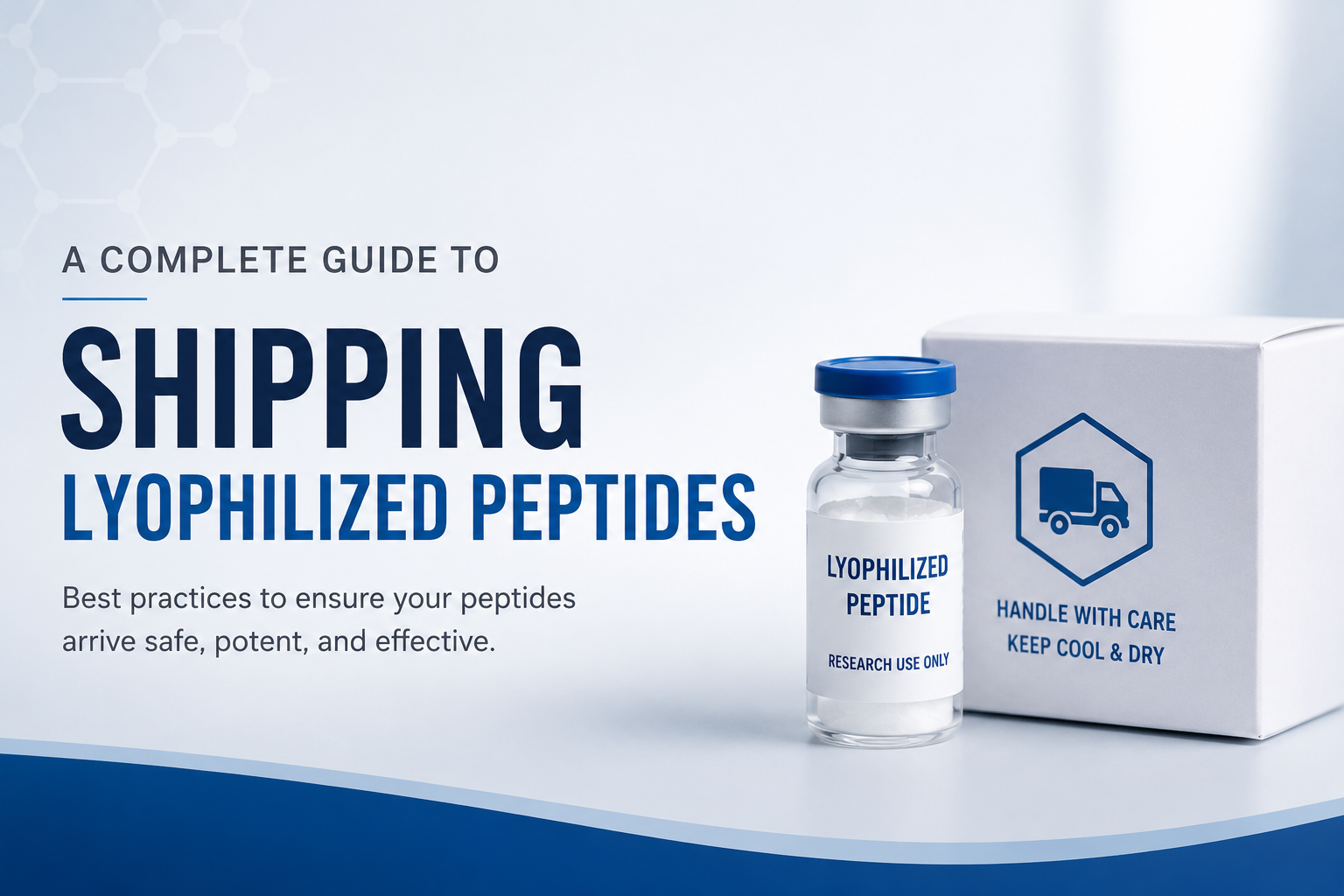
Lyophilized Peptides and Shipping Conditions Understanding Stability During Transit Introduction Questions often arise regarding whether shipping delays, warm temperatures, or standard transit conditions may…
The Responsibility of Reviewing a Certificate of Analysis Before You Buy In today’s research market, one of the most irresponsible things a buyer can…