
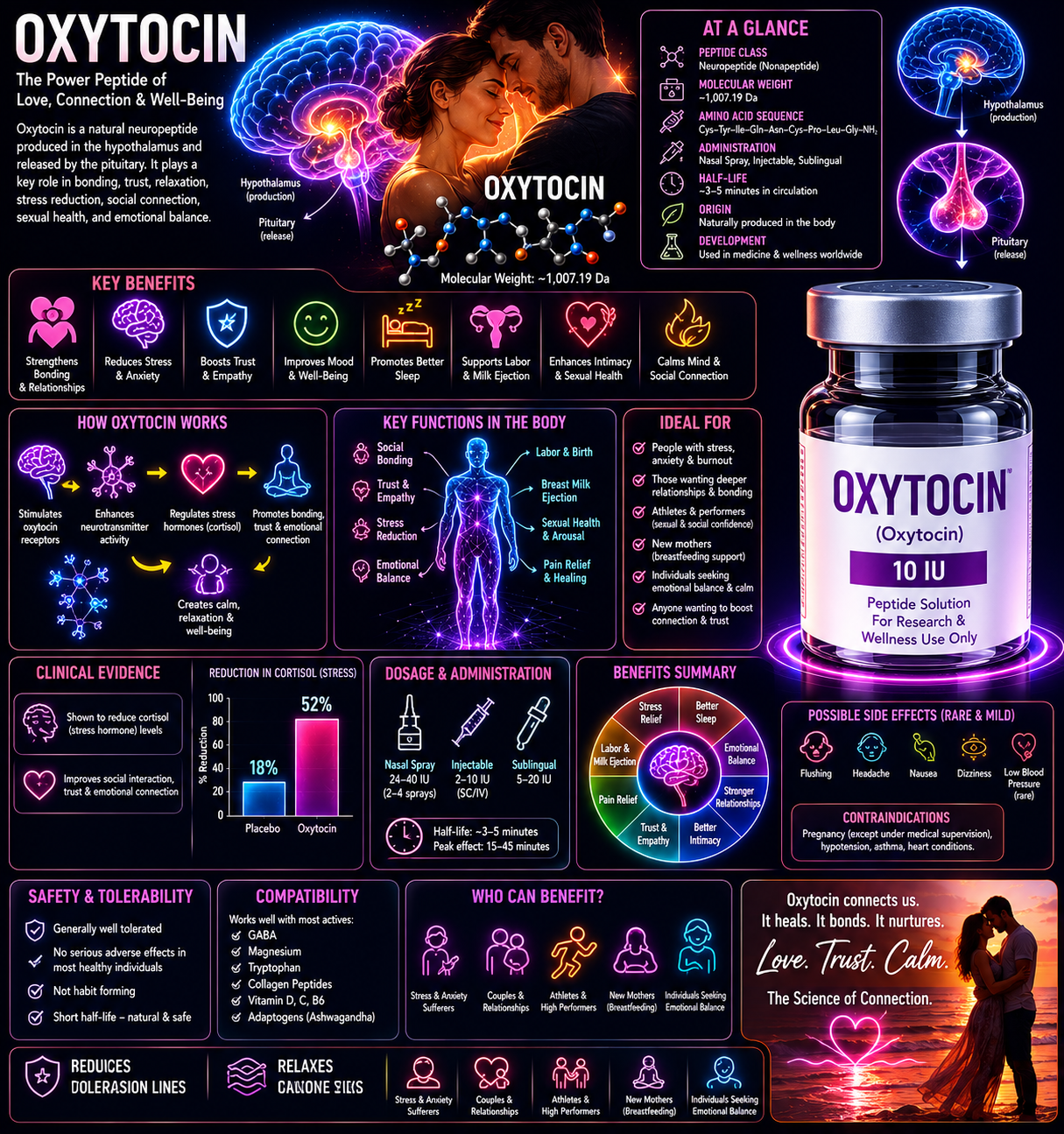
Oxytocin: What It Is, How It Works, Benefits, and Research Overview What Is Oxytocin? Oxytocin is a neuropeptide hormone produce
Oxytocin: What It Is, How It Works, Benefits, and Research Overview
What Is Oxytocin?
Oxytocin is a neuropeptide hormone produced primarily in the hypothalamus and released by the posterior pituitary gland. It acts as both a hormone and neurotransmitter, influencing social bonding, reproductive behaviors, and physiological processes.
Researchers and clinicians study oxytocin for its roles in:
- Labor and childbirth (stimulates uterine contractions)
- Lactation (milk ejection reflex)
- Social bonding and trust
- Emotional regulation and stress reduction
- Potential therapeutic applications in psychiatric and neurological disorders (nih.gov)
Oxytocin is sometimes administered synthetically as a pharmaceutical (e.g., Pitocin) for medical purposes, or investigationally in research on behavior and neuropsychiatric conditions.
How Does Oxytocin Work?
Oxytocin functions through oxytocin receptors (OXTR), which are G-protein coupled receptors distributed in:
- Uterine smooth muscle
- Mammary glands
- Brain regions involved in emotion and social behavior (e.g., amygdala, nucleus accumbens)
- Heart and vascular system
1. Reproductive Function
- Labor: Oxytocin stimulates uterine contractions to facilitate childbirth
- Lactation: Triggers milk ejection in mammary glands via myoepithelial cell contraction
2. Social and Emotional Regulation
- Enhances trust, empathy, and social recognition
- Reduces social anxiety and stress responses
- Modulates the amygdala to dampen fear-related responses (nih.gov)
3. Cardiovascular and Stress Effects
- May influence blood pressure and heart rate
- Supports parasympathetic nervous system activity, promoting relaxation
- Plays a role in stress hormone modulation (cortisol reduction)
Benefits and Potential Applications
- Childbirth Support
- Induces and augments labor contractions
- Reduces postpartum hemorrhage risk
- Lactation
- Stimulates milk ejection (let-down reflex)
- Social Bonding and Relationships
- Enhances trust, empathy, and interpersonal bonding
- Promotes maternal-infant attachment
- Emotional and Stress Regulation
- Reduces anxiety and stress in experimental settings
- May improve mood and social cognition
- Potential Psychiatric Applications (Investigational)
- Autism spectrum disorders (social functioning)
- Anxiety and depression
- PTSD (emotional regulation and fear processing)
Administration
- Medical: Injectable oxytocin (e.g., Pitocin) for labor and postpartum care
- Research/Investigational:
- Intranasal sprays to target central nervous system effects
- IV infusion for clinical studies
- Dosing: Varies by application (medical labor induction vs. behavioral research)
Side Effects
Medical use:
- Uterine hyperstimulation
- Hyponatremia (water retention)
- Headache, nausea
- Rare cardiovascular effects
Behavioral research use (intranasal):
- Generally mild: nasal irritation, transient headache, or mild dizziness
- Effects are short-lived and reversible
Oxytocin vs Vasopressin vs Argireline vs Semax
| Compound | Type | Primary Function | Administration | FDA Approved? |
|---|---|---|---|---|
| Oxytocin | Neuropeptide hormone | Labor, lactation, social bonding, stress regulation | IV, intranasal, injection | Yes (for labor/lactation) |
| Vasopressin | Peptide hormone | Water retention, blood pressure regulation | IV, injection | Yes |
| Argireline | Synthetic peptide | Anti-wrinkle, mild muscle relaxation | Topical | No |
| Semax | Synthetic peptide | Neuroprotective, cognitive support | Nasal | No (Russia) |
Frequently Asked Questions
What is oxytocin used for?
- Medically for labor induction, postpartum hemorrhage, and lactation support
- Investigationally for social bonding, mood regulation, and neuropsychiatric research
Is oxytocin a peptide?
- Yes. Oxytocin is a nine-amino-acid peptide hormone
How is oxytocin administered?
- Injectable for medical uses
- Intranasal spray for research purposes
Is oxytocin safe?
- Yes, when used appropriately under medical supervision; mild side effects may occur in research applications
Can oxytocin improve social behavior?
- Research suggests it may enhance trust, empathy, and social bonding, though effects are context-dependent and still investigational
Final Thoughts
Oxytocin is a naturally occurring peptide hormone that plays critical roles in reproduction, lactation, social bonding, and stress regulation. Its medical use is well-established for labor induction and milk ejection, while research continues into its potential applications for psychiatric, neurological, and social behavioral interventions. Oxytocin’s ability to modulate both physiological and emotional pathways makes it a central focus in both clinical medicine and neuroscience research.
