
:root{--ink:#16202a;--muted:#5c6975;--line:#dce3e8;--panel:#f6f8fa;--accent:#174f69;--accent2:#28634b;--warning-bg:#fff8e8} *{box-sizing:border
Glutathione Scientific Overview: Structure, Biology, Research, and Testing
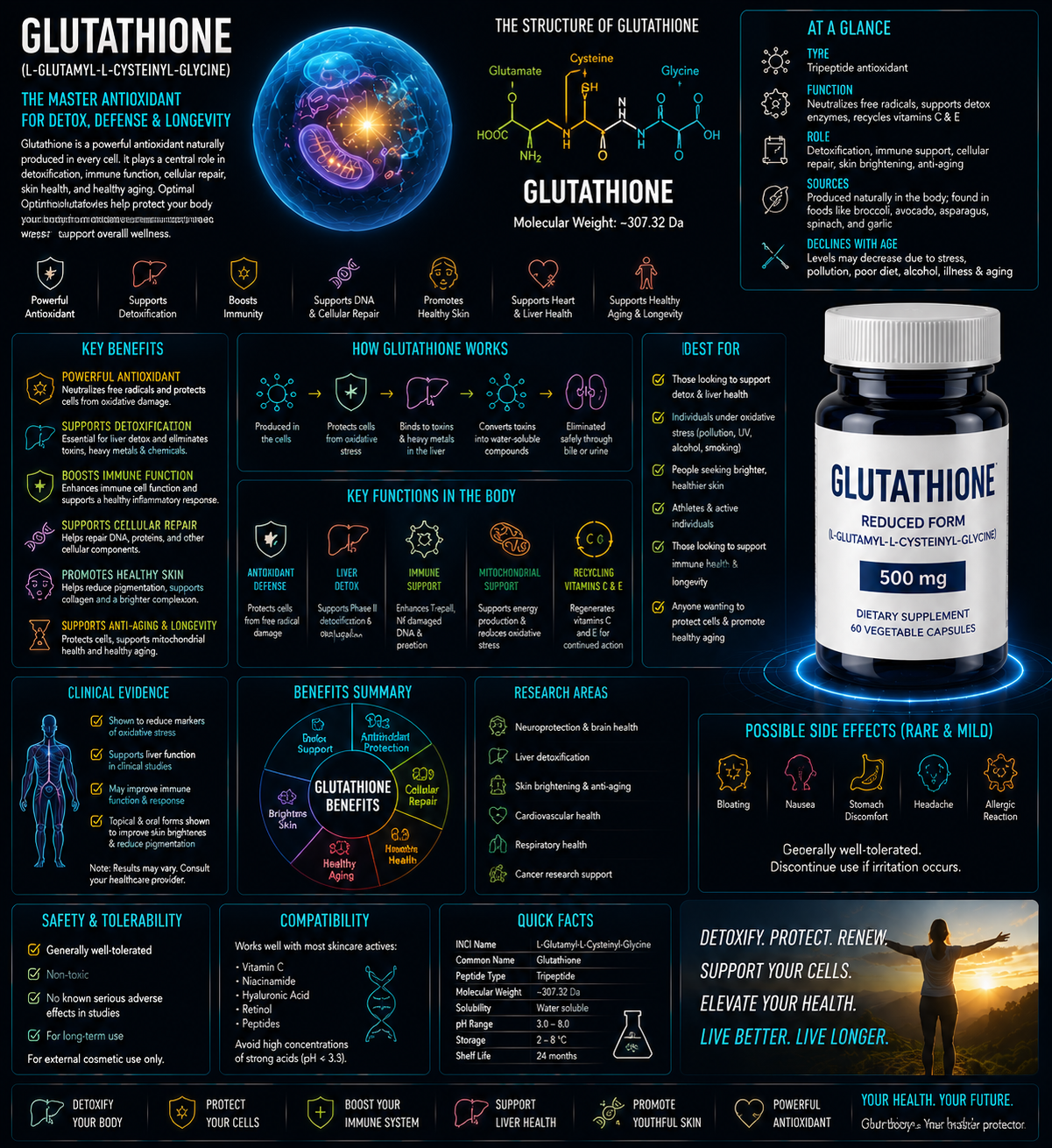
For example, Glutathione scientific overview content should separate established cellular biology from commercial claims about supplementation, skin lightening, detoxification, and injectable use. This endogenous γ-glutamyl tripeptide that functions in redox buffering, peroxide reduction, conjugation, and signaling.
What Is Glutathione?
First, glutathione is a low-molecular-weight thiol made from glutamate, cysteine, and glycine. Its reduced form is abbreviated GSH, while the oxidized disulfide form is abbreviated GSSG.
Next, cells synthesize glutathione inside cells and is present in millimolar concentrations in many tissues. For example, it is especially abundant in the liver, where it participates in antioxidant defense, electrophile conjugation, drug metabolism, and export of conjugated compounds.
However, calling glutathione the “master antioxidant” is common marketing language. Meanwhile, a more scientifically precise description is that it is one of the body’s most abundant and important intracellular redox buffers and enzyme cofactors. It operates as part of a network that also includes NADPH, glutathione reductase, glutathione peroxidases, thioredoxin, catalase, superoxide dismutases, vitamins C and E, and numerous repair systems.
Endogenous γ-glutamyl tripeptide
GSH
GSSG
Often cysteine
Most cells; liver is central to whole-body homeostasis
Redox buffering, peroxide reduction, conjugation, signaling
🧬 Molecular Structure
First, reduced glutathione is an unusual tripeptide because glutamate is connected to cysteine through the glutamate side-chain γ-carboxyl group rather than the conventional α-carboxyl group. This γ-glutamyl bond helps protect glutathione from ordinary intracellular peptidases.
🧪 Sequence and Structural Notation
γ-L-Glutamyl-L-cysteinylglycine
Abbreviated sequence: γ-Glu-Cys-Gly
| Component | Role |
|---|---|
| Glutamate | Meanwhile, Forms the unusual γ-peptide linkage with cysteine. |
| Cysteine | Likewise, Supplies the reactive sulfhydryl group responsible for redox and conjugation chemistry. |
| Glycine | In addition, Completes the tripeptide and supports synthesis and cellular availability. |
| Thiol group (-SH) | Moreover, Donates reducing equivalents and reacts with electrophiles. |
⚛️ Molecular Weight and 🧫 Formula
| Reduced glutathione formula | By contrast, C10H17N3O6S |
|---|---|
| Reduced glutathione molecular weight | Approximately 307.32 g/mol |
| Oxidized glutathione formula | Also, C20H32N6O12S2 |
| Oxidized glutathione molecular weight | Approximately 612.63 g/mol |
| CAS number, reduced form | 70-18-8 |
| PubChem CID, reduced form | 124886 |
📅 Discovery Timeline
1888: Early sulfur-containing substance described
First, J. Likewise, de Rey-Pailhade described a sulfur-rich biological substance he called “philothion,” an early observation later linked to glutathione.
1921: Hopkins identifies glutathione
Next, Frederick Gowland Hopkins characterized a widely distributed cellular reducing substance and coined the term glutathione.
1929: Tripeptide composition established
Then, researchers showed to contain glutamate, cysteine, and glycine.
1950s–1960s: Biosynthetic and enzyme pathways clarified
Afterward, researchers characterized glutathione synthesis, glutathione reductase, glutathione peroxidase, and γ-glutamyl metabolism.
1970s–1980s: Detoxification and transport expand
Meanwhile, glutathione S-transferases and glutathione conjugation became central topics in toxicology, pharmacology, and cancer research.
1990s–2000s: Redox signaling replaces a simple antioxidant model
Moreover, research showed that glutathione regulates protein thiols, transcription, proliferation, apoptosis, and cell signaling—not merely free-radical scavenging.
2010s–2020s: Supplementation and translational research grows
Finally, studies evaluated oral, liposomal, sublingual, topical, and precursor approaches. In addition, results have been mixed and depend on formulation, duration, baseline status, tissue measured, and clinical setting.
📖 Research History
Importantly, glutathione research evolved from descriptive antioxidant chemistry into a systems-level understanding of redox biology. Moreover, gSH is not simply “used up” when it encounters oxidants. It is synthesized, transported, conjugated, exported, oxidized, reduced, and attached reversibly to proteins through glutathionylation.
However, researchers observe low glutathione levels in many diseases, but this association does not automatically prove that supplemental glutathione treats those diseases. By contrast, depletion may be a cause, consequence, adaptation, or biomarker depending on the condition.
Glutathione Synthesis and Recycling
Step 1: γ-Glutamylcysteine formation
First, glutamate-cysteine ligase joins glutamate and cysteine. Also, this is generally the rate-limiting step and requires ATP.
Step 2: Glycine addition
Next, glutathione synthetase adds glycine to form GSH, also using ATP.
Step 3: Oxidation during peroxide reduction
Then, glutathione peroxidases use GSH to reduce hydrogen peroxide or lipid hydroperoxides. Consequently, two GSH molecules form one molecule of GSSG.
Step 4: NADPH-dependent recycling
Finally, glutathione reductase converts GSSG back to GSH using reducing power from NADPH.
GSH/GSSG redox balance
Importantly, the cellular GSH-to-GSSG relationship is one indicator of redox status. However, interpretation is technically sensitive because sample handling can artificially oxidize GSH after collection.
🧠 How Glutathione Works
1. Peroxide reduction
Then, glutathione peroxidases use GSH to convert hydrogen peroxide and lipid hydroperoxides into less reactive products.
2. Direct thiol reactions
Next, the cysteine thiol can react with oxidants and electrophiles, although much antioxidant activity is enzyme mediated rather than simple direct scavenging.
3. Xenobiotic conjugation
Meanwhile, glutathione S-transferases attach GSH to electrophilic drugs, metabolites, and environmental chemicals. Conjugates can then be processed and exported.
4. Protein S-glutathionylation
In addition, reversible attachment of glutathione to protein cysteine residues protects thiols and regulates signaling, metabolism, transcription, and stress responses.
5. Antioxidant-network interactions
Likewise, glutathione supports regeneration and protection of other redox systems, including vitamin C, vitamin E, thioredoxin-related pathways, and antioxidant enzymes.
6. Mitochondrial protection
Meanwhile, mitochondria import GSH from the cytosol. Therefore, mitochondrial glutathione helps control peroxide, lipid oxidation, iron-sulfur protein function, and cell-death signaling.
7. Immune-cell function
Finally, GSH availability influences lymphocyte proliferation, antigen presentation, cytokine signaling, macrophage function, and redox-sensitive immune responses. For example, this does not mean supplementation universally “boosts immunity.”
🎯 Major Glutathione-Related Enzymes
| Enzyme or system | Function |
|---|---|
| Glutamate-cysteine ligase | Rate-limiting first step in GSH synthesis. |
| Glutathione synthetase | Consequently, Adds glycine to produce GSH. |
| Glutathione reductase | However, Uses NADPH to recycle GSSG to GSH. |
| Glutathione peroxidases | Therefore, Reduce hydrogen peroxide and lipid hydroperoxides. |
| Meanwhile, glutathione S-transferases | For example, Conjugate GSH to electrophiles and xenobiotics. |
| Glutaredoxins | Meanwhile, Regulate protein glutathionylation and thiol-disulfide exchange. |
| γ-Glutamyl transferase | Likewise, Participates in extracellular glutathione breakdown and amino-acid recovery. |
Potential Benefits and Research Areas
Antioxidant and redox support
Importantly, glutathione is indispensable to cellular antioxidant defense. Meanwhile, whether supplementation improves outcomes depends on baseline status, absorption, dose form, duration, and disease context.
Liver and drug metabolism
For example, the liver uses glutathione conjugation to process many electrophilic compounds. Likewise, the phrase “liver detox” is often oversimplified: glutathione participates in specific enzymatic pathways, not a generic cleansing process.
Acetaminophen toxicity
Moreover, acetaminophen overdose depletes hepatic glutathione through formation of the reactive metabolite NAPQI. The established antidote is N-acetylcysteine, which restores cysteine availability and has additional protective actions. Glutathione itself is not the standard FDA-approved antidote.
Respiratory and neurological research
In addition, glutathione depletion and oxidative imbalance are studied in lung disease, Parkinson disease, Alzheimer disease, psychiatric disorders, and other conditions. In addition, findings do not establish routine glutathione treatment for these diseases.
Exercise and aging
Meanwhile, research examines whether precursor combinations such as glycine plus NAC can improve GSH synthesis, mitochondrial measures, or oxidative-stress markers in older adults. Moreover, larger outcome trials are needed.
Skin pigmentation
However, glutathione may influence melanogenesis by altering redox conditions, tyrosinase activity, and the balance between eumelanin and pheomelanin. By contrast, small oral and topical trials have reported modest reductions in melanin index, but findings are variable, long-term durability is uncertain, and skin-lightening injections are not FDA approved.
Supplemental and Pharmaceutical Forms
Oral reduced glutathione
First, older short-term studies found little change in systemic glutathione status, while later longer trials reported increases in some blood and tissue compartments. Oral bioavailability should therefore not be described as uniformly negligible.
Liposomal and sublingual formulations
Next, these formulations are intended to reduce gastrointestinal degradation or alter absorption. Also, small studies suggest possible advantages, but direct comparisons and independent replication remain limited.
Glutathione precursors
Moreover, NAC supplies cysteine, while glycine can become limiting in some populations. Consequently, adequate glutamate is usually available through metabolism. Precursor effectiveness depends on the limiting substrate and health context.
Topical glutathione
In addition, topical oxidized or reduced glutathione has been studied for pigmentation and skin appearance. However, efficacy depends on stability, vehicle, penetration, concentration, and product quality.
Inhaled glutathione
Likewise, nebulized glutathione has been studied in selected respiratory conditions. Therefore, it can provoke bronchospasm in susceptible individuals and is not a general wellness treatment.
Intravenous and injectable glutathione
Finally, IV administration produces immediate systemic exposure, but higher exposure does not automatically establish clinical benefit. Injectable use introduces risks involving sterility, endotoxin, compounding quality, hypersensitivity, and unapproved claims. FDA has specifically highlighted endotoxin-related adverse events involving compounded injectable glutathione.
Safety and Regulatory Considerations
Oral adverse effects
First, reported effects can include abdominal discomfort, bloating, loose stools, nausea, headache, or rash. Long-term safety data vary by formulation and population.
Asthma and inhalation
Next, inhaled glutathione may cause bronchoconstriction or worsen symptoms in some people with asthma.
Injectable risks
Moreover, potential risks include infection, endotoxin reactions, fever, chills, hypotension, hypersensitivity, incorrect concentration, particulate contamination, and harm from unapproved skin-whitening regimens.
Skin-lightening claims
Importantly, no injectable glutathione drug is FDA approved for skin whitening. Evidence for oral and topical brightening is limited and does not justify assuming uniform or permanent changes.
Cancer and treatment interactions
However, glutathione can protect normal cells from oxidative injury, but it can also influence drug resistance and tumor-cell survival. People receiving chemotherapy or radiation should not add high-dose antioxidant therapies without oncology guidance.
Pregnancy and chronic disease
Finally, safety depends on route, formulation, health status, and concurrent medications. “Naturally present in the body” does not guarantee that concentrated external administration is appropriate.
🧪 Laboratory Testing Methods
| Method | Purpose | Important limitation |
|---|---|---|
| HPLC-UV or UPLC | In addition, Assay and related-substances analysis. | Moreover, GSH can oxidize during handling, affecting results. |
| LC-MS / HRMS | By contrast, Confirms identity and detects degradants or adducts. | Also, Does not establish sterility or biological benefit. |
| Thiol derivatization assays | Consequently, Quantifies reduced GSH using reagents such as monobromobimane or NEM-based methods. | However, Sample stabilization must be immediate and validated. |
| GSH/GSSG analysis | Therefore, Measures reduced and oxidized forms separately. | For example, Ex vivo oxidation can falsely elevate GSSG. |
| Enzymatic recycling assay | Meanwhile, Measures total glutathione using glutathione reductase and chromogenic detection. | Likewise, May not distinguish all related thiols without controls. |
| In addition, Chiral or amino-acid analysis | Moreover, Supports composition and stereochemical identity. | By contrast, Does not replace intact-compound analysis. |
| Also, Assay / net content | Consequently, Measures actual glutathione amount. | However, Must distinguish GSH from total glutathione and salt basis. |
| Therefore, Water and residual solvents | For example, Characterizes powder composition and process residues. | Meanwhile, Does not prove redox state. |
| Elemental impurities | Likewise, Measures toxic metals and process contaminants. | In addition, Does not prove identity or sterility. |
| Endotoxin testing | Moreover, Detects bacterial endotoxin in injectable materials. | By contrast, A passing result does not prove sterility. |
| Sterility and particulates | Also, Evaluates viable microbes and particle burden in finished injectables. | Consequently, Bulk-powder purity cannot substitute for these tests. |
| Stability testing | However, Monitors oxidation, assay, pH, appearance, and degradants over time. | Therefore, Must reflect the actual formulation, container, and storage conditions. |
📄 How to Interpret a Glutathione COA
1. Identify the redox form
First, the report should specify reduced glutathione (GSH), oxidized glutathione (GSSG), or another derivative.
2. Confirm chemical and salt basis
Next, verify whether assay is reported as free glutathione, sodium salt, another salt, hydrate, or “as is” material.
3. Separate purity, assay, and redox composition
- Identity First, confirms the claimed molecule.
- Purity Next, estimates relative chromatographic composition.
- Assay Also, measures actual glutathione content.
- GSSG level Moreover, indicates oxidation and may be a stability marker.
4. Review sample handling
Importantly, GSH oxidizes readily. Valid methods minimize air exposure, control pH and temperature, and stabilize thiols promptly.
5. Check related substances
Moreover, potential concerns include GSSG, cysteinylglycine, glutamylcysteine, degradation products, residual reagents, and synthesis impurities.
6. Do not confuse powder purity with injectable quality
However, a high-purity raw material does not prove sterility, low endotoxin, absence of particulates, correct concentration, or finished-product stability.
7. Match the batch
Finally, the lot on the COA must match the tested material and include methods, dates, specifications, numerical results, laboratory identity, and authorized review.
📊 Glutathione vs NAC vs GHK-Cu vs Alpha-Lipoic Acid
Biological Roles and Evidence Differences
| Feature | Glutathione | NAC | GHK-Cu | Alpha-lipoic acid |
|---|---|---|---|---|
| Compound type | Endogenous tripeptide | Acetylated cysteine derivative | Copper-binding tripeptide complex | Endogenous disulfide-containing cofactor |
| Main role | For example, Redox buffer, peroxide reduction, conjugation | Meanwhile, Cysteine donor, mucolytic, acetaminophen antidote | Likewise, Tissue-remodeling and skin research | In addition, Mitochondrial enzyme cofactor and redox activity |
| Relationship to GSH | Direct molecule | Moreover, Can support synthesis by supplying cysteine | By contrast, No direct precursor role | Also, Interacts with antioxidant networks |
| FDA-approved drug uses | Consequently, No general glutathione drug approval or skin-whitening injection approval | However, Yes, including acetaminophen overdose and mucolytic uses | No | Therefore, Not FDA approved as a general antioxidant drug |
Reduced Glutathione vs Oxidized Glutathione
Redox-State Differences
| Property | GSH | GSSG |
|---|---|---|
| Structure | For example, One tripeptide with a free thiol | Meanwhile, Two glutathione molecules linked by a disulfide |
| Primary role | Likewise, Reducing equivalent and enzyme substrate | In addition, Oxidized product recycled by glutathione reductase |
| Molecular weight | 307.32 g/mol | 612.63 g/mol |
| COA relevance | Moreover, Target active form in reduced-glutathione products | By contrast, Often monitored as an oxidation impurity or separate ingredient |
Oral Glutathione vs NAC/Glycine Precursors
| Approach | Rationale | Evidence considerations |
|---|---|---|
| Oral GSH | Also, Provides the intact tripeptide or digestion products | Consequently, trials remain mixed, although some longer studies show increased body stores. |
| NAC | However, Supplies cysteine, often rate limiting | Therefore, Well-established pharmacology; effect depends on need and context. |
| Glycine plus NAC | For example, Supplies two substrates that may become limiting with age or disease | Meanwhile, Promising biomarker studies; broader outcome evidence is developing. |
| Likewise, Dietary protein and sulfur foods | In addition, Supports amino-acid availability and endogenous synthesis | Moreover, Part of general nutrition, not a guaranteed therapeutic intervention. |
🔗 Related Compounds
- N-acetylcysteine: First, Cysteine precursor and established acetaminophen-overdose antidote.
- γ-Glutamylcysteine: Next, Immediate biosynthetic precursor to GSH.
- Glutathione disulfide: Also, Oxidized form of glutathione.
- Glutaredoxins: Moreover, Enzymes that regulate glutathionylation and thiol redox state.
- Glutathione peroxidase: In addition, Selenium-dependent and non-selenium enzymes that use GSH to reduce peroxides.
- Alpha-lipoic acid: Likewise, Redox-active mitochondrial cofactor studied in antioxidant networks.
- Vitamin C and vitamin E: Finally, Antioxidants that interact with cellular redox systems.
🖼️ Original Diagram Specifications
Diagram 1: Glutathione molecular structure
By contrast, Show γ-Glu-Cys-Gly and highlight the unusual γ-glutamyl bond and cysteine thiol.
Diagram 2: Synthesis and recycling cycle
Also, Show glutamate plus cysteine forming γ-glutamylcysteine, glycine addition forming GSH, oxidation to GSSG, and NADPH-dependent recycling.
Diagram 3: Peroxide detoxification
Consequently, Illustrate glutathione peroxidase using two GSH molecules to reduce hydrogen peroxide, followed by glutathione reductase recycling GSSG.
Diagram 4: Liver conjugation pathway
However, Show an electrophilic metabolite, glutathione S-transferase conjugation, export, and further processing toward mercapturic-acid excretion.
Diagram 5: Supplementation pathways
Therefore, Compare oral intact GSH, liposomal GSH, NAC, glycine plus NAC, topical GSH, and IV exposure without implying equivalent evidence or safety.
Diagram 6: COA workflow
For example, Show identity, HPLC purity, GSH assay, GSSG impurity, water, residual solvents, endotoxin, sterility, particulates, and batch verification.
❓ Frequently Asked Questions
Is glutathione a peptide?
Meanwhile, Yes. It is an endogenous tripeptide made from glutamate, cysteine, and glycine.
Is glutathione made from glutamine?
Likewise, The molecule contains glutamate, not glutamine. Glutamine can be metabolized into glutamate and may indirectly support synthesis.
What does glutathione do?
In addition, It supports redox buffering, peroxide reduction, detoxification reactions, protein-thiol regulation, mitochondrial protection, and immune-cell function.
Does oral glutathione work?
Moreover, Evidence is mixed. Some short studies found little change, while longer studies and certain formulations reported increased glutathione stores. Results are not uniform.
Is liposomal glutathione proven to be superior?
By contrast, Small studies are encouraging, but high-quality independent head-to-head evidence remains limited.
Does glutathione lighten skin?
Also, Small oral and topical trials report modest reductions in melanin index in some participants. Effects vary, durability is uncertain, and injectable skin-whitening use is not FDA approved.
Is IV glutathione safer or more effective than oral glutathione?
IV administration creates higher immediate exposure but also introduces sterility, endotoxin, compounding, hypersensitivity, and procedure risks. Greater exposure does not prove greater clinical benefit.
Is glutathione FDA approved?
Consequently, Glutathione is sold in dietary supplements, but there is no general FDA approval of glutathione as a drug for antioxidant wellness or skin whitening. Injectable skin-whitening products are unapproved.
How can the body make more glutathione?
However, Cells synthesize it from glutamate, cysteine, and glycine. Adequate protein intake and precursor availability matter; NAC can provide cysteine in appropriate medical or research contexts.
Does glutathione detox heavy metals?
Therefore, Glutathione participates in binding and handling some electrophiles and metals, but it is not a substitute for evidence-based diagnosis and chelation treatment in confirmed poisoning.
Does 99% HPLC purity prove an injectable vial is safe?
For example, No. It does not prove sterility, endotoxin safety, correct content, low GSSG, absence of particulates, or stability after formulation.
Glutathione Scientific Overview: Final Thoughts
In conclusion, glutathione is a fundamental cellular tripeptide and redox regulator. It supports peroxide reduction, electrophile conjugation, protein-thiol signaling, mitochondrial protection, and numerous metabolic processes.
However, its biological importance does not validate every commercial claim. Oral supplementation studies are mixed but do not support the blanket statement that oral glutathione is ineffective. Conversely, IV exposure should not be assumed to be superior or safe merely because it raises circulating levels rapidly.
Therefore, the most accurate approach is to distinguish normal glutathione physiology from evidence for a specific formulation, route, population, and clinical outcome. Product evaluation should separately assess identity, reduced-versus-oxidized form, purity, net content, stability, and—when injectable—sterility, endotoxin, and particulate quality.
📚 References
- For example, Forman HJ, Zhang H, Rinna A. Glutathione: overview of its protective roles, measurement, and biosynthesis. Molecular Aspects of Medicine. 2009.
- Moreover, Lushchak VI. Glutathione homeostasis and functions: potential targets for medical interventions. Journal of Amino Acids. 2012.
- In addition, Aquilano K, Baldelli S, Ciriolo MR. Glutathione: new roles in redox signaling for an old antioxidant. Frontiers in Pharmacology. 2014.
- However, Aoyama K, Nakaki T. Glutathione in cellular redox homeostasis. 2015.
- Therefore, Vašková J, et al. Glutathione-related enzymes and proteins: a review. Molecules. 2023.
- Likewise, Meister A, Anderson ME. Glutathione. Annual Review of Biochemistry. 1983.
- For example, Lu SC. Regulation of glutathione synthesis. Molecular Aspects of Medicine. 2009.
- Moreover, Wu G, et al. Glutathione metabolism and its implications for health. Journal of Nutrition. 2004.
- In addition, Jones DP. Redefining oxidative stress. Antioxidants & Redox Signaling. 2006.
- However, Sies H. Glutathione and its role in cellular functions. Free Radical Biology and Medicine.
- Therefore, Pizzorno J. Glutathione! Integrative Medicine. 2014.
- Likewise, Minich DM, Brown BI. A review of dietary nutrients for glutathione support. Nutrients. 2019.
- For example, Allen J, Bradley RD. Effects of oral glutathione supplementation on systemic oxidative stress biomarkers. Journal of Alternative and Complementary Medicine. 2011.
- Moreover, Richie JP Jr, et al. Randomized controlled trial of oral glutathione supplementation on body stores. European Journal of Nutrition. 2015.
- In addition, Sinha R, et al. Oral supplementation with liposomal glutathione elevates body stores of glutathione and markers of immune function. European Journal of Clinical Nutrition. 2018.
- However, Schmitt B, et al. Effects of oral glutathione supplementation on oxidative stress and muscle fatigue. Journal of the International Society of Sports Nutrition.
- Therefore, Arjinpathana N, Asawanonda P. Glutathione as an oral whitening agent: randomized placebo-controlled study. Journal of Dermatological Treatment.
- Likewise, Dilokthornsakul W, et al. Clinical effect of glutathione on skin color: systematic review. Journal of Cosmetic Dermatology. 2019.
- For example, Weschawalit S, et al. Glutathione and its antiaging and antimelanogenic effects. Clinical, Cosmetic and Investigational Dermatology.
- Moreover, Sonthalia S, et al. Glutathione as a skin-whitening agent: facts, myths, evidence, and controversies. Indian Journal of Dermatology, Venereology and Leprology. 2016.
- In addition, Sarkar R, et al. Glutathione as a skin-lightening agent and in melasma. 2025.
- However, Alzahrani TF, et al. Safety and efficacy of glutathione for skin lightening. 2025.
- Therefore, U.S. Food and Drug Administration. FDA highlights concerns with glutathione used to compound sterile injectables. 2019.
- Likewise, U.S. Food and Drug Administration. Skin-lightening injection consumer warnings and unapproved-drug information.
- For example, Presnell CE, et al. Computational insights into glutathione in oxidative stress. 2013.
- Moreover, Gu F, et al. Glutathione redox imbalance in brain disorders. Current Opinion in Clinical Nutrition and Metabolic Care. 2015.
- In addition, Franco R, Cidlowski JA. Apoptosis and glutathione: beyond an antioxidant. Cell Death and Differentiation.
- However, Dickinson DA, Forman HJ. Cellular glutathione and thiols metabolism. Biochemical Pharmacology.
- Therefore, Hayes JD, Flanagan JU, Jowsey IR. Glutathione transferases. Annual Review of Pharmacology and Toxicology. 2005.
- Likewise, Brigelius-Flohé R, Maiorino M. Glutathione peroxidases. Biochimica et Biophysica Acta. 2013.
- For example, Gallogly MM, Mieyal JJ. Mechanisms of reversible protein glutathionylation. Current Opinion in Pharmacology.
- Moreover, Ballatori N, et al. Glutathione dysregulation and the etiology and progression of human diseases. Biological Chemistry.
- In addition, National Center for Biotechnology Information. PubChem Compound Summary: Glutathione.
- However, National Center for Biotechnology Information. PubChem Compound Summary: Glutathione disulfide.
- Therefore, International Council for Harmonisation. ICH Q2(R2): Validation of Analytical Procedures.
- United States Pharmacopeia. General Chapter <621>, Chromatography.
- United States Pharmacopeia. General Chapter <71>, Sterility Tests.
- United States Pharmacopeia. General Chapter <85>, Bacterial Endotoxins Test.
- United States Pharmacopeia. General Chapters <788> and <790>, Particulate Matter and Visible Particulates in Injections.
- United States Pharmacopeia. General Chapters <232> and <233>, Elemental Impurities.
- International Council for Harmonisation. ICH Q3C: Impurities—Guideline for Residual Solvents.
- International Council for Harmonisation. ICH Q5C: Stability Testing of Biotechnological/Biological Products.
- International Council for Harmonisation. ICH Q6B: Specifications—Test Procedures and Acceptance Criteria for Biotechnological/Biological Products.
Redox Biology and Supplementation Sources
Skin, Safety, Regulatory, and Analytical Sources
Meanwhile, Molecular data, supplementation evidence, skin-pigmentation research, and FDA injectable-safety information were reviewed in July 2026. Consult current primary literature and official regulatory sources for time-sensitive details.